Search  in | Advanced
   Print  


IN THIS SECTION
Development/History
Participation and Testimonials
Funding
Get Involved/Contact Us

QUICK LINKS
Chagas’ Biovigilance Network
West Nile Virus Biovigilance Network
  

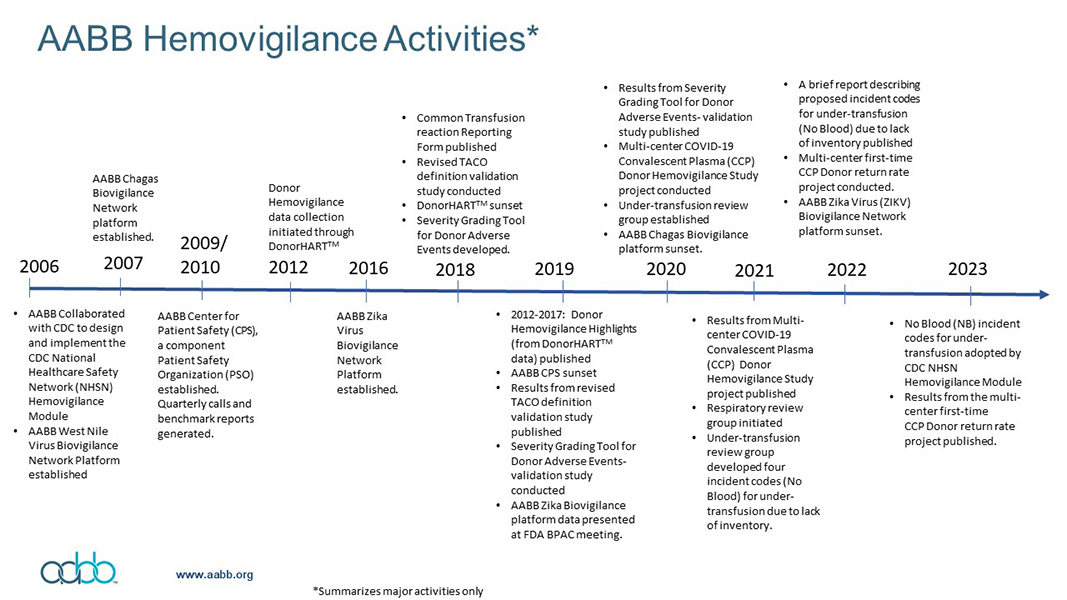
A national biovigilance network is a vital and urgent project to enhance patient safety and to protect donor health in transfusion and transplantation medicine.


The U.S. Biovigilance Network will, for the first time on a nationwide basis, collect and analyze data to identify trends and recommend best practices to reduce adverse reactions and incidents associated with blood transfusion and related biological therapies. Ultimately, the analyses of this data will enhance patient safety, protect donor health, make better use of blood, tissue, organs, and cellular products, and reduce healthcare costs.


Major anticipated outcomes of the Network include:


·         Improving patient outcomes and donor health.

·         Reducing risk for hospitals, collection centers and others participating in transfusion and transplantation.

·         Reducing costs of transfusion and transplantation by eliminating errors and waste where possible.

·         Improving the policies, processes and procedures for transfusing blood and transplanting tissue, organs and cellular products.

·         Identifying threats that adversely affect patients and donors and designing interventions to mitigate them.

·         Continuously improving quality for participating facilities through benchmarking.

·         Developing evidence-based responses to support community efforts addressing public health concerns of the Federal government.


The Network is a unique public/private collaboration with shared responsibilities for program development, operation and management, and funding. The federal government, through the Department of Health and Human Services, including the Centers for Disease Control and Prevention, has committed over $1 million toward start-up costs, and has provided the platform for initial surveillance efforts through its National Healthcare Safety Network. The U.S. Biovigilance Network has secured an additional $1.3 million in private contributions to fund the initial expenses and is seeking $1.7 million in additional support to complete development and implement the program.


The U.S. Biovigilance Network is a series of Web-based electronic surveillance systems linked together through expert review and analysis. They are being carefully designed to interface with existing data collection systems to avoid duplicate data entry. The two systems in development are:

·         The transfusion recipient system (anticipated Summer 2009)

·         The blood donor system (anticipated Spring 2009)


The pilot, beginning in January 2009, will be implemented with nine hospitals across the country. This will allow for fine-tuning of the surveillance system and analysis of initial data collected. Additional organizations are voluntarily registering to contribute data, with full participation and system launch anticipated in 2009.

View the U.S. Biovigilance Network launch press release

Last modified on 12/18/2008 10:05:34 AM
What's New!
AABB Weekly Report - January 9, 2009
Details
AABB Patient and Donor Safety Center Named a Patient Safety Organization by Department of Health and Human Services
Details
The Proposed 4th edition of Standards for Perioperative Autologous Blood Collection and Administration
Details
The Proposed 26th edition of Standards for Blood Banks and Transfusion Services
Details
CMS Publishes 2009 Hospital Outpatient Prospective Payment System Rule
Details
FDA Liaison Meeting Summary
Details
2007 National Blood Collection and Utilization Survey
Details
Call for AABB Award Nominations
Details
Association Bulletin #08-04 - Strategies to Reduce Adverse Reactions and Injuries in Younger Donors
Details
First Ever National Biovigilance Network in the U.S. Reaches $1 Million in Funding, Prepares for Fall Pilot Launch
Details
List of AABB-Accredited Facilities with Approved Variances for ISBT 128
Details