Please note: AABB reserves the right to make updates to this program.
Wednesday, January 27, 2027
2:00 – 3:00 PM Eastern Time
Program Number: 27EL-704
Director/Moderator: Anh Dinh, MD, Assistant Research Physician, National Institutes of Health, Bethesda, MD
Speakers:
This eCast addresses the practical and ethical challenges transfusion medicine professionals face when caring for patients who decline some or all blood products, including Jehovah's Witnesses and individuals who refuse transfusion for personal, financial, or safety reasons. The program brings together two faculty speakers whose presentations move from the front-end work of recognizing and honoring patient preferences to the clinical science and hands-on strategies that make transfusion-free care feasible. The first portion examines how transfusion-refusing patients are identified across the care pathway and how their individual acceptances and refusals—down to specific components, minor fractions, and blood-conservation procedures—are elicited and documented in a way that is confidential, non-coercive, and reliably communicated across the care team. The second portion turns to the evidence base for bloodless medicine and surgery and to the pharmacologic and procedural tools, such as high-dose erythropoiesis-stimulating agents and other blood-conservation measures, that clinicians use to prevent and manage anemia in these patients.
After participating in this educational activity, participants should be able to:
Registration includes access to both the live and on-demand version of this eCast.
If you are a facility interested in participating in this eCast, simply complete the Group Viewing registration form and AABB will provide detailed instructions to share with your team approximately one week prior to the live program (each team member to register for the program utilizing a promocode). For single viewers, simply click on the Register button below to register.
Please note: registration for the live eCast will close 1 hour prior to the eCast start time. If you register after this time, you will receive access to the on-demand eCast when it is available.
| Single Viewer | Register |
| Group Viewing | Register |
This activity is eligible for one (1) continuing education credit/contact hour for California Nurses, California Lab Personnel, Florida Lab Personnel and General Participation credit. AABB reserves the right to reduce or increase the number of credits granted based on the final activity duration. For more information on each credit type please visit our Continuing Education Credits webpage.
There is no financial support for this activity.
Claiming Credit
Live Activity - Upon completion of the live activity, you will receive instructions to complete your evaluation, which is necessary to claim credit and receive your certificate of attendance/completion (credit must be claimed by the date provided in the instructions). The evaluation can be found by logging into the AABB Education Platform.
Enduring Activity - Once the enduring (on-demand) program is available, you will receive instructions to access the AABB Education Platform. Upon completion of viewing the enduring activity, you will need to complete the evaluation, which is necessary to claim credit and receive your certificate of completion (credit must be claimed by the date provided in the AABB Education Platform).
Program & Credit Expiration Dates:
Disclosure Declaration
It is the policy of the Association for the Advancement of Blood & Biotherapies to ensure independence, balance, objectivity, and scientific rigor and integrity in all of its CE activities. Faculty must disclose to the participants any relationships with commercial companies whose primary business is producing, marketing, selling, re-selling, or distributing healthcare products used by or on patients. AABB has evaluated, identified, and mitigated any potential conflicts of interest through a rigorous content validation procedure, use of evidence-based data/research, and a multidisciplinary peer review process. The following information is for participant information only. It is not assumed that the presence of such relationships will have a negative impact on the presentations.
Disclosures for the planners of this event can be found here. Disclosures for the program faculty, peer reviewers, and AABB personnel are provided at the beginning of the program.
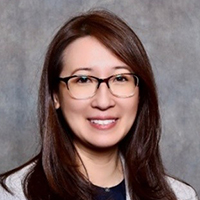 Dr. Anh Dinh received her BA in Biology from the University of Virginia and her MD from Eastern Virginia Medical School. She completed her clinical pathology residency at Beth Israel Deaconess Medical Center / Harvard Medical School, where she served as Chief Resident. She then completed fellowship training through the Harvard Medical School Fellowship Program in Transfusion Medicine and the Children’s Hospital of Philadelphia Histocompatibility and Immunogenetics Fellowship Program. She is board-certified in clinical pathology and blood banking/transfusion medicine and is an Affiliate of the American College of Histocompatibility and Immunogenetics. Dr. Dinh is currently an Assistant Research Physician at the National Institutes of Health (NIH) Clinical Center and serves as the Associate Medical Director and Chief of the Research Practice Development team in the Center for Cellular Engineering in the Department of Transfusion Medicine.
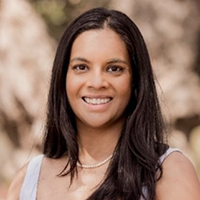 Dr. Shelley Kalsi received her MD from the Feinberg School of Medicine, Northwestern University, in Chicago Illinois. She completed residency at University of Maryland Medical Center, hematology/oncology fellowship at University of Pittsburgh Medical Center, and Blood Bank/Transfusion Medicine fellowship at the National Institutes of Health. Upon completing fellowship, she joined the National Heart Lung Blood Institute, Hematology Branch. Currently she is Associate research Physician and Director of the Hematology Consult Service.
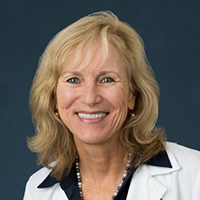 Dr. Linda Resar is a physician-scientist and Professor of Medicine (Hematology), Oncology, and Pathology at the Johns Hopkins University School of Medicine. Her research focuses on understanding how normal cells become cancerous and evolve into aggressive, treatment-resistant tumors, with the ultimate goal of developing more effective, personalized, and less-toxic therapies. Dr. Resar discovered that a protein called HMGA1 functions as a molecular "key,"" opening and closing regions of the genome to regulate stem cell properties, promote tumor development, and drive progression to aggressive, often lethal cancers. Her research established a critical role for HMGA1 in myeloproliferative neoplasms (MPNs), other hematologic malignancies, and solid tumors. Her team also identified therapeutically actionable pathways governed by HMGA1 that enable cancer cells to proliferate uncontrollably, resist treatment, and evade immune surveillance. As both a hematologist-oncologist and a laboratory investigator, Dr. Resar is committed to translating fundamental discoveries in stem cell and cancer biology into innovative therapies that improve patient outcomes. In addition to her research, Dr. Resar co-directs the Johns Hopkins Blood Management and Bloodless Medicine and Surgery Programs, which provide specialized care for patients who cannot receive blood transfusions because of medical conditions or personal beliefs. Her clinical work encompasses two complementary challenges in blood cell production: 1) In her MPN clinic, she treats patients whose abnormal blood stem cells produce excessive numbers of blood cells, using therapies that control blood counts while targeting the underlying mutant stem cells. 2) Conversely, for patients with insufficient blood cell production or those who must avoid transfusions, she employs strategies to stimulate the body's own blood-forming stem cells to increase production of red blood cells, platelets, and white blood cells. Together, her research and clinical programs reflect a unified mission: to understand and harness the biology of stem cells to develop more precise, effective, and less-toxic treatments for patients with cancer and blood disorders.

4550 Montgomery Avenue
Suite 700, North Tower
Bethesda, MD 20814
301.907.6977