Please note: AABB reserves the right to make updates to this program.
Wednesday, March 10, 2027
2:00 – 3:00 PM Eastern Time
Program Number: 27EL-712
Director/Moderator: Elizabeth Crowe, MD, PhD, Assistant Professor of Pathology, Blood Bank Medical Director, Johns Hopkins University School of Medicine, Baltimore, MD
Speakers:
Transfusion-transmitted malaria (TTM) remains a rare but potentially fatal complication of blood transfusion. Despite established donor screening protocols, cases continue to occur with diagnostic delays that can lead to severe patient outcomes including multiorgan failure and death. Clinicians in non-endemic regions often maintain low suspicion for malaria in transfusion recipients, while blood establishment professionals face evolving FDA guidance to reduce the risk of TTM. These knowledge and practice gaps span the transfusion medicine continuum, affecting physicians, laboratory scientists, quality professionals, and nursing staff who share responsibility for TTM prevention, detection, and response.
This program utilizes an interactive lecture format combined with clinical case studies to address these gaps. An infectious diseases physician/malariologist will present cases of nosocomial malaria transmission, including a TTM fatality, illustrating clinical presentation patterns, diagnostic challenges, and investigation workflows. A blood establishment quality systems director will then review the status of FDA guidance to reduce the risk of TTM, the operational aspects of donor lookback processes, and regulatory reporting requirements. Through this interprofessional approach, participants will gain practical knowledge to recognize TTM promptly, to implement approaches to reduce the risk of TTM (e.g., selective donation testing) and coordinate effective responses across clinical and blood bank teams.
After participating in this educational activity, participants should be able to:
Registration includes access to both the live and on-demand version of this eCast.
If you are a facility interested in participating in this eCast, simply complete the Group Viewing registration form and AABB will provide detailed instructions to share with your team approximately one week prior to the live program (each team member to register for the program utilizing a promocode). For single viewers, simply click on the Register button below to register.
Please note: registration for the live eCast will close 1 hour prior to the eCast start time. If you register after this time, you will receive access to the on-demand eCast when it is available.
| Single Viewer | Register |
| Group Viewing | Register |
This activity is eligible for one (1.0) continuing education credit/contact hour for Physicians, California Nurses, California Lab Personnel, Florida Lab Personnel and General Participation credit. AABB reserves the right to reduce or increase the number of credits granted based on the final activity duration. For more information on each credit type please visit our Continuing Education Credits webpage.
There is no financial support for this activity.
In support of improving patient care, this activity has been planned and implemented by the Association for the Advancement of Blood & Biotherapies (AABB), which is jointly accredited by the Accreditation Council for Continuing Medical Education (ACCME), the Accreditation Council for Pharmacy Education (ACPE), and the American Nurses Credentialing Center (ANCC), to provide continuing education for the healthcare team.
Physicians (ACCME): AABB designates this live activity for a maximum of one (1.0) AMA PRA Category 1 CreditTM. AABB designates this enduring activity for a maximum of one (1.0) AMA PRA Category 1 CreditTM. Physicians should claim only the credit commensurate with the extent of their participation in the activity.
Claiming Credit
Live Activity - Upon completion of the live activity, you will receive instructions to complete your evaluation, which is necessary to claim credit and receive your certificate of attendance/completion (credit must be claimed by the date provided in the instructions). The evaluation can be found by logging into the AABB Education Platform.
Enduring Activity - Once the enduring (on-demand) program is available, you will receive instructions to access the AABB Education Platform. Upon completion of viewing the enduring activity, you will need to complete the evaluation, which is necessary to claim credit and receive your certificate of completion (credit must be claimed by the date provided in the AABB Education Platform).
Program & Credit Expiration Dates:
Disclosure Declaration
It is the policy of the Association for the Advancement of Blood & Biotherapies to ensure independence, balance, objectivity, and scientific rigor and integrity in all of its CE activities. Faculty must disclose to the participants any relationships with commercial companies whose primary business is producing, marketing, selling, re-selling, or distributing healthcare products used by or on patients. AABB has evaluated, identified, and mitigated any potential conflicts of interest through a rigorous content validation procedure, use of evidence-based data/research, and a multidisciplinary peer review process. The following information is for participant information only. It is not assumed that the presence of such relationships will have a negative impact on the presentations.
Disclosures for the planners of this event can be found here. Disclosures for the program faculty, peer reviewers, and AABB personnel are provided at the beginning of the program.
 Elizabeth (Liz) Crowe, MD, PhD, is an Assistant Professor in the Department of Pathology at the Johns Hopkins University School of Medicine. She is also the Medical Director of the blood bank and the Specialist in Blood Bank Technology/Transfusion Medicine (SBBT/TM) at the Johns Hopkins Hospital. Her areas of interest include transfusion medicine education, patient blood management, and immunohematology.
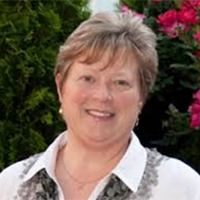 Margaret Hannan has more than 40 years’ experience in blood banking, with 35 of those spent in blood bank leadership; she has been employed with Blood Bank of Delmarva, a Division of New York Blood Center Enterprises, in Newark, Delaware for 40 years. Margaret’s experience includes blood and apheresis collections, project management, and Quality & Regulatory Affairs. Margaret is currently the organization’s Director of Enterprise Quality Systems. In this role, she is responsible for the successful implementation of enterprise-wide quality systems initiatives and leads efforts to design, improve and harmonize quality systems processes and training. Among her areas of expertise are blood and apheresis standards and regulations, training and development, and quality assurance and continuous process improvement activities. In addition to a background in nursing, Margaret holds a bachelor's degree in organizational management, a master's degree in organizational leadership, and is an AABB assessor.
 David J. Sullivan, Jr., MD is a professor at the Johns Hopkins Bloomberg School of Public Health, as well as a malariologist and infectious diseases physician. Dr. Sullivan has over 30 years of research experience on malaria and the erythrocyte including malaria clinical field studies in Bangladesh and Africa. Dr. Sullivan's expertise focuses on heme, hemozoin and metal metabolism in the malaria infected erythrocyte revolving around diagnosis and drugs. He also pivoted to work on COVID-19 Convalescent Plasma.

4550 Montgomery Avenue
Suite 700, North Tower
Bethesda, MD 20814
301.907.6977