Please note: AABB reserves the right to make updates to this program.
Wednesday, June 2, 2027
2:00 – 3:00 PM Eastern Time
Program Number: 27EL-740
Director/Moderator: Michelle Lodermeier, MBA, MLS(ASCP)SBBᴄᴍ, Program Director, BBT, American Red Cross, St. Paul, MN
Speakers:
There are always two sides to every story, and genotyping in transfusion medicine is no exception. In this program, attendees will explore molecular testing for common minor blood group antigens from both the donor and patient perspectives as presenters walk through the same key questions from two very different viewpoints: Who is being tested? Why was testing performed? What do the results actually tell us? And how are those results used in practice? Along the way, attendees will see how the same molecular methods and terminology can lead to very different conversations and decisions depending on the setting.
Using real-world examples, this eCast will compare how donor centers and patient care teams approach genotyping in everyday transfusion medicine practice. By hearing both "sides of the story," attendees will develop a more connected and practical understanding of genotyping and leave with a more holistic perspective.
After participating in this educational activity, participants should be able to:
Registration includes access to both the live and on-demand version of this eCast.
If you are a facility interested in participating in this eCast, simply complete the Group Viewing registration form and AABB will provide detailed instructions to share with your team approximately one week prior to the live program (each team member to register for the program utilizing a promocode). For single viewers, simply click on the Register button below to register.
Please note: registration for the live eCast will close 1 hour prior to the eCast start time. If you register after this time, you will receive access to the on-demand eCast when it is available.
| Single Viewer | Register |
| Group Viewing | Register |
This activity is eligible for one (1.0) continuing education credit/contact hour for Physicians, California Nurses, California Lab Personnel, Florida Lab Personnel and General Participation credit. AABB reserves the right to reduce or increase the number of credits granted based on the final activity duration. For more information on each credit type please visit our Continuing Education Credits webpage.
There is no financial support for this activity.
In support of improving patient care, this activity has been planned and implemented by the Association for the Advancement of Blood & Biotherapies (AABB), which is jointly accredited by the Accreditation Council for Continuing Medical Education (ACCME), the Accreditation Council for Pharmacy Education (ACPE), and the American Nurses Credentialing Center (ANCC), to provide continuing education for the healthcare team.
Physicians (ACCME): AABB designates this live activity for a maximum of one (1.0) AMA PRA Category 1 CreditTM. AABB designates this enduring activity for a maximum of one (1.0) AMA PRA Category 1 CreditTM. Physicians should claim only the credit commensurate with the extent of their participation in the activity.
Claiming Credit
Live Activity - Upon completion of the live activity, you will receive instructions to complete your evaluation, which is necessary to claim credit and receive your certificate of attendance/completion (credit must be claimed by the date provided in the instructions). The evaluation can be found by logging into the AABB Education Platform.
Enduring Activity - Once the enduring (on-demand) program is available, you will receive instructions to access the AABB Education Platform. Upon completion of viewing the enduring activity, you will need to complete the evaluation, which is necessary to claim credit and receive your certificate of completion (credit must be claimed by the date provided in the AABB Education Platform).
Program & Credit Expiration Dates:
Disclosure Declaration
It is the policy of the Association for the Advancement of Blood & Biotherapies to ensure independence, balance, objectivity, and scientific rigor and integrity in all of its CE activities. Faculty must disclose to the participants any relationships with commercial companies whose primary business is producing, marketing, selling, re-selling, or distributing healthcare products used by or on patients. AABB has evaluated, identified, and mitigated any potential conflicts of interest through a rigorous content validation procedure, use of evidence-based data/research, and a multidisciplinary peer review process. The following information is for participant information only. It is not assumed that the presence of such relationships will have a negative impact on the presentations.
Disclosures for the planners of this event can be found here. Disclosures for the program faculty, peer reviewers, and AABB personnel are provided at the beginning of the program.
 Michelle Lodermeier serves as the Program Director for the American Red Cross Blood Banking Technology Program. She holds a bachelor's degree from San Francisco State University, an MBA from California State University, Sacramento, and completed her SBB training at the National Institutes of Health. With over 20 years of experience in blood banking, Michelle has worked in a wide range of roles, including bench technologist, IRL manager, and educator. She is an AABB assessor and a board member of the CAAHEP Committee on Accreditation for SBBT/TM programs. In her current role, Michelle supports individuals pursuing blood bank certification and helps them build meaningful, long-term careers in transfusion medicine.
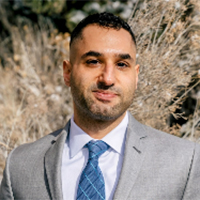 Dr. Waseem Anani is an Associated Medical Director at Canadian Blood Services. He is the medical director for molecular testing, cell free fetal DNA, and the national immunohematology reference laboratory. Dr. Anani completed his Clinical Pathology residency at the University of Pittsburgh Medical Center and went on to do his Transfusion Medicine fellowship at the Medical College of Wisconsin (BloodCenter of Wisconsin now Versiti). He has also earned the Specialist in Blood Banking (SBB) certification.
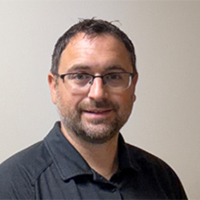 Maxim Tynuv serves as a Blood Bank Manager, overseeing transfusion services operations at two Fairview University hospitals and the Fairview Minneapolis Clinics and Surgery Center. He holds a Bachelor of Arts in Physiology and a Bachelor of Science in Medical Technology. In 2017, Maxim obtained his Specialist in Blood Banking (SBB) certification following completion of the SBB program at the National Institutes of Health (NIH). Maxim brings over 16 years of combined blood bank experience in leadership roles across multiple institutions. His expertise includes transfusion service operations, blood component manufacturing, and process improvement.

4550 Montgomery Avenue
Suite 700, North Tower
Bethesda, MD 20814
301.907.6977