
“A therapy is not truly accessible merely because it has been approved; access exists only when an appropriate patient can realistically move through the entire pathway without the system itself becoming the barrier.”
- Adrienne B. Mendoza, MHA, Senior Vice President, BioBridge Global.
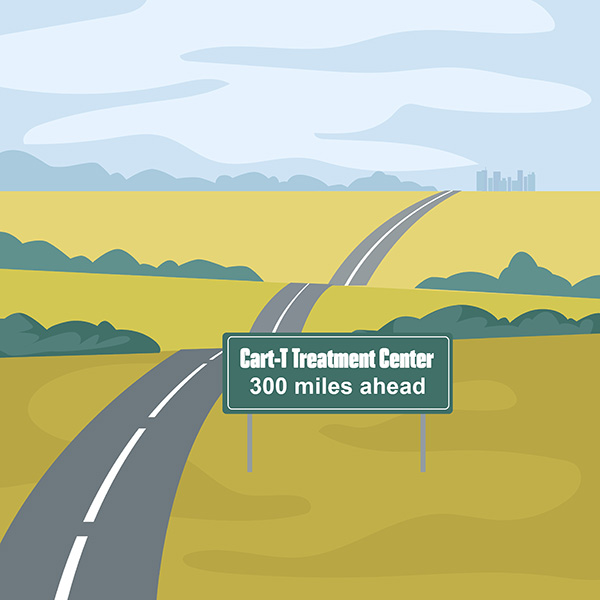
A 32-year-old patient with relapsed lymphoma is told that chimeric antigen receptor (CAR)-T cell therapies offer the best chance for long-term remission. The science is extraordinary. The therapy has been approved by the United States Food and Drug Administration (FDA), is recommended by clinical guidelines and is covered by the patient's insurance; yet treatment never begins.
The nearest certified treatment center is several hundred miles away. Manufacturing requires multiple visits over several weeks. Temporary relocation is becoming necessary. A full-time caregiver must accompany the patient throughout treatment and the early recovery period. Time away from work threatens the family's financial stability, while local physicians have limited experience navigating referrals for advanced cellular therapies.¹
As medicine enters an era increasingly defined by cell therapies, gene editing, regenerative medicine and personalized biologics, bioethics must confront a question that extends far beyond scientific innovation: Can we honestly describe a therapy as “available” if eligible patients cannot realistically receive it?
Scientific innovation deserves celebration. Yet developing revolutionary therapies is only part of the challenge. Health care systems must also be prepared to deliver these therapies equitably, ensuring that scientific progress translates into meaningful patient access rather than remaining an unrealized promise. This reality should inspire policymakers, health care organizations, manufacturers and clinicians alike to address these disparities before they become the principal limitation of the next generation of medicine.
Texas provides a compelling illustration of this challenge. Statutory analysis by the 89th Texas Legislature confirmed that FACT-accredited CAR-T treatment centers are located in only five cities, Houston, Dallas, San Antonio, Austin and Belton, meaning that patients living in the Rio Grande Valley, the Panhandle, or East Texas may reside 300 to 500 miles from the nearest certified center.² As Adrienne Mendoza, MHA, senior vice president of BioBridge Global, observed during a recent conversation, Texas is not simply another example; it is perhaps the clearest lens through which to understand the broader access challenge.
Mendoza stated that, “Texas is a microcosm of the country: 254 counties, more than 30 million residents, some of the largest urban cancer centers in the world alongside some of the most medically underserved rural regions in the United States. If a decentralized model can work here, it can work anywhere. And if it cannot work here, we have to be honest about why.”
The extraordinary success of modern biotechnology has fundamentally transformed the therapeutic landscape. CAR-T cell therapies have dramatically improved outcomes for selected hematologic malignancies. Gene therapies now offer durable treatment, and, in some cases, the possibility of curing diseases once considered chronic. Genome-editing technologies have entered clinical practice, while regenerative medicine continues to expand the boundaries of what is therapeutically possible.
These scientific achievements deserve recognition. However, they also present a profound ethical challenge. Although remarkable advances have expanded the therapeutic possibilities available to patients, bioethicists must now ask whether health care systems are equally prepared to ensure fair and equitable access to these innovations. The National Academy of Medicine defines access as “the timely use of personal health services to achieve the best possible health outcomes.”³
Unlike conventional pharmaceuticals that can be prescribed and dispensed through existing health care systems, advanced cellular therapies, including CAR-T therapy, hematopoietic stem cell transplantation and cord blood transplantation, depend on an intricate ecosystem of specialized collection and processing technologies, accredited manufacturing and transplant centers, highly trained multidisciplinary teams, sophisticated logistics, intensive monitoring and prolonged follow-up.
Making these therapies accessible is therefore considerably more complex than expanding access to traditional medical or specialty care. Patients pursuing advanced cellular therapies must navigate an entirely different therapeutic pathway, one that often includes referral to a specialized center, confirmatory testing, insurance authorization, cellular collection, product manufacturing, hospitalization, management of treatment-related toxicities, long-term surveillance and coordination among multiple health care institutions. Each step introduces barriers that extend far beyond biology.
A 2025 analysis published in Blood Advances quantified the magnitude of these barriers. Patients living in the highest-distance quintile (average distance of 104.4 miles from an authorized treatment center) were significantly less likely to receive CAR-T therapy than those in the lowest-distance quintile (average distance of 34.2 miles). Modeling suggested that if states with poorer geographic access achieved travel distances comparable to those with better access, the number of Medicare beneficiaries receiving CAR-T therapy could increase by 37.6% in practical terms; nearly four of every 10 currently untreated. This means that otherwise eligible patients might receive therapy if distance alone were no longer a barrier.4,5
Emerging evidence demonstrates that access to CAR-T therapy is determined not only by clinical eligibility but also by structural factors, including travel distance, socioeconomic status, insurance coverage, referral pathways and other social determinants of health. Patients who live farther from certified treatment centers or who have fewer financial resources are significantly less likely to receive CAR-T therapy despite meeting the same medical eligibility criteria.¹˒⁵
The gap is not narrowing. Although several hundred authorized treatment centers now operate across the U.S., recipients remain disproportionately concentrated in wealthier regions. At the same time, patients living in lower-income states continue to experience reduced access to therapies that may offer their greatest chance of long-term survival. These observations compel us to reconsider what “access” truly means. Regulatory approval alone may no longer be sufficient. A therapy should not be considered genuinely available unless eligible patients have a realistic opportunity to receive it.
The solution is unlikely to be universal decentralization. Instead, it may lie in stronger partnerships between specialized centers and community health care systems. As Chris Salyers, DHSc, director of Programs and Evaluation at the National Organization of State Offices of Rural Health (NOSORH), observed during an interview for this article: “Partnerships between specialized institutions and rural healthcare providers have proven successful in bringing advanced therapies to underserved populations. Regionalized healthcare planning, viewed through the lens of economic and community development, may prove to be a key strategy for bridging the gap between underserved populations and advanced therapies that require highly specialized management.”
Justice has long been recognized as one of the foundational principles of biomedical ethics. Two patients with the same diagnosis, comparable prognosis, and equivalent biological eligibility should, in principle, have the same opportunity to receive treatment. Yet in practice, one patient may undergo CAR-T therapy within weeks, while another never reaches a specialized referral center.
The structural factors ultimately determine who receives treatment and who does not. Achieving justice therefore requires more than scientific innovation. It requires health care systems that actively reduce inequities so that access to potentially life-saving therapies is determined by clinical needs rather than circumstance.
Consider the geography of care. A patient living in Presidio County, Texas, is approximately 400 miles from the nearest FACT-accredited CAR-T center in San Antonio. Similarly, a patient in Dalhart, in the northwestern Panhandle, is geographically closer to treatment centers in Denver or Oklahoma City than to any certified center within Texas. Denver, Colorado, is approximately 430–450 driving miles from the nearest certified center in Texas, whereas Oklahoma City, Oklahoma, is approximately 140–150 driving miles from the nearest certified center in Texas. When “in-network” effectively means traveling hundreds of miles to reach an accredited facility, access becomes a function of geography rather than diagnosis.
The same principle extends beyond CAR-T therapy. Patients requiring hematopoietic stem cell transplantation, including unrelated donor and cord blood transplantation, often face similar structural barriers because specialized transplant programs remain concentrated within a limited number of academic medical centers. Across advanced cellular therapies, scientific innovation alone cannot overcome inequities created by geography and health care infrastructure.
Justice therefore requires more than regulatory approval. It demands that health care systems be organized so that eligible patients have genuine opportunities, not merely theoretical ones, to benefit from scientific progress.
As philosopher Norman Daniels argued, justice in health care extends beyond the equitable distribution of medical resources; it requires preserving fair equality of opportunity by ensuring access to interventions that prevent disease and restore normal functioning. When geography, infrastructure or socioeconomic barriers systematically limit access to potentially curative therapies, patients are deprived not only of treatment but also of the opportunity to pursue their lives on equal terms with others.⁶
Respect for patient autonomy has traditionally centered on informed consent—the ability to understand treatment options and make voluntary decisions. Yet for many patients, the greatest barriers arise long before informed consent is ever obtained.
Advanced cellular therapies frequently require temporary relocation, prolonged time away from work, continuous caregiver support and substantial financial and logistical resources. For patients who cannot meet these demands, the freedom to choose treatment becomes largely theoretical. Their autonomy is constrained not by a lack of information, but by limitations imposed by the healthcare system itself.
Autonomy therefore extends beyond informed consent to include a patient's practical ability to act on an informed decision. Patients who cannot afford temporary relocation, secure caregiver support or take extended leave from work may be denied the opportunity to pursue treatment despite fully understanding its potential benefits. Recognizing this broader concept of autonomy should encourage health care professionals, policymakers, and health care systems to address the structural barriers that prevent patients from exercising genuine choice.
Qualitative research conducted by the Cancer Support Community among CAR-T recipients and caregivers illustrates this challenge. Even after therapy has been prescribed, the requirement for a full-time caregiver, four to six weeks of residence near the treatment center, and significant disruption of household income frequently become decisive barriers to treatment. When pursuing a potentially curative therapy requires choosing between survival and financial stability, the choice being offered cannot truly be considered free.⁷
A physician may identify the optimal treatment, recommend it and obtain informed consent. Nevertheless, the patient may never receive therapy because referral pathways fail, manufacturing capacity is limited, insurance authorization is delayed or the logistical demands of treatment become overwhelming. When this occurs, the resulting harm reflects not poor clinical judgment but failures within the health care system.
This reality expands the ethical responsibilities associated with beneficence. Physicians alone cannot ensure equitable access to advanced therapies. A recent analysis published in Leukemia & Lymphoma identified more than a dozen system-level barriers to CAR-T therapy, including fragmented referral pathways, complex payer authorization processes, inadequate caregiver support, limited temporary housing and challenges associated with post-infusion follow-up. Each of these barriers lies largely outside the direct control of the treating clinician and requires coordinated action across the health care ecosystem.⁷
Manufacturers, regulators, health care institutions, professional societies, payers, policymakers, and public health organizations all influence whether innovative therapies ultimately reach the patients they were designed to benefit from. Ethical responsibility therefore extends well beyond the bedside. Beneficence can no longer be measured solely by recommending the best available therapy; it must also encompass building health care systems capable of delivering that therapy equitably.
Likewise, the principle of non-maleficence should be viewed through a broader lens. Harm does not arise solely from the adverse effects of treatment. It may also result from delays, fragmented referral pathways, limited infrastructure or failures in access that prevent eligible patients from receiving potentially life-saving therapies. As advanced cellular therapies, including hematopoietic stem cell transplantation and cord blood transplantation, continue to evolve, minimizing harm will increasingly depend on addressing the structural barriers that separate scientific innovation from patient care.
This commentary was written by Ludwig Frontier, MD, MSc, MBA, DHSc, Magister in Bioethics and Cellular Therapies, Medical Manager for Macopharma. It was developed in collaboration with Adrienne B. Mendoza, MHA, Senior Vice President of BioBridge Global and Chief Operating Officer of BBG Advanced Therapies. The commentary integrates published evidence with perspectives from interviews the author conducted with leaders in advanced cellular therapies and rural health.
By Ludwig Frontier, MD, MSc, MBA, DHSc, and Adrienne B. Mendoza, MHA, Contributing Writers
August 2026
 View Issue
BACK TO ISSUE
August 2026NEXT STORY
Improving Cord Blood Transplantation
Transfusion is AABB’s scholarly, peer-reviewed monthly journal, publishing the latest on technological advances, clinical research and controversial issues related to transfusion medicine, blood banking, biotherapies and tissue transplantation. Access of Transfusion is free to all AABB members.
Learn More About Transfusion Journal
Keep abreast of what's happening in the field of biotherapies with CellSource - AABB's monthly update on the latest biotherapies news.

To submit news about the blood and biotherapies field to AABB, please email news@aabb.org.


President
Jose Cancelas, MD, PhD, CABP
Chief Executive Officer
Debra Ben Avram, FASAE, CAE
Chief Communications and Engagement Officer
Julia Zimmerman
Director of Marketing and Communications
Jay Lewis, MPH
Managing Editor
Kendra Y. Mims, MFA
Senior Communications Manager
Drew Case
AABB News
(ISSN 1523939X) is published monthly, except for the combined November/December issue for the members of AABB; 4550 Montgomery Avenue; Suite 700 North Tower; Bethesda, MD 20814.
AABB is an international, not-for-profit association representing individuals and institutions involved in transfusion medicine, cellular therapies and patient blood management. The association is committed to improving health by developing and delivering standards, accreditation and educational programs that focus on optimizing patient and donor care and safety.
+1.301.907.6977
Email: news@aabb.org
Website: www.aabb.org
Copyright 2025 by AABB.
Views and opinions expressed in AABB News are not necessarily endorsed by AABB unless expressly stated.
Notice to Copiers: Reproduction in whole or part is strictly prohibited unless written permission has been granted by the publisher. AABB members need not obtain prior permission if proper credit is given.


4550 Montgomery Avenue
Suite 700, North Tower
Bethesda, MD 20814
301.907.6977