
Although chimeric antigen receptor (CAR) T-cell therapies have emerged as a potentially curative treatment option for certain blood cancers within the last decade, geographic, logistical and financial barriers continue to limit patient access. Today, only an estimated two in 10 eligible patients in the United States receive CAR T-cell therapy. To close the gap, organizations in the biotherapies space are developing strategic partnerships and redefining care models.
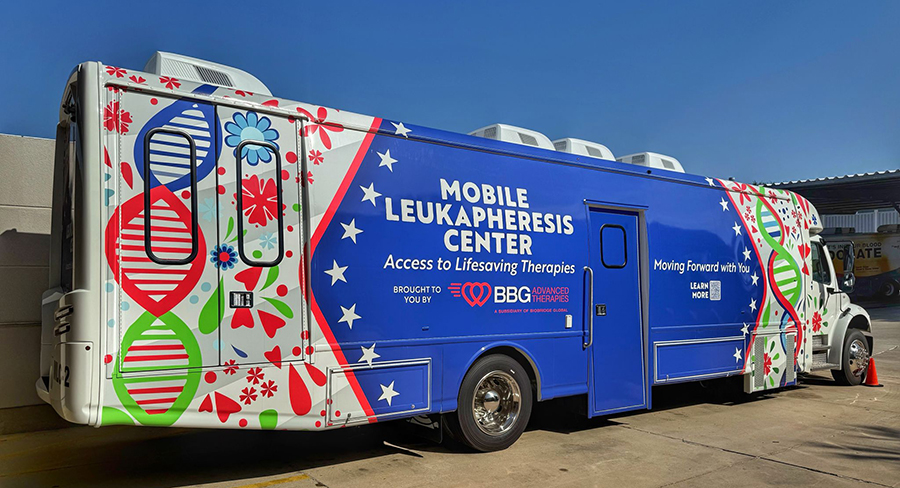
AABB News spoke to Kite, a Gilead Company, and BBG Advanced Therapies, a subsidiary of BioBridge Global, both AABB corporate partners, about their recent collaboration to expand access to CAR T-cell therapies across Texas through a first-of-its-kind Mobile Leukapheresis Center (MLC) Program.
Adrienne Mendoza, MHA, senior vice president of BioBridge Global and chief operating officer of BBG Advanced Therapies, noted that the collaboration grew from both organizations’ shared commitment to support more patients in community settings while reducing barriers to access.
 “Kite is a patient-focused, forward-thinking collaborator that has treated more patients than any other CAR T-cell therapy company,” Mendoza told AABB News. “I'm very proud of the Kite team for taking the first leap of faith to explore this opportunity. They're naturally innovative, and that's what's driven their success over time. That's why we're excited to work with them.”
Kite developed two of the seven FDA-approved CAR T-cell therapies —Tecartus and Yescarta—and has treated more than 36,500 patients worldwide to date. Zack Galitzeck, director of market access innovations at Kite, said that BBG Advanced Therapies stood out because it developed the nation’s first MLC.
“It's the first time this capability has been on wheels, able to go anywhere in the state of Texas,” Galitzeck said. “We're excited to partner with BBG to explore what the future of apheresis access could look like. Right now, the mobile leukapheresis center operates only in Texas, but we hope this inspires other organizations across the country to consider mobile apheresis options.”
BBG Advanced Therapies unveiled its MLC in May 2025 in San Antonio and collected its first donation in October. Mendoza said the organization became a qualified supplier within 12 months, implementing the procedures and processes needed to align with Kite’s requirements for its clinical sites and apheresis partners who provide services to support the manufacturing of Kite’s CAR T-cell therapies.
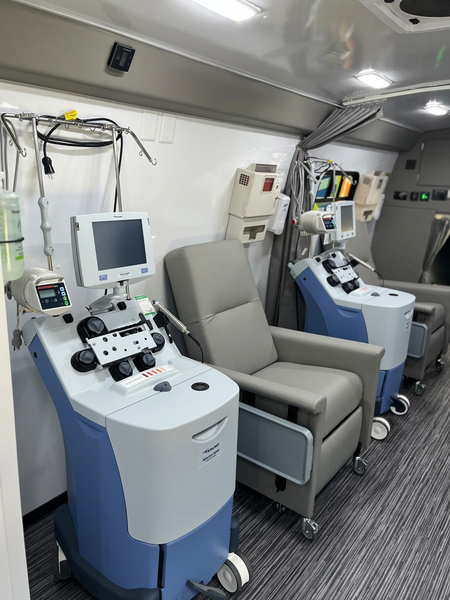
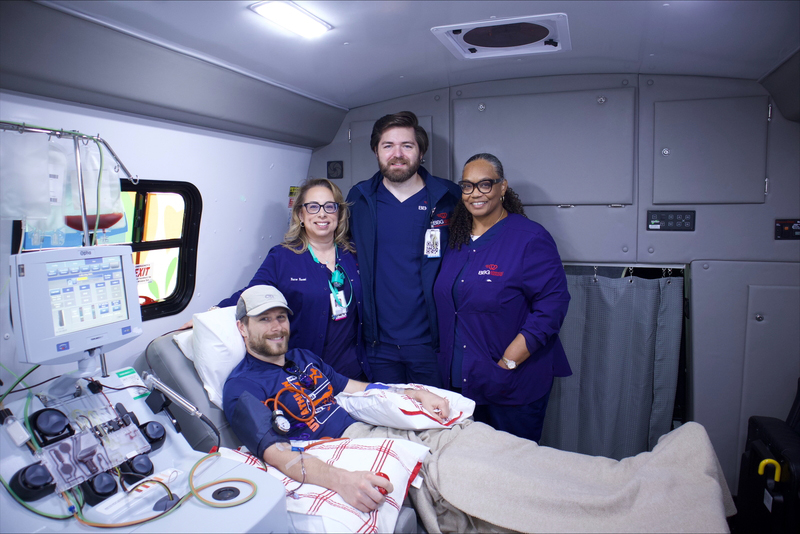
The self-contained MLC features two collection stations and a testing lab and collects immune cells from donors or patients to support the development of personalized treatments for blood cancers, solid tumors, autoimmune disorders and other conditions. Once the initial T-cell collection, or leukapheresis, is complete, the leukapheresis product is sent to a Kite manufacturing facility, where a CAR gene is added and the cells proliferate. The patient’s cells are then sent back to an authorized treatment center, where the patient receives a one-time infusion.
Mendoza described Texas as an ideal place to explore a decentralized collection model because of its size and geographic challenges. “There's an opportunity here to show how this can ultimately support more patients receiving their therapies and help clinicians provide those treatments in more community settings,” Mendoza said. “It's a perfect model to explore that can then be translatable, and I think the lessons learned will be influential for the entire field.”
Galitzeck said one of the biggest barriers to patients accessing CAR T-cell therapy is patient logistics, such as long distances to treatment centers. The MLC is designed to remove geographic and systemic barriers by bringing high-quality cell collection directly to patients.
“The CAR T journey involves multiple trips for referral, evaluation, leukapheresis and infusion,” he said. “A mobile unit is a game changer because it breaks away from that model, especially in Texas, which has many unique geographic challenges. By partnering with qualified apheresis experts, we hope to bring one step of the CAR-T journey closer to where patients live.”
Galitzeck added that Kite is also working to address other barriers to treatment. “Our goal is to develop innovative solutions addressing all barriers and improve access to cell therapy. We can do this only by partnering closely with innovators in the field,” he said.
To date, there are 13 authorized treatment centers for various CAR T-cell therapies across Texas located in major metropolitan areas, including Houston, Dallas, San Antonio, Waco and Lubbock. Mendoza pointed out that more than 70% of the Texas population lives more than 200 miles from one of these treatment centers, creating an access challenge across the nation's second-largest state.
For example, a patient in El Paso, McAllen, Edinburg, Brownsville, Harlingen or Laredo has a six-to-eight-hour drive just to reach the treatment center. Patients receiving these therapies also need a caregiver to accompany them, according to treatment protocols. It is estimated that the average out-of-pocket expense for the patient and caregiver is about $22,000 for a 200-mile trip.
Through the MLC, patients can have their cells collected closer to home rather than traveling to an authorized treatment center for leukapheresis and staying nearby while waiting for their engineered cells to be returned. They travel only for the infusion.
“By providing apheresis or leukapheresis services locally, more treatment centers could theoretically be activated more quickly, because a local hospital can handle the transfusion and bridging therapies while this step is covered elsewhere,” Mendoza said.
According to BBG Advanced Therapies, the Texas deployment will serve as a proof-of-concept model for additional markets, signaling how mobile collection infrastructure can support the continued growth of cell and gene therapies while maintaining the quality and consistency required for these complex, personalized medicines.
Mendoza said success will ultimately be measured by showing increased patient access to therapies, particularly in more diverse communities. She pointed out that geographic distance is also a socioeconomic issue and said BBG Advanced Therapies will evaluate how many more patients gain access, who is benefiting, how many additional treatment centers can be authorized and activated closer to where patients live and how much travel distances can be reduced.
“People in diverse communities who typically live outside major metropolitan areas are probably among the eight in 10 patients who can’t access these therapies today, whether that’s about race, ethnicity, financial means or all of the above,” she said. “Those are the measures of success: solving the paradigm where only two in 10 patients can access these therapies due to distance and cost and measurably reducing that cost and geographic burden.”
Innovation that creates lasting change and improves patient access requires cross-sector collaboration across the biotherapies field. Mendoza emphasized that meaningful progress depends on partnerships among different industry groups coming together around a common need and finding a way to use their respective capabilities to address shared challenges.
“It’s not just blood centers working with other blood centers, which is hugely important,” Mendoza said. “It's also pharmaceutical companies, blood banks, testing laboratories and manufacturing organizations coming together. That's how we ultimately accomplish change together.”
Galitzeck added that successful collaboration depends on selecting the right partners. Because leukapheresis provides the starting material needed to manufacture CAR T-cell therapies, every collection must meet stringent quality standards, he explained.
“BBG Advanced Therapies has been a strong partner with extensive experience,” Galitzeck said. “Getting this step right is critical to manufacturing success. If that step fails, we've lost many weeks of time for a patient whose cancer may advance rapidly and needs treatment. The reputation of cell therapy ultimately comes down to being able to successfully produce and deliver the patient’s CAR T-cells in a timely manner.”
“When there's that intrinsic belief that more patients deserve access to these therapies, and solutions exist to bridge the gap, you just do what you can to make those opportunities available.” – Adrienne Mendoza, MHA
Mendoza advised organizations to understand the needs of the field and a potential partner's vision, challenges and goals before building a partnership.
“We were empathetic to why our community wasn't accessing these therapies today, who was working on solutions, what capabilities and skills we could lend and what else was needed,” she said. “We really researched the challenges the field was facing — the realities for patients, caregivers and pharmaceutical companies, and what they were trying to achieve.”
Looking ahead, Mendoza believes expanding access will depend on activating more treatment centers; increasing awareness among patients, providers and payers; reducing costs through greater efficiencies and continuing to scale manufacturing closer to where patients receive care.
“Interestingly, when partnerships address the activation of more places, knowledge grows too, because more places gain experience administering these therapies to more patients across more demographics,” she said. “When there's that intrinsic belief that more patients deserve access to these therapies, and solutions exist to bridge the gap, you just do what you can to make those opportunities available.”
Galitzeck hopes the model expands beyond Texas, whether through BBG Advanced Therapies or other apheresis partners. “It's an important way to reach patients who live far from a CAR T-cell treatment center,” he said. “We’re open to partnering with organizations interested in expanding access to leukapheresis in their regions.”
He also expressed optimism about the future of biotherapies as organizations across the cell therapy ecosystem continue working together to develop innovative solutions for CAR T-cell therapies.
“I hope it inspires others to ask, ‘What can we do differently? What can we do better?’” he said. “As more cell therapies move through clinical trials, including therapies beyond oncology, patient access will face new constraints and barriers. I hope organizations continue taking a forward-thinking, solution-oriented approach.”
For Galitzeck, every investment in expanding access comes back to the patients who need these therapies most.
“There's a patient in Texas right now, perhaps in a rural area, who may have thought CAR T-cell therapy wasn't an option for them,” he said. “Hopefully, initiatives like the mobile leukapheresis center help patients realize they can have access to these therapies.”
BACK TO ISSUE
August 2026NEXT STORY
A New Era of Blood and Biotherapies
Transfusion is AABB’s scholarly, peer-reviewed monthly journal, publishing the latest on technological advances, clinical research and controversial issues related to transfusion medicine, blood banking, biotherapies and tissue transplantation. Access of Transfusion is free to all AABB members.
Learn More About Transfusion Journal
Keep abreast of what's happening in the field of biotherapies with CellSource - AABB's monthly update on the latest biotherapies news.

To submit news about the blood and biotherapies field to AABB, please email news@aabb.org.


President
Jose Cancelas, MD, PhD, CABP
Chief Executive Officer
Debra Ben Avram, FASAE, CAE
Chief Communications and Engagement Officer
Julia Zimmerman
Director of Marketing and Communications
Jay Lewis, MPH
Managing Editor
Kendra Y. Mims, MFA
Senior Communications Manager
Drew Case
AABB News
(ISSN 1523939X) is published monthly, except for the combined November/December issue for the members of AABB; 4550 Montgomery Avenue; Suite 700 North Tower; Bethesda, MD 20814.
AABB is an international, not-for-profit association representing individuals and institutions involved in transfusion medicine, cellular therapies and patient blood management. The association is committed to improving health by developing and delivering standards, accreditation and educational programs that focus on optimizing patient and donor care and safety.
+1.301.907.6977
Email: news@aabb.org
Website: www.aabb.org
Copyright 2025 by AABB.
Views and opinions expressed in AABB News are not necessarily endorsed by AABB unless expressly stated.
Notice to Copiers: Reproduction in whole or part is strictly prohibited unless written permission has been granted by the publisher. AABB members need not obtain prior permission if proper credit is given.


4550 Montgomery Avenue
Suite 700, North Tower
Bethesda, MD 20814
301.907.6977