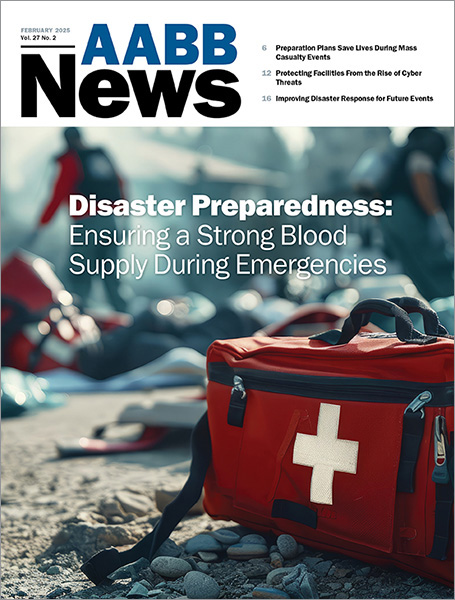
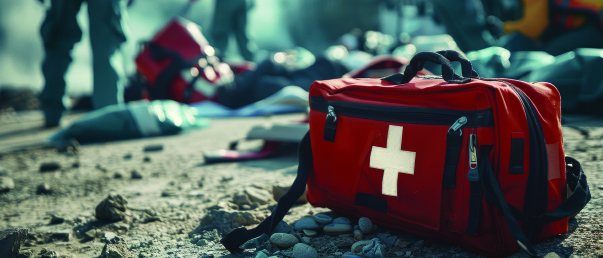
On Nov. 5, 2017, a gunman opened fire inside First Baptist Church in Sutherland Springs, Texas, killing more than two dozen worshippers and wounding 20 more in the deadliest church shooting in American history. The tragedy and shock reverberated beyond the small rural town and rocked surroundings communities.
South Texas Blood & Tissue (STB&T) in San Antonio, located approximately 30 miles from the site, provided more than 200 units of blood to hospitals in South Texas treating the injured victims in Sutherland Springs. As blood products decreased, STB&T requested blood donations specifically from people with O-positive or O-negative blood. Texans responded and came out in droves to donate blood and support victims.
At the time, the nation was still reeling from the Las Vegas mass shooting that claimed the lives of 59 people and injured more than 500 concertgoers at a music festival on Oct. 1, 2017. Adrienne Mendoza, MHA, senior vice president, BioBridge Global and COO, BBG Advanced Therapies, and former COO of STB&T, noted that both mass shootings raised concerns among local emergency response groups and prompted the formation of the Regional Whole Blood program, a consortium of multi-disciplinary, multi-institutional members. Collaborating partners include STB&T, Southwest Texas Regional Advisory Council (STRAC), Brooke Army Medical Center (BAMC), University Hospital, University of Texas Health San Antonio and regional EMS agencies.
Mendoza noted the prehospital blood program, which maintains a daily circulation of low-titer group O whole blood, was inspired by military medicine, particularly in the treatment of gunshot wounds and severe trauma cases on the battlefield to reduce prehospital mortality due to hemorrhage.
“The military developed a list of donors who have a low presence or absence of specific antibodies, and they screened these donors to ensure their blood was available in the area when needed,” she said. “Many of our local surgeons and emergency responders were familiar with military medicine and wanted to model a similar strategy. Both mass shootings reiterated the need for this type of program for the civilian sector to improve disaster preparedness for our community and save lives.”
Mendoza explained that emergency response groups recommended implementing a mass casualty push pack system that can transport blood products from STB&T’s helipad to the site of a disaster event. STB&T showed tremendous initiative in the development and implementation of an on-site helipad, so EMS air providers could obtain and distribute mass casualty push packs to far reaches of the region and state with extreme efficiency. The push packs contain low-titer O-positive whole blood (LTWOB) and are readily available for deployment at local trauma centers or EMS, enabling prehospital transfusions in the civilian setting.
“They trained us as a blood center to load up a box of 10 to 20 blood products depending on the request and prepare the push pack for transport, whether by helicopter or ambulance,” Mendoza said.
Four years after the program’s inception, the regional whole blood deployment protocol was activated for the first time. It was a day Mendoza will never forget.
“I received a text message that STRAC had activated a mass casualty push pack while I was sitting in a conference room at work during our strategic retreat,” Mendoza recalled. “When I saw the request for O-negative packed red blood cells, I figured there was an incident involving children.”
Mendoza’s intuition was correct. On May 24, 2022, in another mass shooting event, a former student killed 19 children and two teachers at Robb Elementary School in Uvalde, a small city located 86 miles west of San Antonio. STB&T had enough blood available to meet the demand thanks to its Heroes in Arms program—an initiative involving a loyal donor base who contribute to the prehospital blood supply by providing low-titer group O-positive whole blood for trauma emergencies.
STB&T prepared 15 units of low-titer group O-positive whole blood and 10 units of packed red blood cells for the helicopter transport, delivering blood products to Uvalde within 67 minutes.
“Every responder with blood available rushed to the scene. Unfortunately, many patients couldn’t receive medical care in time, but those who received whole blood transfusions were able to survive,” Mendoza said. “Some Uvalde survivors have become ambassadors and acknowledge that those blood units played a huge role in saving their lives.”
Lieutenant William Bullock, medical officer, EMT-P, MPA, trained many of the providers that responded to the scene that afternoon and facilitated operations from nearby San Antonio. Bullock, the lead developer of the regional whole blood program for the San Antonio Fire Department and a specialized program coordinator for community outreach at STB&T, spoke to AABB News about the critical need for a prehospital blood supply during a mass casualty event.
“The Sutherland Springs tragedy reinforced the lesson that getting blood to the point of injury is a top priority,” he pointed out. “In Uvalde, we had people with penetrating injuries and hemorrhagic shock, so we needed to get blood there quickly. Fortunately for South Texas, EMS units are equipped with whole blood, so EMS units from surrounding areas descended upon Uvalde to get the right product to the people in need. It was a big lift given the caliber of injuries, so we contacted STB&T for additional blood.”
Bullock lauded STB&T for its efficient distribution process despite the hurdles of time and distance.
“The process was expedited, and I’m extremely proud of how quickly we had a mass casualty push pack on the scene to complement the units already on hand. There were no shortcuts; all procedures were followed,” Bullock stated. “Everything ran efficiently thanks to our long-standing collaboration with STB&T and our established process of maintaining a steady blood supply in the region. The situation was difficult because it was far away, and the injuries were so catastrophic, but we had a strong collective effort in Uvalde, given all the complications.”
Bullock said he believes San Antonio’s prehospital program helped to save lives in Uvalde. He encourages blood centers to consider implementing a prehospital transfusion program into their disaster preparedness plan.
“Some blood centers might be nervous to use blood in the prehospital setting or in a disaster because of their concerns about exhausting their supply,” he said. “In six years, South Texas EMS providers have transfused more than 2,000 units of prehospital blood. In South Texas, we have had success with this prehospital program as part of our disaster preparedness. The donors who contribute to this program are extremely loyal, showing up several times a year to donate and reinforcing our overall regional blood supply.”
Mass casualty events, whether caused by man-made hazards or natural disasters, are highly unpredictable and often occur without warning. Both Bullock and Mendoza discussed the benefits of using a proactive approach to mitigate risks at major events throughout the region.
For example, the San Antonio Fire Department coordinates with STB&T to distribute mass casualty push packs—10 to 20 units of low-titer group O-positive whole blood—to EMS supervisors across the city during the MLK March, New Year’s Eve and the 11-day Fiesta celebration so that blood is available in case of an unexpected incident.
“The community anticipates where there might be violence and has these blood products available in the prehospital environment,” Mendoza said. “We help community responders preemptively place mass casualty push packs on the parade route as part of our disaster preparedness. If there's a response needed, we can send blood quickly to where it’s needed within the large region of Texas.”
“We already know these events will have many people in a relatively tight and potentially vulnerable space, so having extra blood products already on our units lets us perform field transfusions if needed,” Bullock added. “In preparing for disaster responses, all stakeholders in the system are developing muscle memory through process repetition. We all work together closely, and we develop a proactive rather than reactive position.”
Crystal Theiler, MLS(ASCP)SBB CM, transfusion service regional coordinator at Aurora Medical Center/Advocate Health, highlighted the role of drills in preparedness. Blood banks within her hospital system, which involves a large network of hospitals in the Midwest and Southeast, conduct biannual mass casualty simulations, one of which includes both the laboratory and clinical staff, to ensure the entire team is prepared for any events and on one accord. Continuous training is crucial due to high turnover rates in health care and the increasing frequency of disaster events in today’s times, she pointed out.
The team started with dry runs and worked through their policies and documents on paper to identify their plan’s strengths and weaknesses. After refining their policies, her institution conducted its first live mock drill in 2023. Each drill integrates mock blood products, coolers and coordination with the emergency department to simulate a real disaster scenario.
“What worked well for us was conducting these live drills ahead of time and maintaining clear communication with the nursing team. It’s important to track blood products from the moment they're drawn on the donor's bedside all the way to their final disposition,” she said. “The greatest challenge was relinquishing that control to the nursing team because as blood bankers, we innately prefer keeping control. We had to educate them on the process and federal regulations, and we were open to their feedback as well.”
Theiler noted they also discovered that simplifying documentation was essential for quicker product dispatch. To that end, they revamped forms to incorporate checkboxes and a clear separation of responsibilities between nursing and lab teams. To navigate logistical challenges of managing blood products during a casualty event, blood banks used color-coded coolers for different types of blood products to ensure proper documentation and track products.
“My biggest takeaway was the importance of education, open communication and collaboration between the emergency department and our transfusion services team,” she said. “It is our responsibility to prep the blood products, but we wouldn't be able to track them effectively without the nursing staff. The process is a coordinated effort.”
Theiler shared that her institution implemented their disaster preparedness plan during two mass casualty events: a car accident and bus accident. “A mass casualty is based on the resources of the community, so it can look very different depending on location,” she explained. “All of our drills and training efforts paid off because we didn't lose track of any products. We knew where everything went. The nursing team felt comfortable with the process. Everything worked extremely well.”
Although STB&T does not have a formal training program, the center participates in routine community-wide mass casualty drills involving hospitals and other agencies.
“Conducting internal tabletop exercises is a key part of our disaster preparedness strategy and helps us practice our response to different scenarios and identify areas for improvement,” stated Audra Taylor, vice president of blood and tissue operations at STB&T. “Our institution is working to take a proactive stance on disaster preparedness by continuously revisiting and improving our disaster plans to ensure we are always prepared for emergencies.”
Ricardo Sumugod, MS, MLS(ASCP)SBB, director of clinical laboratories at Northwestern Medicine, discussed the importance of knowing the blood bank’s limits and inventory to provide adequate care during mass casualty events. He also recommended implementing strong emergency plans, like the Hospital Incident Command System, to effectively triage patients and prioritize care.
“If a massive transfusion protocol is activated and there are 10 patients, but only enough blood for two, the hospital is already in trouble,” he pointed out. “Establishing limits and understanding the hospital's capacity to handle patients early on is crucial to avoid overcommitting, which affects the quality of care.”
Knowing the current inventory and having a continuous supply chain is crucial to support patient populations in emergency events, he noted. Sumugod referred to the 2020 meta-analysis study by Glenn Ramsey, MD, as the blueprint for his institution’s formula to calculate inventory needs. In the review, Ramsey recommended that blood centers plan for three RBC units, one plasma unit and 0.25 platelet-dose units per admission (event-wide); and six RBC units, four plasma units and 0.5 units of platelets for trauma centers.1
Northwestern also uses a color-coded system to manage its blood inventory, enabling staff to track critical products and communicate inventory status to hospital leaders and departments. This ensures that “everyone is aware of the current inventory levels and can plan accordingly, especially during critical times when blood products are in high demand,” Sumugod said. While the system is currently manual, Sumugod mentioned there’s potential for automation to improve accuracy.
Sumugod recommended routinely updating protocols to maintain compliance with FDA guidelines and AABB’s Standards for Blood Banking and Transfusion Services, which mandate that all accredited facilities have an emergency preparedness plan in place and to exercise it regularly. “These protocols should be tested consistently to ensure they are effective during the actual event,” he added. “We also test our communication channels as part of disaster planning, which involves updating contact information within the blood bank and external partners. This helps to identify potential issues.”
When ethical concerns around triage and resource allocation surface, Sumugod noted that his team works with the ethics committee to develop procedures for prioritizing blood distribution during shortages. “This can be challenging in blood banking, particularly in cases where the patient’s chances of survival are low,” Sumugod said. “Blood banks need to take the futility of care into account and engage in discussions with their clinical team. It can be a hard conversation, but ethical considerations should be addressed.”
There is no one-size-fits-all solution for disaster preparedness. However, representatives from all institutions mentioned in this article strongly recommended conducting a post-event evaluation after any mass casualty event or drill to assess what worked well and identify areas for improvement. Avoid procrastinating on action items, Sumugod pointed out.
“You don’t want to find yourself in a situation where you didn’t make a necessary adjustment, and then you’re in trouble,” he said.
Although disaster preparedness requires an ongoing effort and intensive planning, it can lead to significant wins when done right. Sumugod advises blood banks to celebrate successes throughout the process.
“It’s important to share successful processes to reinforce good practices and encourage their continuation,” he said. “This will help future preparedness.
South Texas Blood & Tissue (STB&T) transported 25 units of blood via helicopter to help Uvalde survivors injured in the Robb Elementary School shooting on May 24, 2022. Adrienne Mendoza, MHA, senior vice president of BioBridge Global and COO, BBG Advanced Therapies, and former COO of STB&T, and EMS Lieutenant William Bullock, EMT-P, MPA, San Antonio Fire Blood Program team lead and STB&T specialized program coordinator, were both part of the disaster response team and share key lessons learned during the tragedy below.
Adrienne Mendoza Says...
Develop a Communications Plan
It’s likely you will receive numerous inquiries during a mass casualty event, so you need to be prepared and have a communications plan in place. The Robb Elementary School shooting was highly televised. Our corporate communications and PR team helped us prepare press releases and manage media inquiries to ensure accurate messaging. Whenever news outlets interviewed me, I always tried to emphasize the importance of routine blood donations to maintain a steady supply during emergencies. The blood that saves lives during a mass casualty event comes from regular donors.
Activate Your Support System
At one point, we knew something happened at Robb Elementary School, but we didn’t know the extent of the injuries or number of victims or wounded patients for almost an hour. We were completely uncertain and unaware about the demand during that time, so we activated the Blood Emergency Readiness Corps.
The lesson learned: You need to have a coalition of other community leaders and blood center leaders who have agreed to help when times get intense. Having access to reservation inventory from this coalition helped to ensure we had blood to meet the patient demand in Uvalde—not only from our own supply but from other participating centers. The blood community wanted to help. That was a very tragic time for our community, and we feel we did everything we could.
Stay Prepared
These events are very unpredictable, and you don’t know how they're going to play out. The community may become emotionally charged about something that's going on, and rightly so. There's a lot of anger today toward the health care system, and people in law enforcement, and you don't know how people are going to perceive your participation as a blood center regarding that. People are very fearful and concerned about what's happening and untrusting. With the increased fear of gun violence, you must be on high alert during these events, as many people are showing up to participate. We have armed security on our main campus all the time, but we added extra security to our facility, mobile drives and our fixed sites during that incident.
Safeguard Blood Products During Transport
Keep extra supplies on hand, including validated shippers, cold packs and dry ice to maintain the blood's temperature and quality during transport. This is extremely important because we really can't risk any blood products being left out of their temperature range and not arriving safely. The goal is getting blood to the site in a timely manner so that it is usable for transfusion. We have to maintain the preciousness of the gifts that were given.
William Bullock Says...
Managing the Surge
As we witnessed in Uvalde, it's very common for many people to show up at blood centers to donate after a major disaster because they want to help. That's human nature, and it's tremendous. But blood centers should have a protocol policy in place to manage the influx of donors effectively, so donors aren't turned away.
In these situations, your staff might be working 12-hour shifts. Consider incorporating contingency plans for bringing in a second shift for additional support. People get tired, and they have to eat. Be sure to train your team, including your receptionist, screening, phlebotomy, testing and distribution staff, to effectively handle the surge and accommodate the sudden increase in donors.
1. Ramsey G. Blood transfusions in mass casualty events: recent trends. Vox Sang. 2020 Jul;115(5):358-366. doi: 10.1111/vox.12916. Epub 2020 Apr 6. PMID: 32253763.
BACK TO ISSUE
February 2025
Transfusion is AABB’s scholarly, peer-reviewed monthly journal, publishing the latest on technological advances, clinical research and controversial issues related to transfusion medicine, blood banking, biotherapies and tissue transplantation. Access of Transfusion is free to all AABB members.
Learn More About Transfusion Journal
Keep abreast of what's happening in the field of biotherapies with CellSource - AABB's monthly update on the latest biotherapies news.

To submit news about the blood and biotherapies field to AABB, please email news@aabb.org.


President
Jose Cancelas, MD, PhD, CABP
Chief Executive Officer
Debra Ben Avram, FASAE, CAE
Chief Communications and Engagement Officer
Julia Zimmerman
Director of Marketing and Communications
Jay Lewis, MPH
Managing Editor
Kendra Y. Mims, MFA
Senior Communications Manager
Drew Case
AABB News
(ISSN 1523939X) is published monthly, except for the combined November/December issue for the members of AABB; 4550 Montgomery Avenue; Suite 700 North Tower; Bethesda, MD 20814.
AABB is an international, not-for-profit association representing individuals and institutions involved in transfusion medicine, cellular therapies and patient blood management. The association is committed to improving health by developing and delivering standards, accreditation and educational programs that focus on optimizing patient and donor care and safety.
+1.301.907.6977
Email: news@aabb.org
Website: www.aabb.org
Copyright 2025 by AABB.
Views and opinions expressed in AABB News are not necessarily endorsed by AABB unless expressly stated.
Notice to Copiers: Reproduction in whole or part is strictly prohibited unless written permission has been granted by the publisher. AABB members need not obtain prior permission if proper credit is given.

4550 Montgomery Avenue
Suite 700, North Tower
Bethesda, MD 20814
301.907.6977