
Growing up with sickle cell anemia, the most severe form of sickle cell disease (SCD), Doreen Rowell-Tetteh, now age 30, survived frequent hospitalizations and several near-death experiences related to the inherited condition. Despite her experience, and the high risk of complications associated with pregnancy in SCD, she always knew she wanted to have children. The bigger challenge, she said, was figuring out how to become a mother without putting her health or her baby’s health at risk.
“I had conversations with my hematologist about my desire before becoming pregnant. There were certain benchmarks she wanted me to reach before feeling comfortable with pregnancy,” she said. “There was some doubt from others about whether pregnancy was realistic for someone with my health history, but I made it clear that having children was important to me. I informed my health care team, and once I became pregnant, we worked through everything together.”
Rowell-Tetteh’s concerns about managing SCD safely during pregnancy were valid, as studies have shown an increased risk of complications, including maternal pain crises, pre-eclampsia, thromboembolic events, fetal intrauterine growth restriction (FGR), preterm birth, low birth weight and stillbirth among pregnant women with SCD.1
“People with SCD already have a number of health concerns that can be exacerbated during pregnancy,” said Victoria Greenberg, MD, maternal-fetal medicine physician at MedStar Washington Hospital Center. She cares for women with SCD during pregnancy in Washington, D.C., where rates of the disease are higher.
“Patients often worry about whether they will experience more pain crises during pregnancy,” Greenberg said. “Many ask how pregnancy will affect their health and whether a sickle cell crisis could affect their baby. They are also concerned about passing SCD on to their child.”
Greenberg said her patients are also increasingly aware of the higher maternal morbidity and mortality rates. “They know maternal mortality rates remain unacceptably high in the United States and disproportionately affect Black women,” she added. “Because SCD primarily affects Black and African American populations, many patients come into pregnancy wondering, ‘Am I going to be okay? Am I going to survive this pregnancy?’"

Greenberg also noted the risk of increased hypercoagulability, a normal physiologic adaptation that helps prevent excessive bleeding during childbirth. However, increased clotting can lead to serious complications, such as blood clots in the legs or lungs. People with SCD are already predisposed to developing clots, making them even more vulnerable during pregnancy and throughout the six-week postpartum period, she pointed out.
Rowell-Tetteh experienced that risk when doctors discovered a blood clot in her heart toward the end of her pregnancy. The mother of two noted that both of her daughters were born around 34 weeks and spent time in the NICU. “The clot became a huge concern,” she said. “Pregnancy also increases that risk, so it felt like a double risk factor because of SCD.”
Preeclampsia and fetal growth restriction are also major concerns for expectant mothers with SCD. “We know that SCD increases the risk of preeclampsia. We also know that African American race, independent of SCD, is an established risk factor for preeclampsia,” Greenberg said. “For the baby, we worry about fetal growth restriction. Babies may measure smaller or fail to receive adequate oxygen and nutrients because sickled cells can affect blood flow within the placenta. These are all factors we monitor closely throughout pregnancy.”
Rowell-Tetteh described her last pregnancy as difficult due to overwhelming fatigue, significant back pain and low oxygen levels, which required oxygen therapy at home for the first time in her life. During pregnancy, she began monthly red cell exchange treatments and continues them today.
“I've had a stroke before, and I've experienced other severe complications throughout my life,” she said. “The red cell exchanges helped reduce some of those risks. During pregnancy, that gave me peace of mind because I knew we were doing everything possible to prevent major complications.”
Transfusions play a vital role in managing SCD during pregnancy. As hydroxyurea is typically discontinued during pregnancy due to potential effects on the developing fetus, transfusion support may be used to help manage symptoms and prevent fetal risks and maternal complications, including vaso-occlusive crises.
Chinelo Onyenekwu, MD, a transfusion medicine physician at the University of Wisconsin-Madison, noted that pregnancy adds another layer of complexity to transfusion support in SCD because both the disease and the pregnancy can evolve rapidly. “Transfusion support can help reduce some of these complications, but management must be individualized,” Onyenekwu said. “There is no one-size-fits-all approach.”
Transfusion support can help reduce some of these complications, but management must be individualized.” – Chinelo Onyenekwu, MD
The results of a recent study, published in Blood, concluded that pregnancy in SCD carries significant maternal and fetal risks and requires management in specialized centers. The authors noted that transfusion programs reduce the risk of vaso-occlusive crises but must be balanced against the risks of alloimmunization and delayed hemolytic transfusion reactions.2
“When stopping hydroxyurea, some patients lose an important option that has been helping them control their disease,” Onyenekwu said. “This is one reason pregnancy can be particularly challenging for patients with SCD. We are often trying to maintain disease control while working with fewer therapeutic options.”
Limited blood availability for this patient population remains an ongoing issue. Patients with SCD often require specially matched blood products to reduce the risk of alloimmunization. Because many patients are of African ancestry and the donor pool is often predominantly of European ancestry, differences in blood group antigens can increase the likelihood of antibody formation, Onyenekwu explained. This process, called alloimmunization, can occur when the immune system is exposed to foreign red blood cell antigens through transfusion or pregnancy. In pregnant persons, these antibodies may complicate future transfusions — potentially destroying transfused red blood cells in a delayed hemolytic transfusion reaction — or in some cases, cross the placenta and attack the baby’s red blood cells, leading to hemolytic disease of the fetus and newborn.
“Alloimmunization can make future transfusions more difficult because the pool of compatible donors becomes smaller,” Onyenekwu said. “Even with recommended extended antigen matching — selecting donor blood that more closely matches the patient’s blood type profile, some patients still develop antibodies, requiring increasingly specialized blood products. Not every hospital or blood bank has the expertise or inventory needed to provide this level of support.”
One of the biggest challenges, Onyenekwu noted, is determining which patients benefit most from transfusion and what type of transfusion support should be provided. She emphasized that larger, well-designed studies are needed to help define the optimal transfusion strategies for pregnant patients with SCD and guide clinical decision making.
“We still do not have enough high-quality evidence to definitively determine if patients should receive transfusions only when clinically necessary or whether prophylactic transfusions should be used throughout pregnancy,” Onyenekwu said. She mentioned the United Kingdom’s Transfusion Antenatally in Pregnant Women with Sickle Cell Disease (TAPS2) study, which found that serial prophylactic exchange transfusions can be successfully performed during pregnancy, with encouraging trends that support the need for a larger study to confirm the benefits.3
“Prophylactic transfusion may help reduce complications by lowering the percentage of sickled red blood cells, but transfusions also carry long-term risks, including iron overload and alloimmunization,” Onyenekwu said. “Current recommendations support transfusion in selected situations, but many questions remain unanswered.”
Onyenekwu noted that red cell exchange can reduce hemoglobin S levels while limiting iron accumulation associated with repeated simple transfusions, making it an important option for some patients who require ongoing transfusion support during pregnancy.
“SCD exists on a spectrum, and patients can have very different disease severity and clinical histories,” Onyenekwu said. “The decision is highly individualized. We consider factors such as baseline hemoglobin level, hemoglobin S percentage, frequency of vaso-occlusive crises, history of acute chest syndrome, previous transfusion requirements and SCD therapies and overall disease burden.”
For that reason, decisions about transfusion strategy often involve both clinical and practical considerations related to access and logistics.
Rowell-Tetteh noted that although the red cell exchange treatments helped reduce the frequency of her pain crises, every warrior’s experience is different. “The red cell exchanges helped to protect my baby and reduced my stress throughout my pregnancy,” she told AABB News. “I've known other warriors whose crises became much worse and who experienced more complications. No two experiences are exactly alike.”
Successful management of SCD depends on strong collaboration among multiple teams, including maternal-fetal medicine, hematology, transfusion medicine, apheresis services, nursing staff and the blood bank. Both Greenberg and Onyenekwu emphasized the importance of providing multidisciplinary care and close monitoring of fetal growth and fetal health, particularly during the third trimester.
“Whenever possible, we involve patients with SCD in our high-risk obstetric clinic, which is staffed by maternal-fetal medicine and OBGYN physicians,” Greenberg said. The Washington Hospital Center also developed the “Safe Babies, Safe Moms” Initiative to improve prenatal care and outcomes in Washington, D.C. The program provides support services, including perinatal nurse navigators, behavioral health specialists and social workers to address both physical and mental health needs of patients.
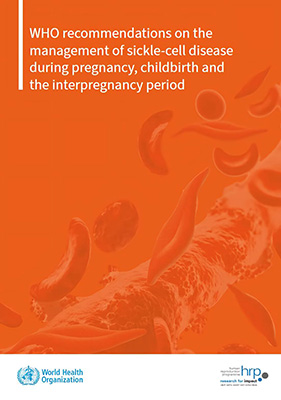
In 2025, The World Health Organization (WHO) released its first-ever global guideline on the management of sickle cell disease (SCD) during pregnancy, addressing a critical and growing health challenge that can have life-threatening consequences for both women and babies. WHO’s new guideline aims to provide evidence-based recommendations that are also relevant for low- and middle-income settings, where most cases and deaths from the disease occur.
“Living with a chronic disease such as SCD can take a significant emotional toll, and we want to make sure we're addressing every aspect of a patient's physical health while also ensuring their mental health is supported and that they are able to access care,” Greenberg said. “Many of our patients come from underserved communities and face challenges such as transportation barriers, childcare responsibilities and demanding work schedules. Our goal is to remove as many barriers as possible, so patients can receive the care they need.”
Onyenekwu added that SCD pregnancies require thoughtful, individualized care, as well as early communication between hematology, transfusion medicine and obstetric teams.
“The most important factor is communication. When maternal-fetal medicine, hematology, transfusion medicine, genetics, pediatrics and laboratory teams work together, they can develop care plans that address both the medical and logistical challenges these patients face,” Onyenekwu said. “Pregnancy in SCD is complex, but with careful planning, multidisciplinary collaboration and appropriate transfusion support, we can help improve outcomes for mothers and their babies.”
Greenberg wants patients to know they are not alone. In addition to multidisciplinary medical care, she emphasized the importance of emotional support and patient education. “Many people with SCD have had successful pregnancies, and it is important for patients to hear those stories and connect with others who understand what they are experiencing,” she said.
She also emphasized the importance of ongoing prenatal care to help patients understand potential complications and warning signs. Greenberg added that patients often find reassurance in knowing what to expect throughout pregnancy and delivery. For example, pregnancies in patients with SCD are typically less than 40 weeks.
“We usually plan delivery between 37 and 39 weeks. At that point, the baby is considered full term, but we are reducing the risks associated with continuing the pregnancy longer,” Greenberg said. “Many patients appreciate knowing there is a defined endpoint and that their care team is actively planning for a safe delivery.”
Rowell-Tetteh noted that her OB team, hematology team, blood medicine specialists and red cell exchange team all coordinated monthly to ensure she received appropriate care across all specialties, including monitoring her blood work and managing potential complications.
“The most reassuring thing was knowing that everyone was communicating with one another,” Rowell-Tetteh said. “They all understood where I was in my pregnancy, what challenges I was facing and what plans were in place if something unexpected happened. That level of coordination made a huge difference.”
Still, Rowell-Tetteh believes additional SCD education for obstetric providers could help improve care during pregnancy. At times, she felt providers were hesitant to begin treatment while waiting for input from the hematology team.
“I don't expect obstetricians to manage every aspect of SCD,” she said. “But there should be a baseline of knowledge that allows providers to care for patients safely and confidently. Better education throughout the medical field would help address many challenges patients with SCD face.”

As a proud mother of two young girls, Rowell-Tetteh encourages women with SCD not to give up on their dream of having children. She has navigated two high-risk pregnancies and wants women with SCD to know that a healthy pregnancy is possible.
“I would tell women not to assume their bodies aren't capable of carrying a child or making it through those nine months of pregnancy,” she said. “Pregnancy is difficult on its own, but pregnancy with SCD feels like carrying ten times the weight. But I did it, and now I have two beautiful girls.”
She advises women with SCD to prioritize their health before and during their pregnancy and build a medical team that understands the disease and respects their wishes.
“When you're pregnant, it's reassuring to know that the people caring for you already understand your history and consistently support you. You know they're committed to helping you have the healthiest pregnancy possible, and that foundation becomes incredibly important during pregnancy,” Rowell-Tetteh said. “But don't let anyone make you feel like having a baby with SCD is the equivalent of climbing Mount Everest. It's challenging, but it's not impossible.”
BACK TO ISSUE
June 2026NEXT STORY
Expanding Possibilities in Sickle Cell Care
Transfusion is AABB’s scholarly, peer-reviewed monthly journal, publishing the latest on technological advances, clinical research and controversial issues related to transfusion medicine, blood banking, biotherapies and tissue transplantation. Access of Transfusion is free to all AABB members.
Learn More About Transfusion Journal
Keep abreast of what's happening in the field of biotherapies with CellSource - AABB's monthly update on the latest biotherapies news.

To submit news about the blood and biotherapies field to AABB, please email news@aabb.org.


President
Jose Cancelas, MD, PhD, CABP
Chief Executive Officer
Debra Ben Avram, FASAE, CAE
Chief Communications and Engagement Officer
Julia Zimmerman
Director of Marketing and Communications
Jay Lewis, MPH
Managing Editor
Kendra Y. Mims, MFA
Senior Communications Manager
Drew Case
AABB News
(ISSN 1523939X) is published monthly, except for the combined November/December issue for the members of AABB; 4550 Montgomery Avenue; Suite 700 North Tower; Bethesda, MD 20814.
AABB is an international, not-for-profit association representing individuals and institutions involved in transfusion medicine, cellular therapies and patient blood management. The association is committed to improving health by developing and delivering standards, accreditation and educational programs that focus on optimizing patient and donor care and safety.
+1.301.907.6977
Email: news@aabb.org
Website: www.aabb.org
Copyright 2025 by AABB.
Views and opinions expressed in AABB News are not necessarily endorsed by AABB unless expressly stated.
Notice to Copiers: Reproduction in whole or part is strictly prohibited unless written permission has been granted by the publisher. AABB members need not obtain prior permission if proper credit is given.


4550 Montgomery Avenue
Suite 700, North Tower
Bethesda, MD 20814
301.907.6977