
Access to timely, reliable data is essential for understanding trends in the nation's blood supply and supporting informed decision-making by transfusion medicine professionals. With support from the AABB Foundation's Process Development Grant, Circulate, a nonprofit organization focused on national blood supply data, has expanded its ability to provide detailed insights into blood collection, donor activity and inventory trends.
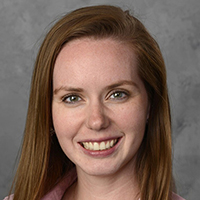
Katherine Risvold, executive director at Circulate, spoke to AABB News about the organization's work, the impact of the Foundation grant and how expanded data resources can support disaster preparedness and strengthen the resilience of the national blood supply.
Risvold: Circulate is the largest aggregator of data about the U.S. blood supply. It also has the only real-time dataset that encompasses not only donor activity and donations but also inventory. Our data is refreshed daily, reflecting the most current inventory, and is aggregated at a national scale.
Our highly granular dataset allows us to provide insight into not just red cells and platelets but also specific types of platelets, low-titer whole blood and cryoprecipitate. We can also share insights into emerging components as they emerge, rather than retrospectively.
That granularity allows us to understand trends at a much deeper level. Rather than looking at annual or quarterly data, we can examine seasonality and changes within a month. This provides a clearer picture of what is happening with the blood supply in real time.
Risvold: Circulate came about in response to an industry-wide and federal government call for more data and ongoing insight into the blood supply, rather than relying on a reactive approach.
When a major disruption occurs, the blood community is very good at coming together, sharing information and making inventory available. But there was an identified gap in understanding what was happening during normal times. With the technology and tools available today, we saw an opportunity to make that information available in a sustainable, ongoing manner.
We are a nonprofit organization, and our goal is to be a public resource. We want to get this data into as many hands as possible, doing as much good as possible. The AABB Foundation grant offered an opportunity to expand our work while also beginning to build a partnership with AABB.
Risvold: Through the grant, we were able to expand our dataset in several directions. One was donor behavior, particularly whether donors are giving at mobile or fixed collection sites. That provides insight into how donation patterns have shifted before, during and after the pandemic.
Because our data is so granular, we can also examine those distinctions by procedure type. For example, we can begin to understand whether there is a growing trend in apheresis red blood cell donations at mobile sites compared with fixed sites.
On the inventory side, the grant helped us make our component groupings much more robust. We can distinguish among different platelet groupings and between low-titer whole blood and other whole blood components. The grant enabled much of that additional detail to become accessible to end users.
That has helped us provide much more specific data insights, which has been invaluable for our membership and audience.
Risvold: We were thrilled to accomplish all our proposed objectives within the 12-month grant period. The grant was instrumental in making that possible.
One interesting area has been the differences we see between fixed and mobile collection sites. Understanding those differences can help us evaluate the capacity and resilience of the blood supply during a surge or other disruption.
For example, if fixed collection sites in a particular region are affected, what capacity exists to collect through mobile apheresis? Our expanded data allows us to begin exploring those questions.
We have also gained greater insight into the growth of low-titer whole blood and emerging blood components. Being able to observe those trends as they happen, rather than retrospectively, provides a valuable new resource for the industry.
We look forward to sharing more of our findings at the AABB Annual Meeting in Atlanta.
Risvold: Our mission is to get this data into as many hands as possible and make it available in a repeatable, sustainable way.
When there is a disruption to the blood supply, the numbers may change, but the data will be presented in the same format. That means people can access familiar, standardized information rather than having to create new processes for gathering it during a crisis.
We want to reduce the friction involved in information sharing and understanding the availability of blood components. Our data is standardized across time and across contributors, which allows everyone to work from the same information.
We also want to support the blood community's advocacy, research and efforts to enhance the safety and resilience of the blood supply. Ultimately, we want to help ensure that patients receive the blood components they need when they need them.
I love being part of the blood community, and I hope Circulate can continue to grow as a resource and a source of support for everyone.
 Learn More About National Blood Supply Data at the 2026 AABB Annual Meeting
Katherine Risvold will share insights from Circulate's work during two sessions at the 2026 AABB Annual Meeting in Atlanta on Saturday, Oct. 17.
How Quickly Can We Build Up the National Blood Supply? Measuring Shocks to the U.S. Blood Supply Through Real-Time Data and Case Studies on Disruption, Supply-Chain Stress, and System Recovery
10:45 a.m.–noon, Room B313B-B314
Data Innovations Transforming Blood Operations: Quantifiable Insights on Emerging Products, Shelf-Life, and Collection Site Types
1:30–2:30 p.m., Room B304-B305
About the AABB Foundation Process Development Grant
The AABB Foundation Process Development Grant provides up to $100,000 to support innovative processes, technologies, tools, and operational models that advance the safe, available and effective delivery of transfusion medicine and biotherapies. The grant is intended to help improve operational performance, efficiency, quality, safety, accessibility or decision support.
Applications for the 2027 AABB Foundation Process Development Grants are being accepted through Dec. 1.
PREVIOUS STORY
Who Is Given a Say in Standards? The Ethical Aspects of Making Public Comments and Professionals' DutiesBACK TO ISSUE
October 2026NEXT STORY
Setting the Standard
Transfusion is AABB’s scholarly, peer-reviewed monthly journal, publishing the latest on technological advances, clinical research and controversial issues related to transfusion medicine, blood banking, biotherapies and tissue transplantation. Access of Transfusion is free to all AABB members.
Learn More About Transfusion Journal
Keep abreast of what's happening in the field of biotherapies with CellSource - AABB's monthly update on the latest biotherapies news.

To submit news about the blood and biotherapies field to AABB, please email news@aabb.org.


President
Jose Cancelas, MD, PhD, CABP
Chief Executive Officer
Debra Ben Avram, FASAE, CAE
Chief Communications and Engagement Officer
Julia Zimmerman
Director of Marketing and Communications
Jay Lewis, MPH
Managing Editor
Kendra Y. Mims, MFA
Senior Communications Manager
Drew Case
AABB News
(ISSN 1523939X) is published monthly, except for the combined November/December issue for the members of AABB; 4550 Montgomery Avenue; Suite 700 North Tower; Bethesda, MD 20814.
AABB is an international, not-for-profit association representing individuals and institutions involved in transfusion medicine, cellular therapies and patient blood management. The association is committed to improving health by developing and delivering standards, accreditation and educational programs that focus on optimizing patient and donor care and safety.
+1.301.907.6977
Email: news@aabb.org
Website: www.aabb.org
Copyright 2025 by AABB.
Views and opinions expressed in AABB News are not necessarily endorsed by AABB unless expressly stated.
Notice to Copiers: Reproduction in whole or part is strictly prohibited unless written permission has been granted by the publisher. AABB members need not obtain prior permission if proper credit is given.

4550 Montgomery Avenue
Suite 700, North Tower
Bethesda, MD 20814
301.907.6977