
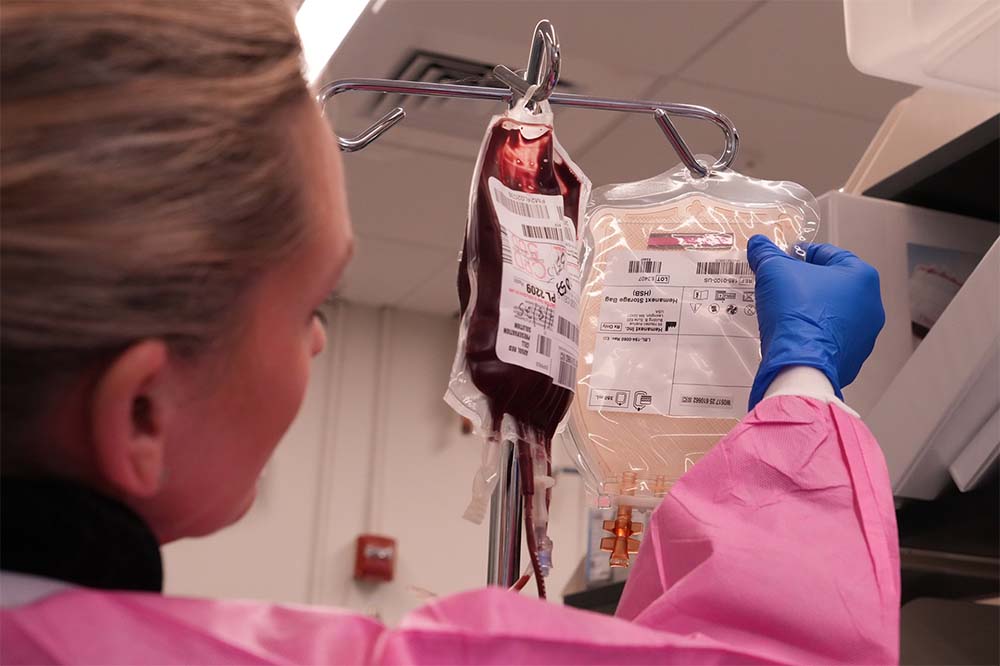
 For decades, the transfusion medicine field has treated "freshness" as a proxy for quality. The instinct is understandable — red cells change biochemically and structurally the longer they sit in a bag, and it is understandable that doctors would expect that a more recently donated unit should perform better than an older one. But the freshness debate runs into a hard logistical wall: blood banks do not manage unlimited inventories. Every unit reserved for a "fresher blood" policy is a unit pulled from somewhere else. In a system built on voluntary donation and unpredictable demand, insisting on the freshest available unit is often simply not achievable at scale, and prioritizing one patient population inevitably means deprioritizing another, leading to the potential for outdating and wastage.
This tension points to a deeper issue worth naming directly: storage age was never a measure of our difficult-to-achieve aim. Red blood cells exist to deliver oxygen. That is their entire clinical job. Hemolysis rates and 24-hour post-transfusion recovery — the two pillars on which our current storage standards rest — tell us whether a cell survives and whether it stays intact.1,2 Neither directly tells us whether the surviving cells are doing their job: picking up oxygen in the lungs and releasing it in the tissues that need it. A unit can pass every recovery and hemolysis benchmark and still represent a population of cells whose oxygen-carrying performance has quietly degraded along the way.1,2
This conundrum is where the field can borrow a lesson from how complex biologics are regulated more broadly. For most modern biologic products, quality is not established after the fact by testing whether the finished product merely survives — quality is built in through tightly controlled manufacturing.3 The process itself is engineered to produce a consistent, characterized product, and manufacturing controls become the quality assurance mechanism. Transfusion medicine has progressively implemented manufacturing controls for red blood cell manufacturing, including screening donors, maintaining sterile techniques, choosing an additive solution and processing method, and controlling processing time and temperature. Storage age became the default quality marker almost by necessity, because there was no manufacturing control based on the underlying biology during storage.
That is beginning to change. Oxygen-controlled processing and storage technology, such as the Hemanext ONE system, represents exactly the kind of manufacturing control that is based on the relationship between oxygen delivery function and physiological changes of stored red cell products.4 The system removes oxygen and carbon dioxide from a leukoreduced red cell unit shortly after collection and maintains that low-oxygen environment throughout refrigerated storage, for up to 42 days.4,5 Because oxidative injury from ambient oxygen exposure is the central driver of the storage lesion — depletion of ATP and 2,3-DPG, membrane damage, reduced deformability and progressive hemolysis1 — removing oxygen from the storage environment directly targets the mechanism of degradation rather than merely tracking its downstream effects. Published data on oxygen-controlled units show better preservation of metabolic and membrane parameters across the storage period,4,6-8 and preclinical hemorrhagic shock models have shown improved oxygen delivery using meaningfully less transfused volume compared with conventionally stored units.9 The improvement in oxygen delivery has been consistently observed in both in vitro evaluations and ex vivo studies of oxygen delivery in human kidneys.10
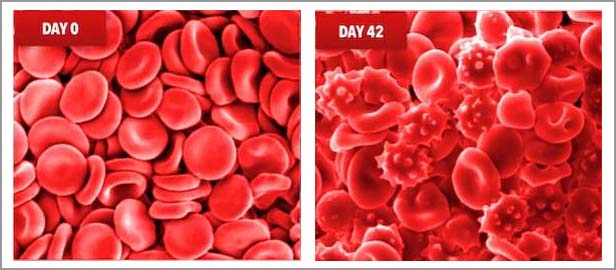
This matters most for exactly the populations at the center of the freshness debate. Chronically transfused patients with sickle cell disease, thalassemia or myelodysplastic syndromes are exposed, unit after unit, year after year, to the limited quality standard we choose to apply; a manufacturing control that limits oxidative injury throughout the full storage period offers a more consistent product regardless of when it happens to be collected or transfused. Acutely bleeding and trauma patients present the opposite but equally important case; they need a unit's full oxygen-delivery capacity available immediately, with no time to select for an ideal storage age and no ability to wait for a fresher unit to become available.
None of this eliminates the value of thinking carefully about storage duration. But it does suggest the field has been asking a slightly imprecise question. Rather than continuing to debate how many days may be too many, transfusion medicine may be better served by asking how we manufacture red cell products so that oxygen-delivery capacity is preserved and verified throughout the full storage period — for every patient, not only the ones who receive the freshest unit in inventory. Manufacturing controls that act on the biology itself, rather than storage-day cutoffs applied after the fact, offer a path toward resolving the freshness debate rather than merely reallocating it. Addressing red cell quality to maximize oxygen delivery will provide optimal benefit to patients receiving red cell transfusions.
www.hemanext.com
BACK TO ISSUE
September 2026
Transfusion is AABB’s scholarly, peer-reviewed monthly journal, publishing the latest on technological advances, clinical research and controversial issues related to transfusion medicine, blood banking, biotherapies and tissue transplantation. Access of Transfusion is free to all AABB members.
Learn More About Transfusion Journal
Keep abreast of what's happening in the field of biotherapies with CellSource - AABB's monthly update on the latest biotherapies news.

To submit news about the blood and biotherapies field to AABB, please email news@aabb.org.


President
Jose Cancelas, MD, PhD, CABP
Chief Executive Officer
Debra Ben Avram, FASAE, CAE
Chief Communications and Engagement Officer
Julia Zimmerman
Director of Marketing and Communications
Jay Lewis, MPH
Managing Editor
Kendra Y. Mims, MFA
Senior Communications Manager
Drew Case
AABB News
(ISSN 1523939X) is published monthly, except for the combined November/December issue for the members of AABB; 4550 Montgomery Avenue; Suite 700 North Tower; Bethesda, MD 20814.
AABB is an international, not-for-profit association representing individuals and institutions involved in transfusion medicine, cellular therapies and patient blood management. The association is committed to improving health by developing and delivering standards, accreditation and educational programs that focus on optimizing patient and donor care and safety.
+1.301.907.6977
Email: news@aabb.org
Website: www.aabb.org
Copyright 2025 by AABB.
Views and opinions expressed in AABB News are not necessarily endorsed by AABB unless expressly stated.
Notice to Copiers: Reproduction in whole or part is strictly prohibited unless written permission has been granted by the publisher. AABB members need not obtain prior permission if proper credit is given.


4550 Montgomery Avenue
Suite 700, North Tower
Bethesda, MD 20814
301.907.6977