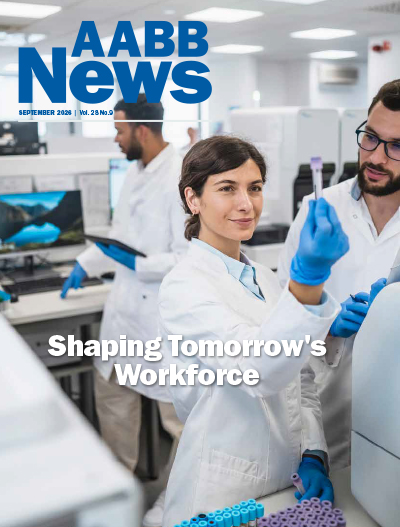

Blood centers and transfusion service departments are bracing for a change in the field’s workforce as experienced professionals prepare to retire. According to the American Society for Clinical Pathology’s 2022 Vacancy Survey, blood bank supervisors had the highest anticipated retirement rate of any laboratory department, with 25.8% expected to retire within five years. Additionally, the overall anticipated retirement rate for blood bank employees was 18.1%, the highest among all departments surveyed.¹
Jean Stanley, MBA, MLS(ASCP)SBB, CMQ/OE(ASQ)CQA, a health care professional in Global Medical Affairs, Donor Screening at Roche Diagnostics, noted that concerns about the laboratory workforce are longstanding. “Since the early ‘90s, there have been discussions regarding shortages of laboratory professionals,” Stanley said. “This trend has been exacerbated by a decline in certified training programs, impacting not only medical laboratory scientists, but also Specialist in Blood Bank programs.”
Stanley highlighted other contributing factors, including a wave of retirements among baby boomers or tenured employees, some of whom hold key leadership positions, and widespread burnout resulting from the pandemic, budget constraints and the pressure to “do more with less.” Additionally, rapid technological advancements, such as molecular techniques and cellular therapies, along with increasingly stringent regulatory requirements, now demand a significantly different and more specialized skill set.
“The departure of tenured employees who hold deep institutional and technical knowledge and expertise can severely impact an organization,” Stanley said. “Therefore, prioritizing succession planning is essential. The stakes are exceptionally high in blood centers and transfusion services, where this specialized knowledge directly influences patient safety, life-critical testing accuracy and the overall continuity of the blood supply.”
We need programs designed to show young professionals the value of being part of transfusion medicine — to show that we do make a difference.” – Eva Quinley, MS, MT(ASCP)SBB, CQA(ASQ)
With 50 years of experience in transfusion medicine, Eva Quinley, MS, MT(ASCP)SBB, CQA(ASQ), an independent consultant in the transfusion medicine and plasma space, emphasized the urgency of intentional succession planning due to the aging workforce.
“If you look at the tenure of people currently in transfusion medicine, they’ve been there 40, 50 years,” she said. “There aren’t as many young people choosing to go into this particular area of health care, so we have fewer people to fill the voids when people begin to retire. We need programs designed to show young professionals the value of being part of transfusion medicine — to show that we do make a difference. We may not always be in the limelight, but what we do is important. As people prepare the next generation, they can help them understand that self-satisfaction that comes from doing a good job — we save lives every day.”
Blood centers and transfusion services without effective succession plans face significant risks when leaders retire or leave unexpectedly. To that end, organizations should start preparing early to fill anticipated – or even unanticipated – vacancies.
“Anytime you’re not prepared — whether it's retirement, illness or something else — and you have a void, it can be very problematic,” Quinley said. “We're not seeing people as prepared as they claim. They don't exercise what needs to be done to prepare an individual for those roles.”
With a background in quality management, Stanley recommended that organizations conduct a comprehensive risk assessment to proactively identify existing gaps and vulnerabilities. This includes establishing a timeline for anticipated vacancies at both staff and supervisory levels across various departments and evaluating the severity of vacancies and their potential impact on operations. Some technical departments may require specialized expertise, whereas senior leadership positions require a more holistic set of leadership skills, she explained.
“Effective succession planning extends far beyond merely filling a vacancy,” Stanley said. “The organization will need to assess and identify high-potential employees who are ready or willing to assume new responsibilities. These individuals should be further assessed to design tailored training and mentorship programs, ensuring they have the necessary support and time to succeed in their future roles.”
Effective succession planning extends far beyond merely filling a vacancy.” – Jean Stanley, MBA, MLS(ASCP)SBB, CMQ/OE(ASQ)CQA
Quinley noted that many organizations have succession plans on paper but fall short on preparing staff to ascend to leadership positions. She recommended that employees interested in career advancement should develop plans early in their first year, with annual reviews to make relevant adjustments as responsibilities and career goals evolve.
“There's a learning curve you have to go through to become a leader in transfusion medicine,” Quinley said. “The sooner you can get someone on a plan and headed toward a leadership role, the better. And it's not just learning the business of transfusion medicine; it's learning the business of operating a business: making a schedule, dealing with workforce problems and so on. There is indeed a lot to learn to be able to manage and lead, and some of what you learn requires real life experience to know how to react in a given situation.”
An effective succession planning process requires a deliberate and systematic plan to transfer knowledge from tenured employees to the next generation, Stanley explained. For example, individual leadership plans should include realistic growth targets; practical learning experiences such as mentorship, shadowing and cross-training; clearly defined leadership competencies; and measurable goals supported by regular check-ins.
“Another is making sure that standard operating procedures are readily available for effective knowledge transfer,” Stanley said. “This documentation is especially important for how to handle unexpected events such as a crisis like a recall or a disaster, where established protocols safeguard continuity.”
Both Stanley and Quinley agreed that succession planning is not a one-and-done task. It requires constant review and attention. “A written plan helps, but you have to revisit it; you can't just put it on the shelf,” Quinley said. “You have to make sure you're doing what’s needed to accomplish those goals, so the people moving into those roles will be ready. And if you've done good succession planning, you'll see the gaps that need to be closed before that person can become the kind of leader they need to be in that role.”
Stanley added that an overall continuous improvement framework such as the Plan-Do-Check-Act (PDCA) cycle can be used to track an employee’s progress against their individualized leadership plan and periodically evaluate the effectiveness of the organization’s broader succession strategy.
Sheri Goertzen, MLS(ASCP), CLS(CA), BB(ASCP), ASQ(CQA), the transfusion service supervisor at Valley Children’s Hospital in Madera, Calif., addressed the challenge of replacing decades of specialized transfusion knowledge, technical expertise, critical thinking and institutional experience.
“Without intentional succession planning, organizations risk losing both technical capability and leadership capacity at the same time,” she said. “We need to identify, develop and empower the next generation of transfusion professionals before that expertise walks out the door.”
As experienced laboratory professionals retire, mentorship can provide a structured way to transfer documented knowledge, such as SOPs and policies and institutional knowledge to newer staff. Goertzen explained that institutional wisdom is much more difficult to transfer, as it is developed through years of experience, problem-solving and exposure to situations that may only happen once or twice in a career.

“Much of that knowledge isn’t written into a procedure manual,” Goertzen said. “It’s the context, judgment and experience that allows someone to recognize that a situation may not be as straightforward as it appears. That is why succession planning has to include intentional opportunities for experienced professionals to mentor and transfer that wisdom before they leave.”
Stanley recommended pairing a tenured employee with the next generation of professionals in a psychologically safe environment that fosters learning, growth and career development. Tenured employees who are not yet planning to retire may find significant value and recognition in being designated as mentors, she pointed out.
“Sharing their institutional and technical knowledge and expertise goes beyond textbook learning and can contribute to a successful transfer of knowledge to the next generation,” Stanley said. “For mentees, these programs facilitate the acquisition of critical competencies necessary for career advancement. Together, the mentor-mentee program builds confidence and enhances employee retention by providing clear pathways for growth.”
Quinley warned that simply assigning mentors and mentees does not guarantee meaningful development will occur. She advised mentors and mentees to establish goals together and regularly revisit their plans to ensure they remain on track.
“A lot of people have what I'd call “mentorship in name only” — they say they have mentors, but there's no real plan,” Quinley said. “If you're going to have mentorship, you should have a plan: What do you want to accomplish with the person you're mentoring, and what do they want?”
Successful mentorship programs also require identifying individuals with strong people skills and a willingness to share knowledge rather than just technical expertise.
“Not just anybody can be a mentor — it takes someone who wants to teach,” Quinley said. “That’s one of the hardest parts: identifying leaders who are willing to share and grow the next group of leaders for the organization.”
Goertzen added that an effective mentorship program doesn’t live on paper. It has to be a relationship. For Goertzen, that relationship is built on four components: relationship, trust, time and intentionality. Mentors should create an environment where employees can safely ask questions, acknowledge what they don't know and make mistakes while learning. Organizations must also provide dedicated time for teaching and learning rather than expecting knowledge transfer to occur between routine responsibilities.
“I also believe knowledge becomes succession when we complete the full learning cycle: I do. We do. You do. Now you teach,” Goertzen said. “The final step is critical. When the learner can successfully teach someone else, we know the knowledge has moved beyond one individual.”
A successful mentorship culture, she added, is also rooted in trust. “Mentors do not feel threatened by developing someone else’s capabilities or worry about losing their value within the department,” Goertzen said. “Instead, everyone benefits. They can take pride in knowing they are helping ensure the department’s future is in capable hands and that its knowledge, values and traditions will continue for years to come.”
Quinley, Stanley and Goertzen will present a session on practical strategies for succession planning in blood centers and transfusion services on Oct. 17 at the 2026 AABB Annual Meeting. The session will assess workforce demographics and provide attendees with practical tools to develop succession plans that strengthen workforce sustainability, support quality programs and ensure the effective transition of expertise to future transfusion service and blood center professionals.
“It’s important for people to know they need to be prepared,” Quinley said. “Succession planning is something we've traditionally underinvested in. Not ignored, exactly — we've done the paperwork, but I don't think we've done the work.”
Quinley emphasized that following through on those plans is equally important. “That's what makes you as prepared as possible for when a person retires, or, hopefully not, becomes ill and has to leave, and someone else has to step in,” she said. “It's a constant process. I don't think we're very good yet at intentional succession planning, and that’s what we really need to work on.”
Goertzen said effective succession planning is not solely about preparing for someone to leave but preparing someone to be ready.
“Our job isn’t simply to replace the people who are leaving,” Goertzen said. “Our job is to make sure the people who follow them are ready to carry the “family business” forward—with the knowledge, confidence, leadership skills and commitment to quality that our patients and providers deserve.”
BACK TO ISSUE
September 2026NEXT STORY
Strengthening Our Workforce
Transfusion is AABB’s scholarly, peer-reviewed monthly journal, publishing the latest on technological advances, clinical research and controversial issues related to transfusion medicine, blood banking, biotherapies and tissue transplantation. Access of Transfusion is free to all AABB members.
Learn More About Transfusion Journal
Keep abreast of what's happening in the field of biotherapies with CellSource - AABB's monthly update on the latest biotherapies news.

To submit news about the blood and biotherapies field to AABB, please email news@aabb.org.


President
Jose Cancelas, MD, PhD, CABP
Chief Executive Officer
Debra Ben Avram, FASAE, CAE
Chief Communications and Engagement Officer
Julia Zimmerman
Director of Marketing and Communications
Jay Lewis, MPH
Managing Editor
Kendra Y. Mims, MFA
Senior Communications Manager
Drew Case
AABB News
(ISSN 1523939X) is published monthly, except for the combined November/December issue for the members of AABB; 4550 Montgomery Avenue; Suite 700 North Tower; Bethesda, MD 20814.
AABB is an international, not-for-profit association representing individuals and institutions involved in transfusion medicine, cellular therapies and patient blood management. The association is committed to improving health by developing and delivering standards, accreditation and educational programs that focus on optimizing patient and donor care and safety.
+1.301.907.6977
Email: news@aabb.org
Website: www.aabb.org
Copyright 2025 by AABB.
Views and opinions expressed in AABB News are not necessarily endorsed by AABB unless expressly stated.
Notice to Copiers: Reproduction in whole or part is strictly prohibited unless written permission has been granted by the publisher. AABB members need not obtain prior permission if proper credit is given.


4550 Montgomery Avenue
Suite 700, North Tower
Bethesda, MD 20814
301.907.6977