For patients experiencing severe trauma and hemorrhagic bleeding, every second that passes can be life-threatening. Prehospital transfusion programs are designed to address this need by bringing blood directly to patients at the point of injury—thus saving critical time by eliminating the need to transport patients to a hospital before a blood transfusion can be performed.
Prehospital transfusion programs are a growing trend throughout the world. Already, data are showing that such programs can improve survival rates by reducing patients’ blood loss and preventing the rapid progression of shock.
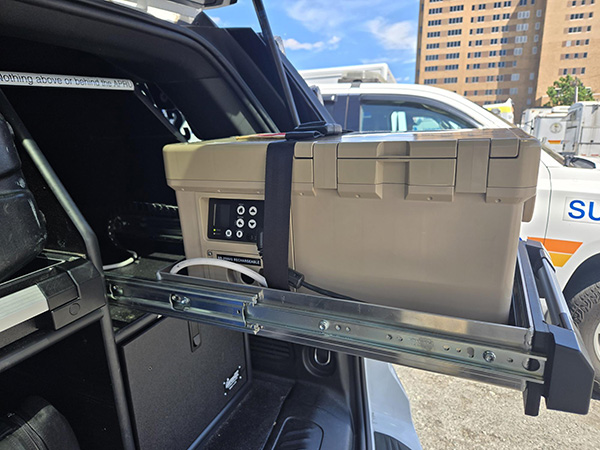
To help ensure that patients who undergo blood transfusions outside of hospitals receive the same high-quality level of care that they would receive at a hospital, AABB launched its Emergency Prehospital and Scheduled Out-of-Hospital Transfusions Standards and Accreditation Program last year. The Standards, developed by experts, establish requirements for blood storage, transport and administration in out-of-hospital settings, as well as documentation, traceability, personnel qualifications and quality system oversight. Earlier this year, University Hospital in Newark, N.J. became the first organization to achieve AABB with this accreditation.
“Congratulations to University Hospital in Newark, N.J., for becoming the first organization to achieve AABB accreditation for Emergency Prehospital and Scheduled Out-of-Hospital Transfusions,” Debra BenAvram, chief executive officer of AABB, said when University Hospital finalized its AABB accreditation. “AABB applauds the staff at University Hospital for their commitment to providing safe blood transfusions for trauma patients as soon as possible. AABB also appreciates University Hospital’s leadership in prehospital transfusion, an advancing area of health care that is saving lives by providing blood to patients in need at the point of injury.”
The staff at University Hospital knew that their prehospital transfusion program would help save lives. But they did not anticipate how quickly that would become clear. In May 2025, on the very day the hospital’s prehospital transfusion program was launched, a life-threatening emergency situation proved its value. Hospital staff got word that there had been a serious motorcycle collision nearby. One of the victims was experiencing severe trauma, had a shock index greater than one, had sustained significant injuries, and was losing blood rapidly.
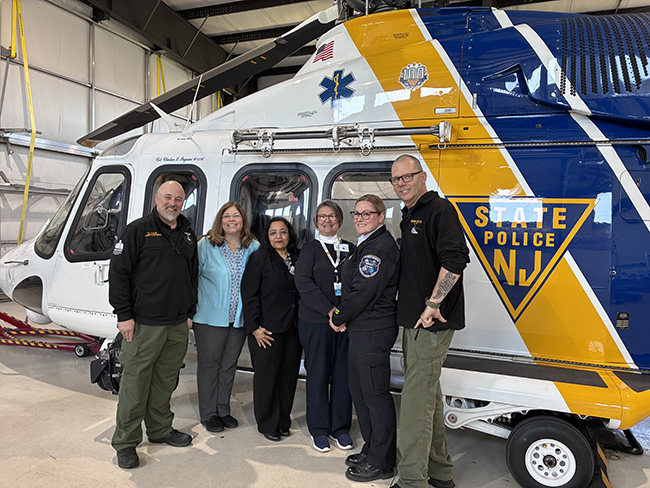
A University Hospital helicopter – now carrying a supply of blood, per the protocols of the new prehospital transfusion program – was dispatched to the scene and health care providers administered a life-saving blood transfusion to the victim within nine minutes of the collision. The patient was then transported to the hospital, where he received additional blood transfusions and underwent several operations. The rapid response – including the reduction in time between the collision and the blood transfusion – is credited with saving his life.
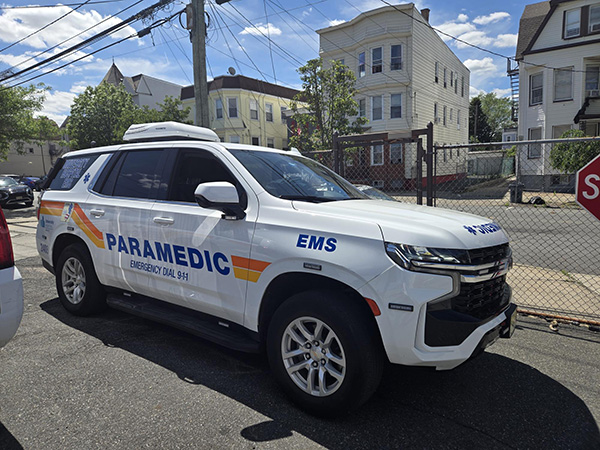
Since then, more than 60 patients experiencing trauma have received life-saving blood transfusions from University Hospital staff – delivered via either helicopter or ambulance – at the point of injury, significantly improving survival rates.
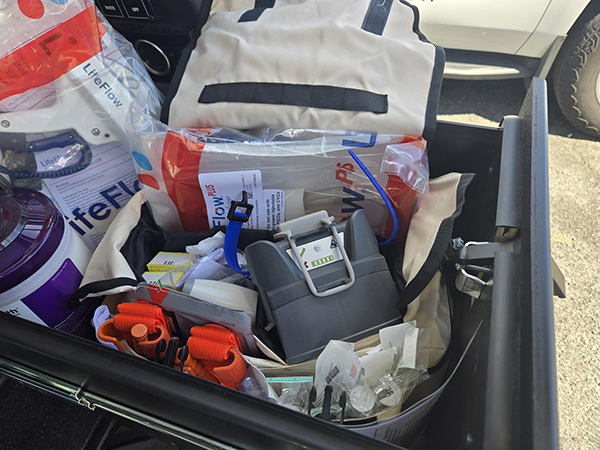
AABB News caught up with several members of University Hospital’s staff to get their insight on the importance of accreditation and the experience of becoming AABB-accredited.
“For University Hospital, pursuing AABB accreditation was about much more than achieving a designation; it was about validating that our prehospital blood program met the highest internationally recognized standards for patient safety, quality and clinical governance,” said Jason Brady, DBA, MICP, CEMSO, executive director of emergency medical services at University Hospital. “As New Jersey's first designated level I trauma center and one of the busiest emergency medical service systems in the region, we recognized that early blood product administration has the potential to significantly improve outcomes for patients experiencing life-threatening hemorrhage. Establishing an accredited program ensures that every aspect of the process – from donor product handling and storage to field administration, documentation, quality assurance and interdisciplinary oversight – is standardized and evidence-based. We wanted to demonstrate that prehospital transfusion can be delivered with the same rigor and accountability expected within the walls of the hospital.”
Brady added that he and his colleagues found the AABB accreditation process both “challenging and extremely rewarding” and, ultimately, valuable for staff as well as patients. “The process of becoming AABB-accredited required collaboration across multiple disciplines that do not traditionally work together on a daily basis, including emergency medical services, the blood bank, trauma surgery, emergency medicine, nursing, laboratory services, quality and hospital administration,” Brady said. “The process encouraged us to critically evaluate every component of our program, refine policies and procedures, strengthen our quality improvement processes and ensure that our operational practices aligned with national standards. Rather than simply preparing for an inspection, the experience helped us build an even stronger and more sustainable program centered on continuous improvement.”
Bhishma Patel, MLS(ASCP), SBB, CQA(ASQ), chief technologist in the department of transfusion medicine services at University Hospital and an AABB assessor for more than 20 years, echoed Brady’s sentiments about ensuring optimal safety and quality for patients.
For University Hospital, pursuing AABB accreditation was about much more than achieving a designation; it was about validating that our prehospital blood program met the highest internationally recognized standards for patient safety, quality and clinical governance.” – Jason Brady, DBA, MICP, CEMSO
“As a level I trauma center with a growing prehospital blood program, it was important for University Hospital to pursue AABB accreditation to ensure that every aspect of our process – including the storage, transportation, administration and monitoring of blood products – met the same rigorous standards upheld within the hospital setting,” she said. “Pursuing AABB accreditation demonstrated our commitment to patient safety, quality and continuous improvement while providing independent validation that our program operates according to nationally recognized standards. We also viewed this achievement as an opportunity to help advance the field of prehospital transfusion medicine and establish a framework for other organizations developing similar programs.”
Timothy Satty, MD, vice-chair for clinical and prehospital operations at University Hospital, said pursuing AABB accreditation helped to validate University Hospital’s operations and procedures, while bolstering collaboration between departments.
“AABB accreditation helps confirm to us, our external partners and the community that University Hospital’s prehospital transfusion program meets rigorous standards for safety and quality. It was also an opportunity to review and strengthen our program and process,” he said. “Achieving AABB accreditation reinforced confidence in our program by ensuring that an expert third party reviewed our process. Patients expect and deserve a safe and effective transfusion program and, given that EMS-based transfusions are new, it is helpful to show that we have taken the time and deployed the resources to ensure that the program meets optimal standards.”
University Hospital staff agreed that AABB accreditation was beneficial to both organizations and the patients they serve. They said they recommend AABB accreditation to other organizations and believe that as more prehospital programs become AABB-accredited, the field will continue to advance and more lives will be saved.
“I encourage other organizations to pursue AABB accreditation,” Satty said. “I also encourage them to start early and engage all stakeholders to ensure a successful process. Prehospital transfusion programs require a strong partnership between hospitals, blood banks and the EMS program. AABB accreditation and following expert-developed standards can help organizations build and maintain a high-quality program.”
“The AABB accreditation process requires thoughtful preparation, collaboration and a strong commitment to meeting the highest standards of care, but the impact is well worth the effort,” Patel said. “Organizations should take the time to understand the standards, develop comprehensive processes and create a strong foundation for long-term success. Ultimately, AABB accreditation is about more than meeting requirements, it is about strengthening your program and ensuring that patients receive safe, timely and effective care when they need it most.”
Brady stressed that AABB accreditation is not merely a mark of achievement; it helps to advance the practice.
“I would encourage organizations to view accreditation not as the finish line, but as part of the journey toward building a high-reliability program,” he said. “The process requires commitment, collaboration and attention to detail, but the benefits extend far beyond earning the accreditation itself. It strengthens partnerships across departments, improves operational consistency and, ultimately, enhances patient care. Most importantly, it creates a culture where quality, accountability and continuous improvement become embedded in everyday practice. For organizations committed to delivering the highest level of prehospital care, pursuing AABB accreditation is well worth the investment.”
PREVIOUS STORY
Advancing the Future of BiotherapiesBACK TO ISSUE
August 2026
Transfusion is AABB’s scholarly, peer-reviewed monthly journal, publishing the latest on technological advances, clinical research and controversial issues related to transfusion medicine, blood banking, biotherapies and tissue transplantation. Access of Transfusion is free to all AABB members.
Learn More About Transfusion Journal
Keep abreast of what's happening in the field of biotherapies with CellSource - AABB's monthly update on the latest biotherapies news.

To submit news about the blood and biotherapies field to AABB, please email news@aabb.org.


President
Jose Cancelas, MD, PhD, CABP
Chief Executive Officer
Debra Ben Avram, FASAE, CAE
Chief Communications and Engagement Officer
Julia Zimmerman
Director of Marketing and Communications
Jay Lewis, MPH
Managing Editor
Kendra Y. Mims, MFA
Senior Communications Manager
Drew Case
AABB News
(ISSN 1523939X) is published monthly, except for the combined November/December issue for the members of AABB; 4550 Montgomery Avenue; Suite 700 North Tower; Bethesda, MD 20814.
AABB is an international, not-for-profit association representing individuals and institutions involved in transfusion medicine, cellular therapies and patient blood management. The association is committed to improving health by developing and delivering standards, accreditation and educational programs that focus on optimizing patient and donor care and safety.
+1.301.907.6977
Email: news@aabb.org
Website: www.aabb.org
Copyright 2025 by AABB.
Views and opinions expressed in AABB News are not necessarily endorsed by AABB unless expressly stated.
Notice to Copiers: Reproduction in whole or part is strictly prohibited unless written permission has been granted by the publisher. AABB members need not obtain prior permission if proper credit is given.


4550 Montgomery Avenue
Suite 700, North Tower
Bethesda, MD 20814
301.907.6977