
In recent years, the United States has dealt with periodic blood supply shortages, with critically low inventories being reported not just in certain regions, but sometimes on a nationwide scale.1 In addition, there are also increasing donor recruitment challenges, leaving blood collection facilities looking for new strategies to encourage donations.
“Sixty-two percent of the U.S. population—about three-fifths —is eligible to donate, but only 3% actually do,” said Ruchika Goel, MD, MPH, CABP, professor of internal medicine and pediatrics at Simmons Cancer Institute at Southern Illinois University School of Medicine, Springfield, Ill.; and adjunct faculty in the division of transfusion medicine at Johns Hopkins University, Baltimore, MD. “This stark disparity highlights the need that the blood community must adopt proactive, evidence-based strategies to actively engage and mobilize eligible donors.”
At the 2025 AABB Annual Meeting, AABB’s Respect, Inclusion, Support and Engagement (RISE) Committee helped organize a session aimed at exploring potential strategies for building and diversifying the donor pool, “Donating for the Future: Bridging Generations and Communities for a Stronger Blood Supply.”
This session discussed building the donor base using two important strategies: increasing the diversity of racial and ethnic groups and diversity of generational groups, Phil Accooe, CABP, CLS, MBA, supervisor of the transfusion service laboratory at the U.S. Department of Veterans Affairs, Long Beach, Calif., and co-chair of the RISE Committee, told AABB News.
“This session was selected by the committee because there were data not only looking at identifying the problem and determining why there might not be a more robust donation supply, but also what interventions are being taken,” Accooe said. “We thought it was timely and insightful.”
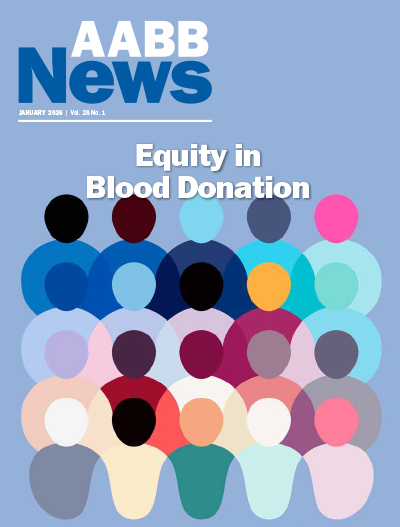
Diversifying the donor pool can refer to multiple parameters including diversity in age, racial and ethnic groups, gender and sexual orientation and geographic location.
“One of the struggles the blood collection community has had in recent years has been matching the donors we recruit to the needs of the diverse patients we serve,” said Mindy Goldman, MD, medical director, donation policy and studies, at Canadian Blood Services, Ottawa, Ontario.
For example, having a racially and ethnically diverse donor base is important because the frequency of both phenotype combinations and rare blood group antigens varies by ethnic and racial groups. Recruiting and retaining a diverse mix of donors is essential.

One of the most challenging situations for matching donors and patients is meeting the needs of patients with sickle cell disease (SCD).
“This population has grown a lot in recent years [in Canada],” Goldman said. “Treatment options have also changed for these patients, with some treatment options involving a lot more blood products than they used to.”
SCD is more prevalent in people of African, and sometimes Asian, descent. Only 0.74% of all donors in Canada self-identify as Black; whereas, about one-third of rare donors self-identify as Black, Goldman pointed out.
“We have a diverse general population in Canada, and it is getting more diverse all the time, but we have to work to make sure we recruit these diverse groups as donors,” Goldman said. “We have some barriers to recruitment of these donors that are particularly important to overcome.”
One such barrier is related to the malaria deferral. Much of the Black population in Canada was not born in Canada but emigrated there over the last decade from countries in Africa, where malaria is endemic. In Canada, for whole blood and platelet donors, having lived in the last three years for six months or more continuously in an area where malaria is endemic (considered residency in a malaria endemic area) triggers a three-year donor deferral, while a history of malaria results in a permanent deferral.2
“Three years is a pretty long deferral, especially for a first-time donor,” Goldman said. “Recruiting donors depends on gaining trust in the community, and if a friend or community member hears someone was deferred for three years, or permanently deferred that discourages others from ever coming in.”
In addition to diversity in racial and ethnic background, the donor base needs diversity of age. The core group of lifelong donors is aging, which leads to a natural decline in eligibility due to comorbidities and a decrease in donation frequency.
“People tend to think that age is the only paradigm, but there is a generational impact too,” Goel said. “Whether you are from the veteran generation, the baby boomers, Gen X, millennials or Gen Z, individuals across generational cohorts differ in the values, motivators, and decision-making factors that shape their willingness to donate blood.”
Goel and colleagues from Vitalant recently studied donation trends looking at generations in addition to age. They found that the overall volume of successful cumulative donations over the last decade was highest in baby boomers, followed by Gen X and millennials, and was least from veterans. However, when they annualized donations per year, the rate was highest among veterans.
Whether you are from the veteran generation, the baby boomers, Gen X, millennials or Gen Z, individuals across generational cohorts differ in the values, motivators and decision-making factors that shape their willingness to donate blood.”
“Veterans are still donating more frequently than other generations; even though the overall volume of their total contribution is less, their annualized donations per year are the highest,” Goel said.
The research also looked at how the COVID-19 pandemic, the full impact of which is still not fully understood, affected donors of different generations. According to Goel, cumulative blood donations were decreasing even prior to the pandemic but took an additional “big hit” during the pandemic.
“Veterans have been consistently donating at steady rates pre- and post-COVID, and for Gen X’s and the baby boomers, the donations have picked up post-COVID,” Goel said. “Unfortunately, for our youngest generations, the millennials and Gen Z, donation numbers never recovered to the pre-COVID levels.”
There are a variety of factors that could be affecting these trends, according to Ralph R. Vassallo, MD, FACP, the chief medical & scientific officer of Vitalant, Scottsdale, Ariz.
“In high school, students are motivated [to donate] by time out of class and we see a large demographic of donors aged 16 to 19 years, but as they get out of high school and into college and beyond—from age 20-50—it is a period of time that people are building careers and families," Vassallo said. “It becomes difficult to take time away, particularly for automated collection of platelets at a fixed site, which can be a 2.5-hour dedicated time period.”
As people age more and become retirees or empty-nesters though, they once again have more time available to donate.
Work is being done to build better relationships and recruitment methods to diversify both the racial/ethnic groups and age of donors.
“From the operational side we are changing marketing and doing social science research with community members to explore barriers and better enable donations among diverse groups,” Goldman said.
Recently, Health Canada approved the first molecular test (NAT test) to screen blood donations for malaria. This is hopefully the first step in introducing selective testing for malaria as part of donor screening. Goldman said they hope to roll out this testing in selected donors in 2026.
“If our proposed changes are approved by our regulator, Health Canada, we would have a three-month deferral after residency, like we do for short-term travelers, and a six-month deferral for a history of malaria” she said. “After these deferral periods, these donors would be eligible but have a NAT test done.”
Research is also being done to better understand the generational component of what motivates people to donate, Vassallo added.
“Boomers, like the veteran generation before them, respond to the idea of duty-driven donation and Gen X, many of whom were latch-key kids, are focused on family and what is good for the family as part of the greater community,” Vassallo said. “Millennials are very motivated by social causes and being recognized for doing something good for society.”
The generational gap needs to be bridged by developing recruitment strategies that appeal to different generations.
These motivations need to be kept in mind during marketing and recruitment efforts, especially in attempts to recruit the younger generation.
“There is a need for an action plan,” Goel said. “How can we establish a sustainable donor pipeline for the future?”
An important first step is to have a thorough baseline understanding of the donor life cycle, Goel said. From first-time youth donors to consistent middle-aged donors to aging donors, there needs to be planned, targeted retention strategies at each stage
The generational gap needs to be bridged by developing recruitment strategies that appeal to different generations.
“As an example, a faith-based channel for motivation is going to be something that works for older generations, but Gen Z and millennials need more digital targeting and social media integration,” Goel said.
Blood donation centers must also work to cultivate community anchors, and these may vary by generation, racial/ethnic group, or other factors like sexual orientation. For example, in the Muslim community, a mosque may be used as a trusted anchor point, regardless of a donor's generation.
As these strategies evolve, it will be important to use data-driven insights into personal outreach and retention strategies for each generation or group of donors. Together, all of these strategies will ensure a stronger blood supply in the future.
“We have been used to a one-size-fits-all approach to the way we expect donors to respond, and we probably need to be a bit more sophisticated than that,” Goldman said. “Social science research into barriers and enablers to donation is important to foster a culture of donation in various population groups.”
BACK TO ISSUE
January 2026NEXT STORY
Celebrating National Blood Donor Month
Transfusion is AABB’s scholarly, peer-reviewed monthly journal, publishing the latest on technological advances, clinical research and controversial issues related to transfusion medicine, blood banking, biotherapies and tissue transplantation. Access of Transfusion is free to all AABB members.
Learn More About Transfusion Journal
Keep abreast of what's happening in the field of biotherapies with CellSource - AABB's monthly update on the latest biotherapies news.

To submit news about the blood and biotherapies field to AABB, please email news@aabb.org.


President
Jose Cancelas, MD, PhD, CABP
Chief Executive Officer
Debra Ben Avram, FASAE, CAE
Chief Communications and Engagement Officer
Julia Zimmerman
Director of Marketing and Communications
Jay Lewis, MPH
Managing Editor
Kendra Y. Mims, MFA
Senior Communications Manager
Drew Case
AABB News
(ISSN 1523939X) is published monthly, except for the combined November/December issue for the members of AABB; 4550 Montgomery Avenue; Suite 700 North Tower; Bethesda, MD 20814.
AABB is an international, not-for-profit association representing individuals and institutions involved in transfusion medicine, cellular therapies and patient blood management. The association is committed to improving health by developing and delivering standards, accreditation and educational programs that focus on optimizing patient and donor care and safety.
+1.301.907.6977
Email: news@aabb.org
Website: www.aabb.org
Copyright 2025 by AABB.
Views and opinions expressed in AABB News are not necessarily endorsed by AABB unless expressly stated.
Notice to Copiers: Reproduction in whole or part is strictly prohibited unless written permission has been granted by the publisher. AABB members need not obtain prior permission if proper credit is given.


4550 Montgomery Avenue
Suite 700, North Tower
Bethesda, MD 20814
301.907.6977