The Dale A. Smith Memorial Award was created in 2022 to honor Dale A. Smith, a long-time Baxter Healthcare executive who was responsible for establishing the Fenwal Division of Baxter. This award is given to an individual(s) or institution to recognize groundbreaking work performed in the application of technology to the practice of transfusion medicine or biotherapies.1
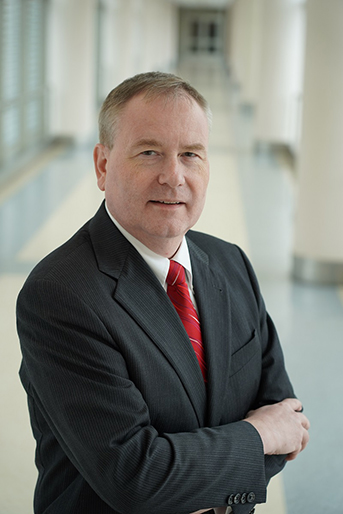
“I am very honored by this prestigious award from AABB,” said Flegel, who will receive the award in person at the 2026 AABB Annual Meeting, to be held Oct 17-19 in Atlanta.
Flegel first became interested in hematology early in his medical career and completed a transfusion medicine residency in Germany.
“In this field, one can give critical support for therapies in numerous fields of medicine and provide support for a variety of patients. This broad impact on patient care is relatively unique to transfusion medicine,” Flegel said. “Then, of course, there is the link between what we do on the patient care side and on the lab side by developing and applying cutting edge technology, which makes transfusion medicine so special.”
On the patient care side of things, Flegel developed the largest external quality assessment for proficiency testing in molecular immunohematology that helped to improve patient safety. These types of assessments can be instrumental for the introduction of new technology in a laboratory and are typically required in many health care systems for clinical application and to maintain accreditation.2
“Quality assessments were developed for programs that want to do molecular testing for blood groups and assure that quality standards are met,” Flegel said.
During this assessment, a lab has to apply routine methods to a series of unknown samples to see whether they can come up with the correct answer.
“We started this program more than 20 years ago, and it continues to run to this day,” Flegel said. “It is the oldest and probably the largest proficiency testing program for molecular immunohematology worldwide.”
On the laboratory side, scientists and clinicians worldwide have been able to benefit from Flegel’s discovery of the molecular structure of the RH gene locus and most of the clinically relevant molecular variants in the RHD and RHCE genes.
Additionally, the RhesusBase was created by Flegel’s initiative, the first online database for blood group alleles. Specifically, RhesusBase is an online compilation of published information on the molecular variability observed at the Rhesus (RHD) locus.3
“This was created in the 1990s – the early years of the internet – and it was the first freely available, complete and curated database for blood group variants on the internet,” Flegel said. “It was a totally new approach at the time. When people found a new gene variant, they could look it up in the database, easily determining if it was a known variant or something novel. If it was novel, it would be integrated into the database.”
The database is still online today; although, Flegel noted, it has been transferred in several iterations into larger databases.
“This whole novel approach started when I found 17 RHD gene variants in my lab, which at the time doubled the number of all known RHD variants,” Flegel said. “Now there are between 500 and 600 alleles in the database.”
Pull quote here....
Looking to the future, Flegel has other important areas of interest that he is hoping to devote his time and efforts to, one of which is the erythrocyte membrane — or the red cell membrane — a structure containing both lipids and proteins that are essential to red cell function.4
“The red cell membrane is a super important structure, and we do not yet completely understand how it functions,” Flegel said. “This is a topic that should be investigated much more thoroughly.”
Studying blood group systems is one way of gaining a better understanding of the red cell membrane, he said, because the blood group system is defined by proteins and sugars that are integrated into the red cell membrane.
Overall, Flegel said that he hopes that awards like the Dale A. Smith Memorial Award bring more attention to this and similar topics in this important field of scientific research.
Transfusion is AABB’s scholarly, peer-reviewed monthly journal, publishing the latest on technological advances, clinical research and controversial issues related to transfusion medicine, blood banking, biotherapies and tissue transplantation. Access of Transfusion is free to all AABB members.
Learn More About Transfusion Journal

Keep abreast of what's happening in the field of biotherapies with CellSource - AABB's monthly update on the latest biotherapies news.
To submit news about the blood and biotherapies field to AABB, please email news@aabb.org.
President
Jose Cancelas, MD, PhD, CABP
Chief Executive Officer
Debra Ben Avram, FASAE, CAE
Chief Communications and Engagement Officer
Julia Zimmerman
Director of Marketing and Communications
Jay Lewis, MPH
Managing Editor
Kendra Y. Mims, MFA
Senior Communications Manager
Drew Case
AABB News
(ISSN 1523939X) is published monthly, except for the combined November/December issue for the members of AABB; 4550 Montgomery Avenue; Suite 700 North Tower; Bethesda, MD 20814.
AABB is an international, not-for-profit association representing individuals and institutions involved in transfusion medicine, cellular therapies and patient blood management. The association is committed to improving health by developing and delivering standards, accreditation and educational programs that focus on optimizing patient and donor care and safety.
+1.301.907.6977
Email: news@aabb.org
Website: www.aabb.org
Copyright 2025 by AABB.
Views and opinions expressed in AABB News are not necessarily endorsed by AABB unless expressly stated.
Notice to Copiers: Reproduction in whole or part is strictly prohibited unless written permission has been granted by the publisher. AABB members need not obtain prior permission if proper credit is given.