
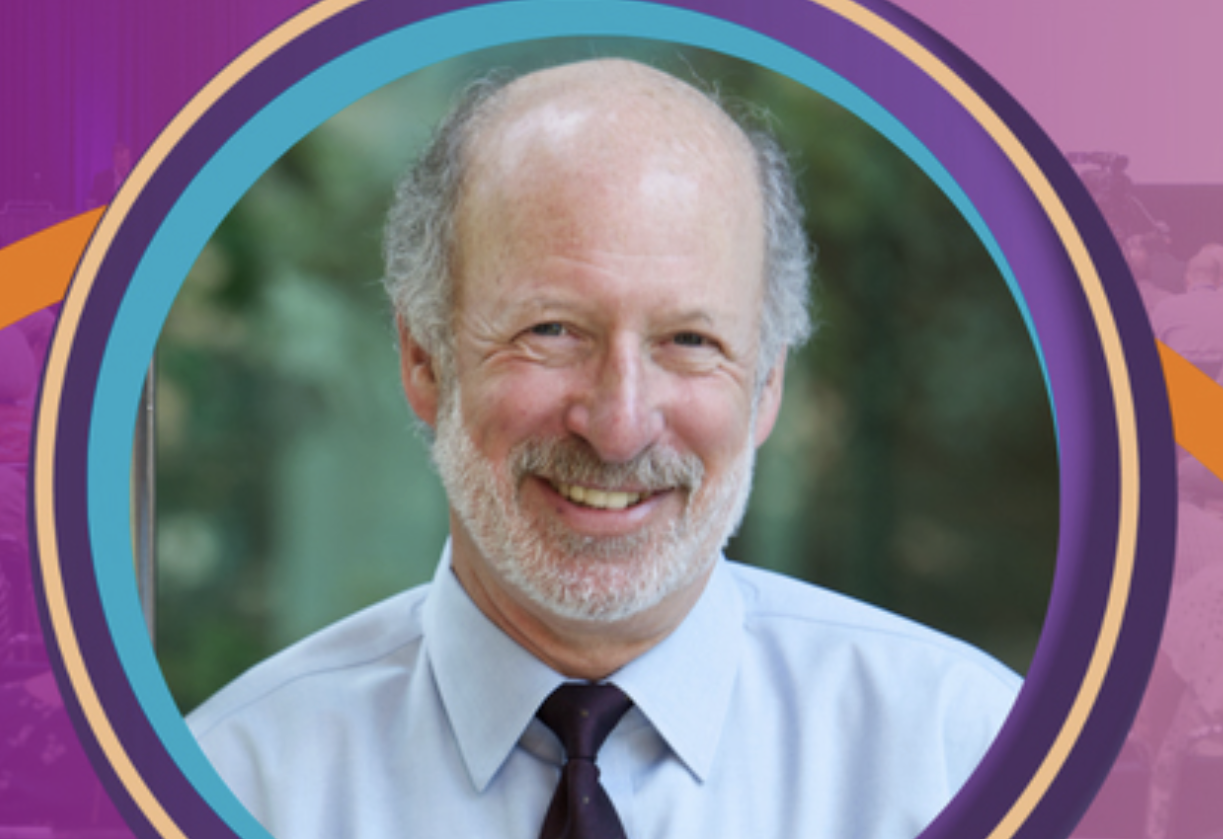
At the upcoming 2026 AABB Annual Meeting, to be held Oct. 17-19 in Atlanta, attendees will have the privilege of hearing a keynote speech from a true giant in medicine: Frederick Appelbaum, MD.
Appelbaum is the executive vice president at Fred Hutch and a professor in Fred Hutch’s clinical research division. He has been an influential leader in the blood and biotherapies field for decades, authoring or coauthoring more than 800 peer-reviewed articles. Among his many accomplishments, early in his career, Appelbaum described the first use of autologous transplantation as curative therapy for malignant lymphoma; this therapy is now used to treat more than 50,000 patients annually. Later in his career, Appelbaum led the first studies demonstrating the ability of transplantation to cure myelodysplasia, non-Hodgkin lymphoma and Hodgkin disease, as well as its role in the treatment of acute myeloid leukemia. Appelbaum was also instrumental in developing gemtuzumab ozogamicin, the first antibody-drug conjugate approved by the FDA.
In his keynote address, Appelbaum will trace the arc of bone marrow transplantation – from its earliest days to the frontier of in vivo gene therapy – and will detail the critical role of the blood banking and transfusion medicine community.
We’ve seen tremendous advancements in health care, and everyone who is involved in the field should take pride in what the field has achieved, because these accomplishments are not done by just one person.
“I'm going to talk about the history of marrow transplantation from the very beginning – all the way back to its roots with the atomic bombs in the 1940s,” Appelbaum told AABB News. “I’ll discuss the arc of how marrow transplantation went from not really being possible to eventually becoming a real therapy that today is used to treat about 100,000 people every year.”
Appelbaum also said he plans to discuss the future potential of bone marrow transplantation. “It is an area of medicine with countless possibilities,” he said. “Future implications include in vivo gene therapy, where we could be able to cure sickle cell anemia with a single injection. We are also looking at the use of CAR T-cells to treat not just hematologic malignancies, but solid tumors and autoimmune diseases. Most recently, some scientists are even looking into curing HIV/AIDS through CAR T cells.”
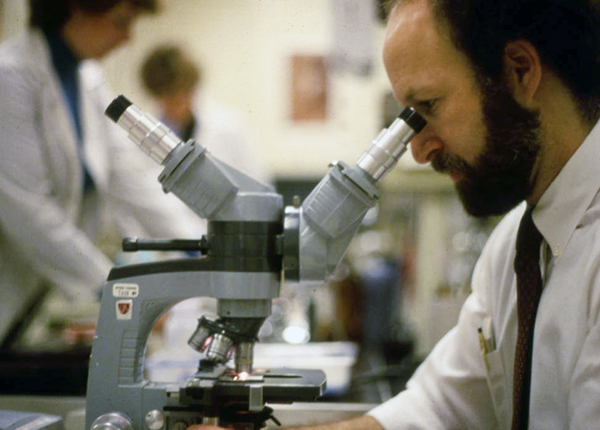
“The reason that the Fred Hutch facility is in Washington State is because Don Thomas was very impressed with the blood bank community in Seattle – and that's one of the reasons he moved to Seattle,” Appelbaum explained. “Once Thomas got here, and was trying to make transplantation work, he relied on the use of HLA-matched platelets and granulocyte transfusions – all things that were done through the blood bank – to help patients to survive the early transplant experience.”
Appelbaum also noted that working with blood banks helped improve mortality for patients undergoing marrow transplantation. “Early on, when I was first in the field, about half of our patients were CMV-seropositive, which meant they had a 50% chance of getting CMV disease after the transplant – and of those, about 50% would die. However, through our work with blood banks, we realized that we could give patients CMV-seronegative blood products, which protected them from getting CMV.”
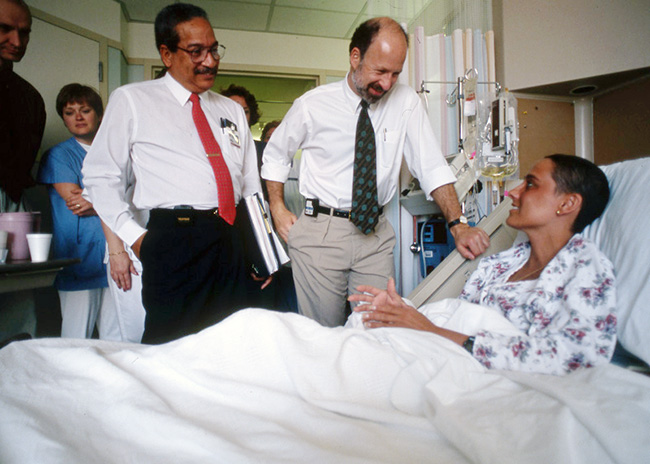
“We’ve seen tremendous advancements in health care, and everyone who is involved in the field should take pride in what the field has achieved, because these accomplishments are not done by just one person; the field achieves these,” Appelbaum said. “At the end of the day, it does take a village; it takes a big village to get what we've done accomplished.”
Appelbaum added that the effects of the field’s collective advancements are seen in the millions of patients who have benefited from advanced treatments. “Today we see many patients – or former patients – that are alive and healthy that may have died in another era without certain therapeutic advancements that are available today,” he said. “And I think the whole field can take pride in that.”
PREVIOUS STORY
Enhancing Patient Safety InternationallyBACK TO ISSUE
July 2026NEXT STORY
AABB Press Celebrates 30 Years of Publishing
Transfusion is AABB’s scholarly, peer-reviewed monthly journal, publishing the latest on technological advances, clinical research and controversial issues related to transfusion medicine, blood banking, biotherapies and tissue transplantation. Access of Transfusion is free to all AABB members.
Learn More About Transfusion Journal
Keep abreast of what's happening in the field of biotherapies with CellSource - AABB's monthly update on the latest biotherapies news.

To submit news about the blood and biotherapies field to AABB, please email news@aabb.org.


President
Jose Cancelas, MD, PhD, CABP
Chief Executive Officer
Debra Ben Avram, FASAE, CAE
Chief Communications and Engagement Officer
Julia Zimmerman
Director of Marketing and Communications
Jay Lewis, MPH
Managing Editor
Kendra Y. Mims, MFA
Senior Communications Manager
Drew Case
AABB News
(ISSN 1523939X) is published monthly, except for the combined November/December issue for the members of AABB; 4550 Montgomery Avenue; Suite 700 North Tower; Bethesda, MD 20814.
AABB is an international, not-for-profit association representing individuals and institutions involved in transfusion medicine, cellular therapies and patient blood management. The association is committed to improving health by developing and delivering standards, accreditation and educational programs that focus on optimizing patient and donor care and safety.
+1.301.907.6977
Email: news@aabb.org
Website: www.aabb.org
Copyright 2025 by AABB.
Views and opinions expressed in AABB News are not necessarily endorsed by AABB unless expressly stated.
Notice to Copiers: Reproduction in whole or part is strictly prohibited unless written permission has been granted by the publisher. AABB members need not obtain prior permission if proper credit is given.

4550 Montgomery Avenue
Suite 700, North Tower
Bethesda, MD 20814
301.907.6977