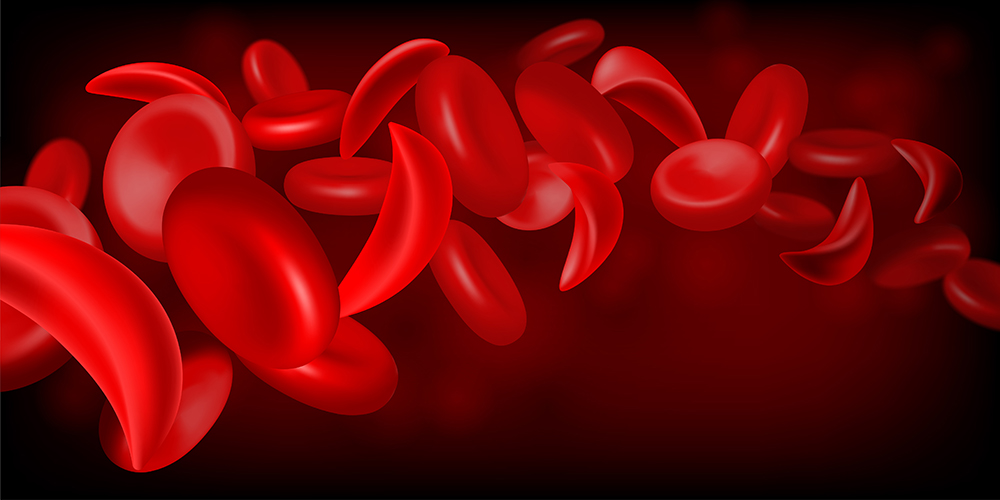
Sickle cell disease (SCD) is the most common inherited hematologic disorder, estimated to affect approximately 100,000 people in the United States, most of whom are non-Hispanic Black.1
SCD is also widely recognized as one of the most transfusion-dependent blood disorders, with many patients requiring lifelong, chronic transfusion support, according to Ruchika Goel, MD, MPH, CABP, senior medical director at Vitalant National Office, professor of internal medicine and pediatrics at Simmons Cancer Institute at Southern Illinois University, and adjunct faculty in the division of transfusion medicine at Johns Hopkins University.
Blood transfusions are a mainstay of treatment for many patients with SCD, but they are not curative and not without complications. In fact, many of the existing and novel therapies for SCD are aimed to help patients achieve transfusion independence.
“Unlike other patients, like those with cancer or those undergoing bone marrow transplantation who may have intermittent transfusion needs,” Goel said, “many people with SCD have lifelong dependence on transfusion.”
The goal of blood transfusions in patients with SCD is to increase oxygen-carry capacity and decrease sickle hemoglobin relative to hemoglobin A.2 The majority of adults with SCD will require at least one red blood cell transfusion in their lifetime.3
“There are essentially three types of transfusion modalities, and they can be used in the acute or the chronic setting,” said Ross Fasano, MD, associate professor in Department of Pathology and Laboratory Medicine at Emory University, Atlanta, and director of apheresis at Children’s Healthcare of Atlanta.
During the 2024 AABB Annual Meeting, these two SCD experts participated in the session, “Sickle Cell Disease: Inching Toward Transfusion Independence” and discussed the role of transfusions for patients with SCD, some of the novel therapies available that could result in transfusion independence and the reality of how close that independence is for patients.
The simplest is a top-off transfusion, which—like it sounds—gives the patient blood through a simple transfusion, Fasano said. The second type of transfusion is an automated red blood cell (RBC) exchange using an apheresis machine. The third is a more historical one but still used today when apheresis is not available, Fasano said. That is a partial manual exchange where a certain amount of the patient’s whole blood is phlebotomized from the patient and is immediately followed by a transfusion of RBCs.
The indications for a transfusion may vary in the acute versus the chronic setting. “In the acute setting, transfusion is commonly used for severe sickle-cell related complications like acute chest syndrome, acute stroke or acute splenic or hepatic sequestration,” Fasano said. “In the chronic setting, the most common indication for a chronic transfusion is stroke prevention.”
The two well-known complications of transfusion in SCD are iron overload and red cell alloimmunization. “Despite having access to more iron chelation medications and modulating how much iron is given by transfusions through the use of red cell exchange transfusions, iron overload remains a problem in individuals with SCD, and patients can suffer long-term morbidity and mortality from it,” Fasano said.
In contrast, red cell alloimmunization, where antibodies to non-self antigens form, is an important concern. Alloimmunization in patients with SCD is estimated to occur in up to 50% of transfused patients with SCD, as compared with 2% to 5% of the thalassemia population, and even lower in the general population.4
“The problem is not the alloimmunization itself, but what that means down the road for patients,” Fasano said. “Once they have one antibody, they are more likely to form more antibodies, which makes allocation of blood units difficult, and sometimes impossible in acute settings.”
Fasano said that he is encouraged by the research and development of new novel disease-modifying agents for patients with SCD, but added that “at least for the foreseeable future, transfusion will still be a major part of the management for most individuals with SCD.”
Specifically, two major trials—the SWiTCH and TWiTCH trials— looked into transitioning children off of transfusion in favor of the disease-modifying therapy hydroxyurea, a Food and Drug Administration-approved treatment for SCD that has been shown to decrease the frequency of severe acute pain, acute chest syndrome and the frequency of blood transfusion requirements. The results varied, Fasano said.
The SWiTCH — Stroke With Transfusions Changing to Hydroxyurea — trial randomly assigned children with SCD who had previously had a stroke and iron overload to standard treatment with transfusion and chelation or phlebotomy and hydroxyurea. No strokes were documented in patients assigned to transfusion, but 10% of patients assigned hydroxyurea experienced stroke.5
“The hydroxyurea arm in SWiTCH was determined to be inferior to chronic transfusions, and it was concluded that patients with a history of stroke should remain on chronic transfusions indefinitely,” Fasano said.
The phase 3 TWiTCH trial enrolled children with SCD and abnormal transcranial doppler (TCD) flow velocities and randomly assigned them to continue standard transfusions or daily oral hydroxyurea. Patients assigned hydroxyurea had an overlap period with transfusions until a stable maximum tolerated dose of hydroxyurea was reached. The study showed similar TCD velocities between both arms at study follow up, indicating a similar stroke risk, and no strokes were observed in either arm. 6
“We need a better understanding of the disease itself and what factors increase erythrocyte sickling, so as to continue to develop new disease-modifying therapies that would minimize the need for transfusion in the future.” - Ross Fasano, MD
“This was a successful study in that it showed that children with SCD with abnormal TCD and minimal-to-no vasculopathy on MRI imaging may transition from transfusion to hydroxyurea,” Fasano said.
However, for the most part, even with the use of hydroxyurea, Fasano said he doesn’t “see transfusion going away” for most patients with SCD.
“We need a better understanding of the disease itself and what factors increase erythrocyte sickling, so as to continue to develop new disease-modifying therapies that would minimize the need for transfusion in the future,” Fasano said.
In addition to hydroxyurea, FDA has approved three additional non-curative disease-modifying therapies for SCD in recent years.
L-glutamine is an amino acid approved in 2017 as a method to reduce acute vaso-occlusive episodes in patients with SCD five years or older. In a randomized controlled trial, patients assigned L-glutamine had a reduction in the number of sickle cell pain episodes through 48 weeks as compared with those assigned placebo.7
Two years later, FDA approved crizanlizumab, a humanized IgG2 antibody that inhibits P-selectin, for patients with SCD aged 16 or older. In the SUSTAIN trial, assignment to crizanlizumab had lower median annual rate of vaso-occlusive crises compared with placebo.8
“Crizanlizumab can help decrease transfusion requirements by reducing the frequency of painful crises,” Goel said. Although it is FDA-approved, Crizanlizumab use has since been withdrawn in the U.K./E.U. due to limited evidence.
Voxelotor was approved by FDA in 2019 for patients 12 and older, and in 2021 for those aged four and up. The approval was based on data that showed the drug significantly increased hemoglobin compared with placebo.9,10 However, this drug was voluntarily withdrawn in September 2024 due to safety concerns.11
“It increases hemoglobin levels by stimulating the production of fetal hemoglobin (HbF), thus reducing the need for blood transfusions,” Goel said. “It was an encouraging addition to the therapeutic armamentarium for SCD, but unfortunately, it was withdrawn from market due to safety concerns.”
In addition to these treatments, there are two therapies available to patients with SCD that are considered curative, Goel said.
“Stem cell transplantation and gene therapy are the only two therapeutic options available that can eventually get patients to permanent transfusion independence,” Goel said.
Historically, use of stem cell transplantation (SCT) was somewhat limited because it required a matched donor, and patients underwent myeloablative conditioning. However, there have been improvements in SCT with use of haploidentical or half-matched donors, the use of reduced-intensity conditioning, and improvements in regimens that reduce graft-versus-host disease.12
“Stem cell transplantation and gene therapy are the only two therapeutic options available that can eventually get patients to permanent transfusion independence.” - Ruchika Goel, MD, MPH, CABP
“In addition, if SCT is not done in a timely fashion, older patients may have end organ damage, making them ineligible for SCT,” Goel said.
In contrast, gene therapy for SCD uses a patient’s own stem cells, eliminating the need for a donor with a matching human leukocyte antigen (HLA). This reduces the risk of rejection and other complications. Currently, two FDA-approved gene therapies are available for patients aged 12 and older with SCD:
Goel said that although this novel therapy has proven to be effective, it is not without drawbacks. “It is important to realize that the currently available SCD gene therapy involves administering myeloablative chemotherapy and a transplant of autologous cells. It is extremely expensive at about $2.5 to $3.1 million per patient,” said Goel, adding though that the lifetime cost of care for a patient with SCD including disability is also in the millions-of-dollars range.14 “Secondly, the therapy is only available at specialized tertiary academic centers.” Access to this therapy is a major limitation.
Looking to the future, further advances in the understanding of the disease and in the care of patients with SCD will be key to continuing to improve the survival of this patient population, minimizing their morbidity, and improving quality of life.
To gain that understanding, Fasano stressed the ongoing importance of not only industry partnerships, but also federally funded research.
“These novel drugs don’t come from industry,” Fasano said. “They originate from basic science that is required to understand the pathological mechanisms of the disease. A lot of the drugs that have hit the market over the last 7-8 years have originated from critical basic science studies which only could have been accomplished through federal funding. Therefore, it is critical that these federal funding sources remain.”
PREVIOUS STORY
Global Progress in Sickle Cell Disease TreatmentBACK TO ISSUE
June 2025
Transfusion is AABB’s scholarly, peer-reviewed monthly journal, publishing the latest on technological advances, clinical research and controversial issues related to transfusion medicine, blood banking, biotherapies and tissue transplantation. Access of Transfusion is free to all AABB members.
Learn More About Transfusion Journal
Keep abreast of what's happening in the field of biotherapies with CellSource - AABB's monthly update on the latest biotherapies news.

To submit news about the blood and biotherapies field to AABB, please email news@aabb.org.


President
Jose Cancelas, MD, PhD, CABP
Chief Executive Officer
Debra Ben Avram, FASAE, CAE
Chief Communications and Engagement Officer
Julia Zimmerman
Director of Marketing and Communications
Jay Lewis, MPH
Managing Editor
Kendra Y. Mims, MFA
Senior Communications Manager
Drew Case
AABB News
(ISSN 1523939X) is published monthly, except for the combined November/December issue for the members of AABB; 4550 Montgomery Avenue; Suite 700 North Tower; Bethesda, MD 20814.
AABB is an international, not-for-profit association representing individuals and institutions involved in transfusion medicine, cellular therapies and patient blood management. The association is committed to improving health by developing and delivering standards, accreditation and educational programs that focus on optimizing patient and donor care and safety.
+1.301.907.6977
Email: news@aabb.org
Website: www.aabb.org
Copyright 2025 by AABB.
Views and opinions expressed in AABB News are not necessarily endorsed by AABB unless expressly stated.
Notice to Copiers: Reproduction in whole or part is strictly prohibited unless written permission has been granted by the publisher. AABB members need not obtain prior permission if proper credit is given.

4550 Montgomery Avenue
Suite 700, North Tower
Bethesda, MD 20814
301.907.6977