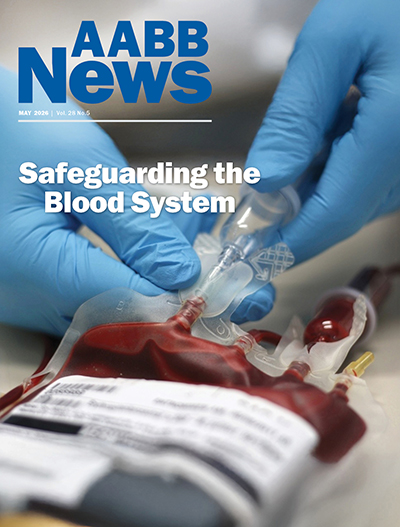

Canada is facing a significant shift in blood safety monitoring following the end of a historic hemovigilance program. The Public Health Agency of Canada (PHAC) discontinued the country’s Blood Safety Contribution Program (BSCP) on March 31, 2026. The program, which supported surveillance activities for blood, tissue and organ-related adverse events, housed Canada’s Transfusion Transmitted Injury Surveillance System (TTISS) and the Transfusion Error Surveillance System (TESS). These surveillance systems monitored errors occurring at any point in the transfusion chain, as well as serious, moderate and selected minor transfusion-related adverse events occurring in Canadian health care settings.
Blood in Canada operates as a national system but is funded by each province. Without TTISS and TESS, hospitals and transfusion services will lose access to national-level data aggregation previously provided by the federal government. Andrew Shih, MD, FRCPC, DRCPSC, MSc, regional transfusion medicine director, Hamilton Regional Laboratory Medicine Program, and director of TTISS Ontario, noted that prior to the program’s closure, hospital-based events and errors were captured through the BSCP, while serious or unexpected events continue to be reported through Canada’s Vigilance Program.
“With the sunsetting of the BSCP, what's largely lost on the hospital or patient-facing side is the capture of hospital-based transfusion errors and adverse events that do not relate to the intrinsic characteristics of the blood supply or actions regulated by Health Canada,” said Shih, who also serves as the chair of Canada’s National Advisory Committee for Blood and Blood Products. “That means minor events are no longer captured, and I'd argue that those matter. You've lost pickup of many so-called minor events that can sometimes signal larger problems.”
PREVIOUS STORY
Ensuring Optimal Blood Safety at All TimesBACK TO ISSUE
May 2026
Transfusion is AABB’s scholarly, peer-reviewed monthly journal, publishing the latest on technological advances, clinical research and controversial issues related to transfusion medicine, blood banking, biotherapies and tissue transplantation. Access of Transfusion is free to all AABB members.
Learn More About Transfusion Journal
Keep abreast of what's happening in the field of biotherapies with CellSource - AABB's monthly update on the latest biotherapies news.

To submit news about the blood and biotherapies field to AABB, please email news@aabb.org.


President
Jose Cancelas, MD, PhD, CABP
Chief Executive Officer
Debra Ben Avram, FASAE, CAE
Chief Communications and Engagement Officer
Julia Zimmerman
Director of Marketing and Communications
Jay Lewis, MPH
Managing Editor
Kendra Y. Mims, MFA
Senior Communications Manager
Drew Case
AABB News
(ISSN 1523939X) is published monthly, except for the combined November/December issue for the members of AABB; 4550 Montgomery Avenue; Suite 700 North Tower; Bethesda, MD 20814.
AABB is an international, not-for-profit association representing individuals and institutions involved in transfusion medicine, cellular therapies and patient blood management. The association is committed to improving health by developing and delivering standards, accreditation and educational programs that focus on optimizing patient and donor care and safety.
+1.301.907.6977
Email: news@aabb.org
Website: www.aabb.org
Copyright 2025 by AABB.
Views and opinions expressed in AABB News are not necessarily endorsed by AABB unless expressly stated.
Notice to Copiers: Reproduction in whole or part is strictly prohibited unless written permission has been granted by the publisher. AABB members need not obtain prior permission if proper credit is given.


4550 Montgomery Avenue
Suite 700, North Tower
Bethesda, MD 20814
301.907.6977