In 2011, Tracy Antonelli almost deleted an email from an adoption agency. But that Memorial Day weekend, she opened the Waiting Children newsletter and read about a one-year-old girl in China who had thalassemia. Antonelli, who was diagnosed with the same rare blood disorder at age four, had long envisioned adopting a little girl from China after learning about the country’s one-child policy. As she stared at the little girl's photo, that childhood dream suddenly seemed within reach.
“I remember feeling overcome with emotions,” she recalled. “I usually deleted those emails because we weren't actively looking to adopt at that time. I called my husband over and said, ‘Look at this little girl; she has thalassemia. Do you think we should adopt her?’ And he said, ‘Absolutely.’ We made the decision just like that.”
After discovering that Chinese orphanages were overrun with children with special needs, including those with blood disorders who were often undertransfused, Antonelli and her husband, Patrick, adopted three toddler girls—all with beta thalassemia major—between 2012 and 2014: Emmie, Rosie and Frannie.
“Adoption was always plan A for us,” Antonelli said. “When I was younger and first learned about adoption from China, most of the stories were about healthy baby girls being abandoned due to the one-child policy. But by the time we were starting our family, the situation in China had shifted considerably, so there were quite a few children with thalassemia who were waiting for adoption.”
Growing up with thalassemia intermedia—a non-transfusion-dependent form of the disorder— Antonelli experienced significant fatigue and anemia due to low hemoglobin levels. She received her first blood transfusion at age 36 while recovering from a routine illness and transitioned to regular transfusions at age 40.
“In patients like me, who aren't transfused from a young age, the body compensates and learns to function at a hemoglobin level of 7, a level at which most people would faint,” she explained. “I used to say I felt tired, but it was the kind of fatigue that sleeping or a nap wouldn't fix. It felt like walking through mud. I had lived my whole life feeling that way and thought it was normal. But as soon as I started regular transfusions, it was like a curtain being lifted. A weight was lifted. It made a huge difference.”
Antonelli added that thanks to regular transfusions, she is the healthiest she has ever been. “I feel like what a normal person feels like now,” she said. “I'm able to exercise better, keep up with my kids better and do more. And a lot of that is thanks to blood transfusions.”
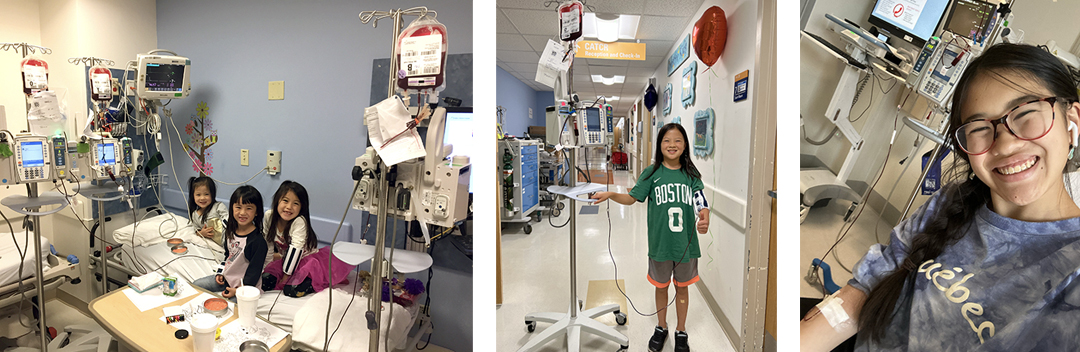
Managing thalassemia in the Antonelli household requires coordination and communication, from appointments and routine screenings to school and extracurricular activities. Over time, Antonelli said her family has developed an efficient system. Her girls—now ages 16, 15 and 12— required regular blood transfusions from the moment they arrived in the United States, as each was diagnosed with the most severe form of thalassemia, also known as Cooley's Anemia. They receive blood transfusions every three weeks.
“They're all on the same transfusion schedule, which is really helpful. A couple of days before, we go in for blood work—type and screen, hemoglobin levels—and then we go to the hospital for transfusions,” Antonelli said. “With four people in the house getting transfusions, there’s definitely a lot to coordinate, but it’s amazingly smooth. We have it down. It’s kind of like a well-oiled machine.”
 In addition to transfusions, their care includes annual MRIs, visits with multiple specialists and chelation therapy to remove excess iron. The process, she noted, was much harder when her daughters were younger, as transfusions took longer, and needles were a bigger challenge.
“Now it’s more manageable,” Antonelli said. “We're very fortunate to be at Boston Children's Hospital, where they offer evening and weekend appointments, so they no longer have to miss school for transfusions. It's just become part of our routine now. It’s not always easy, but we make it work. I'm blessed with three wonderful, flexible, brave kids who understand why they need their transfusions.”
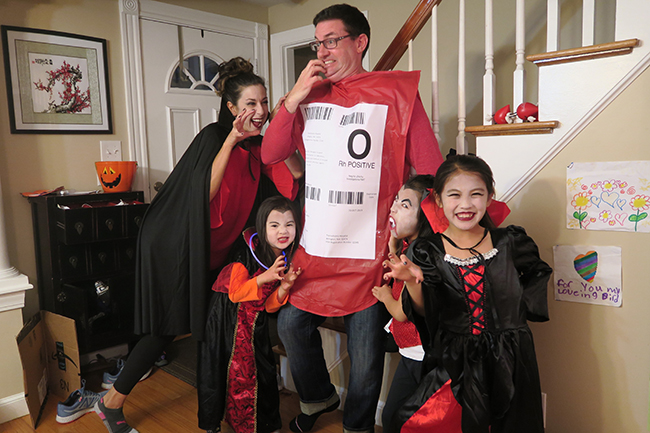
More broadly, Antonelli wants people to know that their family is just like any other family: busy people living normal lives who happen to fit blood transfusions into their schedule.
“You can absolutely live a full, fantastic life with thalassemia,” she said. “I don't feel like it holds us back.”
Antonelli told AABB News that she and her daughters have received more than 800 transfusions combined—roughly 1,400 units of blood—to date. As a patient and parent, she actively advocates for blood donation and greater awareness of its impact on patients with chronic and life-threatening conditions.
She has witnessed the impact firsthand on her own life and on her daughters’ lives, noting that her athletic children can ride their bikes and play sports because of the generosity of blood donors.
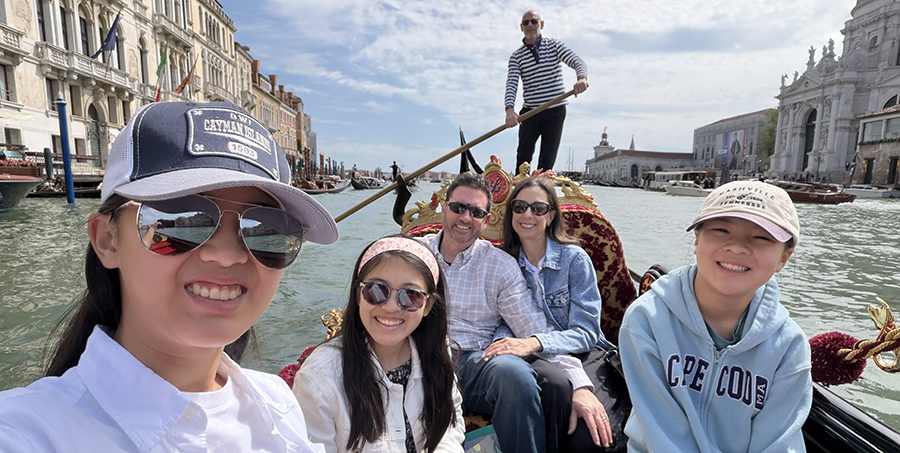
“I truly believe blood donors are heroes. It’s incredible that people take time out of their lives to give a part of themselves so that we can live the life we’re living,” she said. “It’s not lost on me that in order to go to Venice, or watch my kids play basketball, or even talk to you right now, someone else’s blood is running through my veins. I'm just incredibly appreciative. We're living a beautiful, full, happy life. Blood donation is the ultimate gift.”
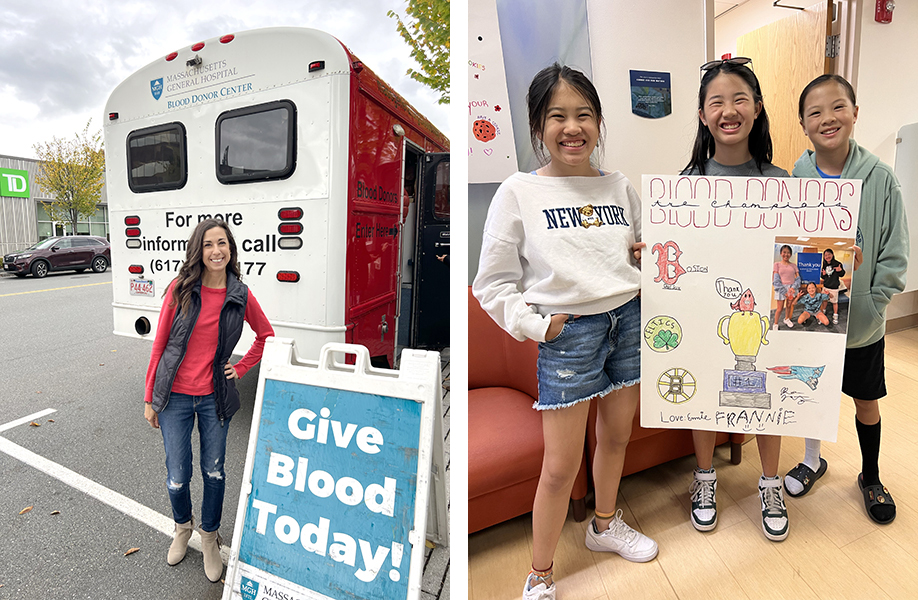 She encourages others to donate blood, and if they’re not able, to spread the word. “You never know when you or someone you love might need a transfusion,” Antonelli said. “The child sitting next to your child in school could be my daughter, relying on blood transfusions to live.”
Although awareness of thalassemia remains limited, Antonelli aims to spread the message about the need for blood donation beyond the condition.
“Blood donation impacts patients with sickle cell disease, cancers and much more,” she said. “I also still push for safer, easier cures. We have curative options now, but they involve chemotherapy and significant hardship. Science keeps improving, though, and I'm optimistic. I think we’re living in a really good time to manage thalassemia compared to a generation ago.”
Antonelli advises parents of children with thalassemia to connect with other patients and families navigating similar challenges. She also recommends seeking care at a thalassemia treatment center and connecting with the Cooley's Anemia Foundation.
“When I was diagnosed at four years old, my parents didn't have a great way to connect with other families going through the same thing,” she said. “Today, there are social media groups, online communities and all kinds of ways to connect. Some of my closest thalassemia friends live nowhere near me, but if I have a question about a new chelator or anything else, I can reach out. So, find your community, and see a thalassemia expert.”
Fifteen years have passed since Antonelli opened the email that led her to Emmie and, subsequently, Rosie and Frannie. When she first brought them home to Boston, her daughters were in dire need of blood transfusions and medical care. Today, they are thriving, active and healthy.
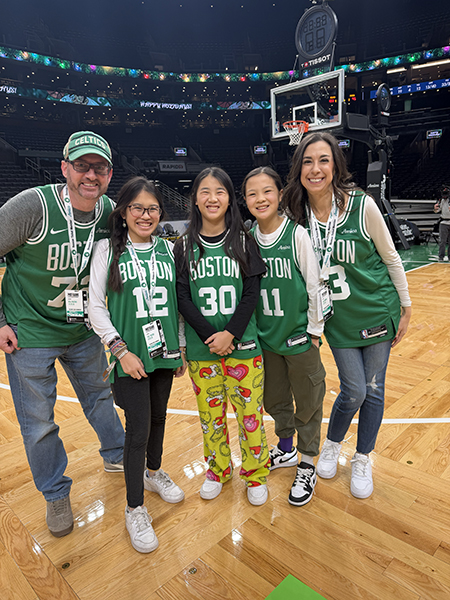
She credits her children for keeping her grounded on challenging days. “I look at them riding bikes and playing basketball, and you'd never know they have a life-threatening blood condition,” she said. “They've had hundreds of transfusions. It wasn't always easy. One of my daughters has terrible veins and sometimes gets stuck five times. That's hard for a kid to go through. But they do it all with such grace.”
Despite the challenges and complications, Antonelli expressed deep gratitude as she reflected on her family’s journey.
“Thalassemia has brought more to my life than it has taken away,” she said. “It might feel inconvenient at times to go for a transfusion. But at the end of the day, it's given me a wonderful perspective on life, a deeper understanding of the generosity of others and a front-row seat to watch my kids overcome real challenges. When they're due for a transfusion and feeling a little low, but they still have a basketball game, they push through it. Their resilience is inspiring.”
Whether they pursue a curative option in the future or continue regular transfusions, Antonelli wants her daughters to know their condition does not limit or define them.
“Thalassemia shouldn't stop them, and I don't think it does,” she said. “They already demonstrate that. They can do anything they want.”
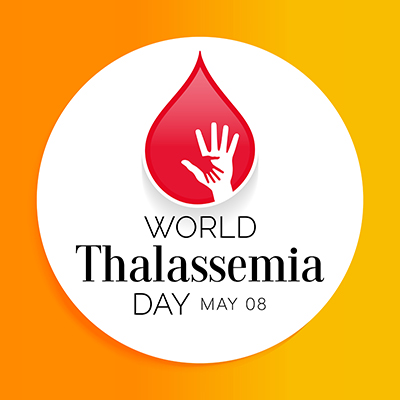
Observed annually on May 8, World Thalassemia Day honors individuals living with thalassemia. The campaign aims to raise global awareness and advocate for improved care. This year’s theme, “Hidden No More: Finding the Undiagnosed. Supporting the Unseen,” highlights individuals who remain undiagnosed due to limited access to screening, as well as those who lack access to adequate care. AABB News is proud to join global efforts and amplify patient voices like Tracy Antonelli’s in this issue.
PREVIOUS STORY
A New Era For Hemovigilance in CanadaBACK TO ISSUE
May 2026
Transfusion is AABB’s scholarly, peer-reviewed monthly journal, publishing the latest on technological advances, clinical research and controversial issues related to transfusion medicine, blood banking, biotherapies and tissue transplantation. Access of Transfusion is free to all AABB members.
Learn More About Transfusion Journal
Keep abreast of what's happening in the field of biotherapies with CellSource - AABB's monthly update on the latest biotherapies news.

To submit news about the blood and biotherapies field to AABB, please email news@aabb.org.


President
Jose Cancelas, MD, PhD, CABP
Chief Executive Officer
Debra Ben Avram, FASAE, CAE
Chief Communications and Engagement Officer
Julia Zimmerman
Director of Marketing and Communications
Jay Lewis, MPH
Managing Editor
Kendra Y. Mims, MFA
Senior Communications Manager
Drew Case
AABB News
(ISSN 1523939X) is published monthly, except for the combined November/December issue for the members of AABB; 4550 Montgomery Avenue; Suite 700 North Tower; Bethesda, MD 20814.
AABB is an international, not-for-profit association representing individuals and institutions involved in transfusion medicine, cellular therapies and patient blood management. The association is committed to improving health by developing and delivering standards, accreditation and educational programs that focus on optimizing patient and donor care and safety.
+1.301.907.6977
Email: news@aabb.org
Website: www.aabb.org
Copyright 2025 by AABB.
Views and opinions expressed in AABB News are not necessarily endorsed by AABB unless expressly stated.
Notice to Copiers: Reproduction in whole or part is strictly prohibited unless written permission has been granted by the publisher. AABB members need not obtain prior permission if proper credit is given.

4550 Montgomery Avenue
Suite 700, North Tower
Bethesda, MD 20814
301.907.6977