If you want to know what’s happening in transfusion medicine, you really do need to be at the AABB Annual Meeting.”
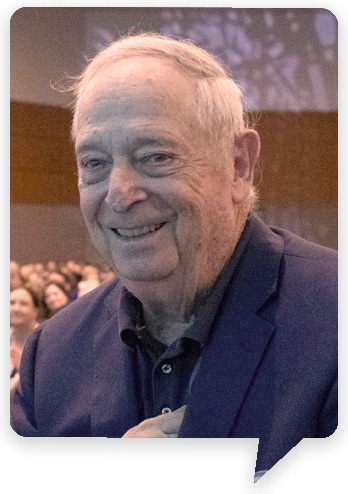 Jeffrey McCullough, MD, attended his first AABB Annual Meeting in Washington, D.C., in 1968—and he hasn’t missed one since! An international leader in research and practice of transfusion medicine blood banking and blood safety, and a former editor of the journal Transfusion, McCullough has published more than 300 articles in the medical literature involving a wide range of issues in transfusion medicine and blood banking.
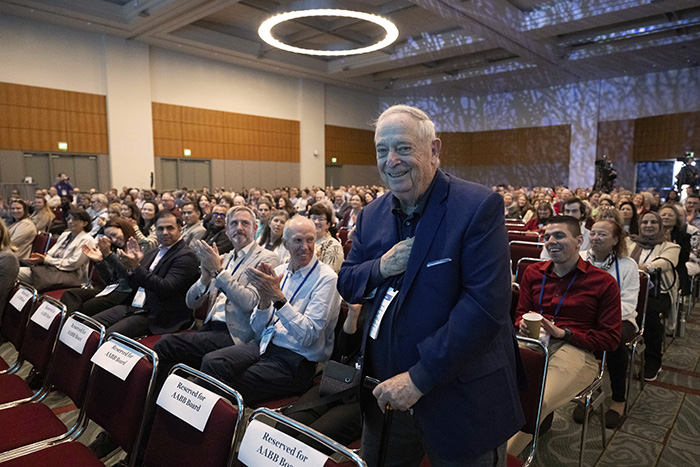
This year, McCullough was recognized at the AABB Annual Meeting in San Diego for the longest consecutive attendance: 57 years! He spoke with AABB News about how the Annual Meeting has evolved over the decades and what inspires him to attend year after year.
McCullough: I was a resident doing a rotation in the blood bank. I had been there for three months, and I really liked the work and the people. A group of the technologists and the blood bank supervisor were planning to attend the AABB Annual Meeting and encouraged me to come along, saying, “This is where it all happens.”
I quickly realized they were right. If you wanted to know what was happening in transfusion medicine, you had to be at the AABB Annual Meeting. That experience helped confirm that blood banking would be my career path. From then on, I just kept going.
McCullough: In the early years, the meetings were much smaller, and everything took place in hotels rather than convention centers. My first AABB Annual Meeting in 1968 was held in two hotels on the north side of Washington, D.C. As the AABB Annual Meeting grew, it moved into convention centers. That shift really changed the character of the meeting.
McCullough: One big difference was the pre-conference seminars. These were held over the weekend and were focused heavily on medical technologists and hospital blood bank procedures, such as antibody identification, crossmatching and other hands-on practices.
McCullough: There were dozens of developments that reshaped the field over time: HIV testing, Rh immune globulin, therapeutic apheresis, the evolution of hemophilia treatment, the growth of factor products and the broadening of the blood safety landscape, to name a few. These weren’t usually first announced at the AABB Annual Meeting, but the event consistently served as the forum where our community processed these discoveries and discussed their implications for transfusion medicine and blood banking.
McCullough: When I became editor of Transfusion, the journal was very U.S.-focused. We broadened it to include significant international work and added editorial board members from outside the United States. That shift soon became visible at the Annual Meeting as well. We began to see more international speakers and more content with a global perspective. For several years, we held sessions in Spanish, which drew enthusiastic participation from attendees in Europe and South America. I think of this as AABB’s “international broadening,” and it was an important step in making the Meeting more inclusive and globally relevant.
McCullough: My second AABB Annual Meeting was especially memorable because I gave my first presentation there. I still have the program from that meeting. I was the first speaker in the plenary session, which was a very big deal. I was young, just getting started – and terrified.
My presentation focused on a postpartum patient whose Rh typing was difficult because she had sustained a larger-than-usual fetomaternal hemorrhage. She was Rh-negative, but the baby’s Rh-positive cells circulating in her bloodstream complicated the testing. This was at the very beginning of Rh immune globulin use. Nobody knew that much about it yet, so being the first plenary speaker on that topic was intimidating enough.
Just before I went on stage, a colleague insisted on introducing me to someone sitting in the front row. It turned out to be Philip Levine, the scientist who discovered the Rh system. Realizing that I was about to present on Rh with him sitting right there was overwhelming. He was gracious and kind, and the talk went fine, but I’ll never forget that moment.
McCullough: San Diego, without question. The weather is excellent, and the facilities and layout make it an enjoyable location. We’ve been there several times throughout the years, and it consistently stands out.
I also remember a meeting in New York City in the 1980s for more personal reasons. New York isn’t always the easiest city for an Annual Meeting, but while I was there, I managed to see three Broadway shows, including Cats, and even took a carriage ride through Central Park. I don’t recall much about the scientific sessions that year, but I certainly remember the trip.
McCullough: Anything related to HIV felt groundbreaking—the development of the first HIV tests, the early data, and the experiences of the organizations producing the assays. Those sessions were ones you wanted to be in the front row for.
Unrelated bone marrow transplantation was, in my opinion, one of the truly transformative developments in cell therapy. My friend John Hansen performed one of the first successful unrelated donor transplants in Seattle. That raised immediate ethical and logistical questions: How do we find donors? Is it ethical to approach HLA-typed platelet donors?
The AABB Annual Meeting became a central forum for those debates and ethical discussions. Bioethicist Art Caplan helped reframe the issue at one meeting by reminding the audience that not offering people the chance to save a life would be the true ethical failure. That perspective helped pave the way for what became the National Marrow Donor Program.
McCullough: The hallway became the heart of the meeting for me. In the past 15 years, I’ve learned just as much from conversations with colleagues as I have from attending formal sessions. We’d meet, catch up on projects, discuss latest developments, exchange ideas over coffee, and sometimes plan multicenter collaborations. The AABB Annual Meeting became a place to review data and plan our next steps.
I’m more removed now, and many of the people I collaborated with are retired. I still believe the Annual Meeting can facilitate these informal and formal connections outside of structured presentations and lectures to encourage collaboration. It’s the largest gathering in the world of people devoted to transfusion medicine, and those interactions are critical.
McCullough: If you want to know what’s happening in transfusion medicine, you really do need to be at the AABB Annual Meeting. It’s where progress is presented and where you can interact with the people driving those advances. Throughout the years, AABB has done a good job of serving as that forum. There’s nothing else quite like it.
For nearly six decades, the AABB Annual Meeting has been a forum where I have watched our community present and discuss the following issues:
—Jeffrey McCullough, MD
PREVIOUS STORY
2025 AABB Annual Meeting: Wrapped! Moments in a SnapshotBACK TO ISSUE
November/December 2025
Transfusion is AABB’s scholarly, peer-reviewed monthly journal, publishing the latest on technological advances, clinical research and controversial issues related to transfusion medicine, blood banking, biotherapies and tissue transplantation. Access of Transfusion is free to all AABB members.
Learn More About Transfusion Journal
Keep abreast of what's happening in the field of biotherapies with CellSource - AABB's monthly update on the latest biotherapies news.

To submit news about the blood and biotherapies field to AABB, please email news@aabb.org.


President
Jose Cancelas, MD, PhD, CABP
Chief Executive Officer
Debra Ben Avram, FASAE, CAE
Chief Communications and Engagement Officer
Julia Zimmerman
Director of Marketing and Communications
Jay Lewis, MPH
Managing Editor
Kendra Y. Mims, MFA
Senior Communications Manager
Drew Case
AABB News
(ISSN 1523939X) is published monthly, except for the combined November/December issue for the members of AABB; 4550 Montgomery Avenue; Suite 700 North Tower; Bethesda, MD 20814.
AABB is an international, not-for-profit association representing individuals and institutions involved in transfusion medicine, cellular therapies and patient blood management. The association is committed to improving health by developing and delivering standards, accreditation and educational programs that focus on optimizing patient and donor care and safety.
+1.301.907.6977
Email: news@aabb.org
Website: www.aabb.org
Copyright 2025 by AABB.
Views and opinions expressed in AABB News are not necessarily endorsed by AABB unless expressly stated.
Notice to Copiers: Reproduction in whole or part is strictly prohibited unless written permission has been granted by the publisher. AABB members need not obtain prior permission if proper credit is given.

4550 Montgomery Avenue
Suite 700, North Tower
Bethesda, MD 20814
301.907.6977