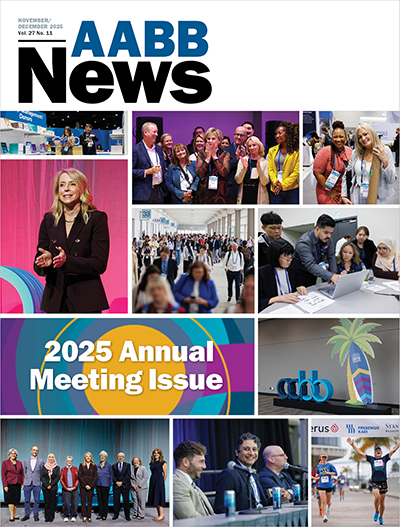
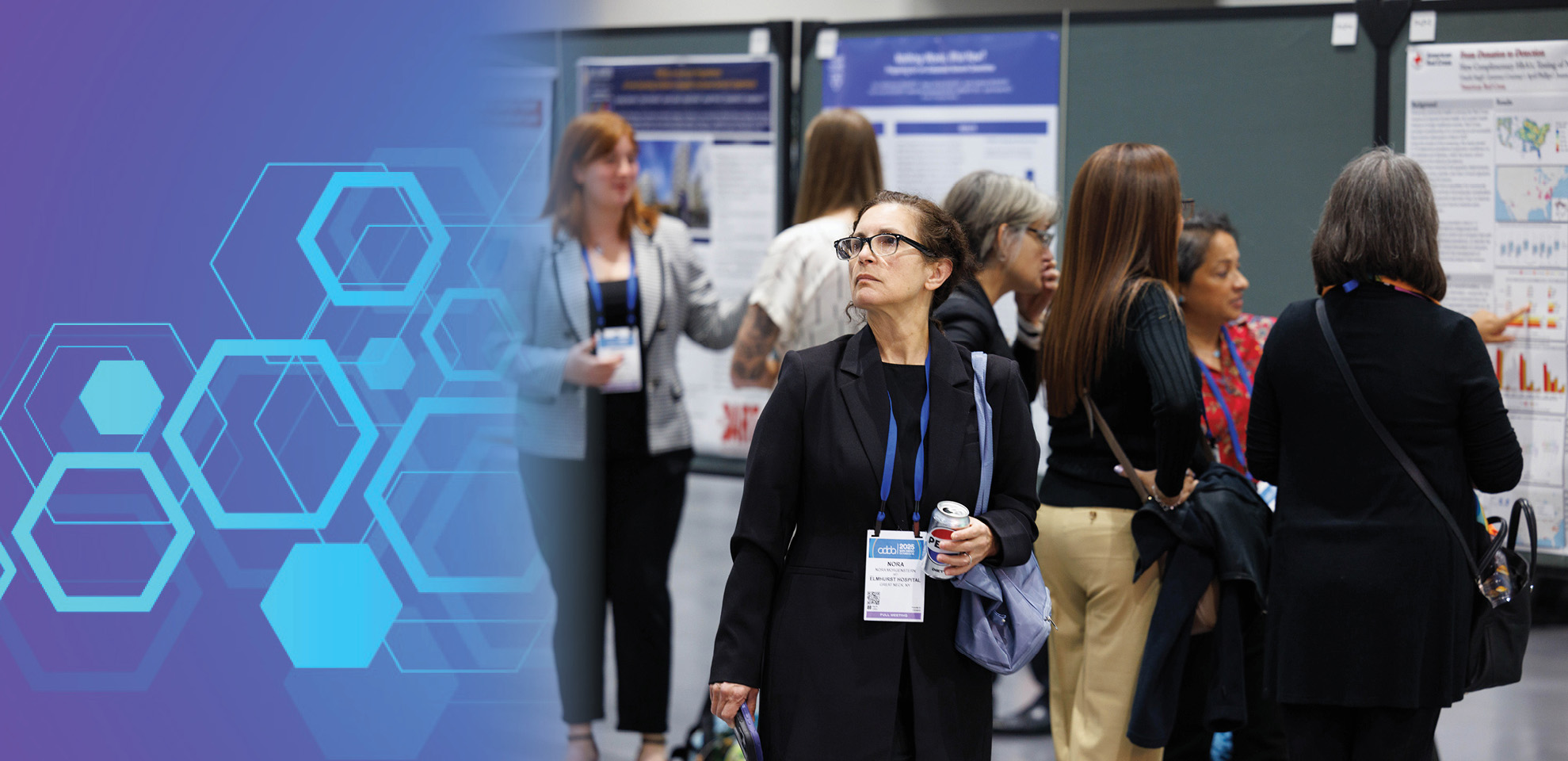
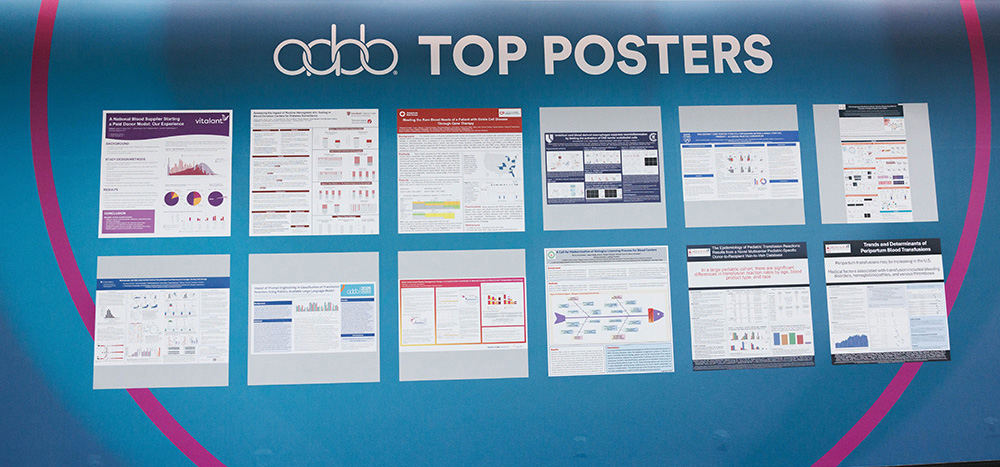
To recognize excellence in research, the 2025 AABB Annual Meeting featured several awards for outstanding scientific abstracts. The Top Poster Awards showcased cutting-edge research on-site in San Diego in the Poster Hall. In addition, presenters delivered brief presentations followed by moderated discussions with experts in the field during curated poster tours.
This year’s top award–winning scientific abstracts—selected from a highly competitive pool—highlight new concepts in blood donation/allocation, advancements in cellular and biotherapies and novel insights for transfusion practice. The six posters featured in this issue reflect the field’s ongoing commitment to evidence-based practices that benefit patients and blood centers.
The poster abstract, authored by Yaseen Jamal, MD, PhD, of the department of pathology at Stanford University School of Medicine, and colleagues, underscored the substantial proportion of donors unaware of their elevated HbA1c levels. The data also revealed differences in new diagnoses and in the proportion of pre-diabetes versus diabetes across demographic groups, highlighting opportunities for targeted outreach.
“More than 1 in 10 adults worldwide have diabetes, with nearly 50% undiagnosed. Hemoglobin A1c (HbA1c) testing is widely available to diagnose and monitor disease progression and blood donation centers can play a pivotal role in public health surveillance,” the researchers reported.
Jamal and colleagues conducted a study to evaluate the impact of incorporating HbA1c screening for all donors and notifying individuals of potentially new diagnoses. HbA1c testing was added into the standard blood donor testing procedure at an academic blood center. Basic demographic data, donation history and past/current history of pre-diabetes/diabetes were collected.
Data from 26,583 whole blood and 5,423 platelet donations were evaluated over an eight-month period. Overall, 14% of all donations had abnormal HbA1c levels, and the majority (56%) of abnormal HbA1c results were from donors without a history of diabetes/pre-diabetes. Among these findings, 92% were classified as first-time diagnoses. Researchers observed significant differences in first-time diagnosis between genders for whole blood donors (F: 54% vs M: 61%, p< 0.01) and age groups (range 52-80%, p< 0.01), but not between counties or ethnicities.
Additionally, the data indicated there was no significant difference in the average number of donations per donor after implementation of HbA1c when compared to a matched time-period before implementation.
A multicenter study of eight hospitals participating in REDS-IV-P examined the epidemiology of transfusion reactions (TRs) in pediatric patients. Researchers reviewed 228,886 transfused blood products from April 2019 to December 2023 in patients aged younger than 18 years and identified 1,183 TRs (0.5%).
“To our knowledge, this is the largest cohort of pediatric TRs. We establish significant differences in reaction rates by age, product, and race. We also highlight the most common symptoms and treatments for each TR,” researchers wrote.
Reaction rates varied significantly by age and product type. Children aged 5–11 years had the highest overall TR rates, while those aged 2-5 years experienced more febrile nonhemolytic transfusion reactions (FNHTRs) than other age groups. Platelet transfusions had the highest reaction rates overall, with allergic reactions most common, whereas red blood cell transfusions had more FNHTRs than other TRs. Although no differences were observed by sex or ethnicity, Asian patients had the highest reported TR rates and Black patients the lowest.
Each reaction type was associated with characteristic symptoms and treatments: urticaria for allergic reactions, fever for FNHTRs, and acute respiratory distress for TACO. Notably, nearly half of patients (49%) did not receive premedications, regardless of reaction type. The authors concluded that these findings establish a vital baseline for future studies to improve diagnostic and mitigation strategies in pediatric hemovigilance.
Supercritical CO₂ sterilizes by penetrating tissues at low temperature and disrupting microbial membranes without the generation of free radicals or heat damage associated with irradiation-based methods. The addition of PAA provides a complementary oxidative mechanism that reliably inactivates bacterial spores, which are more resistant to CO₂ alone. This process does not alter tissue architecture, the amounts of pertinent extracellular matrix proteins present in the tissue, or the biophysical properties of the tissue.
Accurate quantification of residual PAA is essential in tissue banking. Elevated levels can irritate host tissue, impair epithelialization, or trigger inflammatory responses. Ensuring that residual PAA levels remain within safe limits is a core requirement for releasing amnion products that preserve both safety and biological function.
This assay (NovaPA kit [NovaSterilis, Ithaca, NY]) is designed to detect and quantify residual PAA following sterilization and can be used with other biological samples that undergo the scCO2 sterilization process with a PAA-based disinfectant additive (NovaKill). This qualification study, presented as a poster, evaluated the assay's precision, accuracy, linearity, and specificity. The researchers also optimized the extraction process for the patches.
All results met the study’s qualification criteria. Precision measures were within acceptable limits (%CV ≤ 20%); accuracy showed 50%–150% recovery; and linearity was maintained across concentrations (R² ≥0.95). Specificity was confirmed by detecting PAA but not HCl.
The most reliable extraction conditions were determined to be 72 hours at 37°C using a 6 cm²/mL volume-to-surface area ratio, which also best approximated physiological conditions. These conditions support consistent residual-PAA recovery for quality assurance.
The findings, presented in a poster abstract by Robert DeSimone, MD, director of transfusion medicine at Weill Cornell Medicine, and colleagues, indicated that the increased rates may be related to “underlying medical-obstetric risk factors in pregnant patients,” including bleeding disorders and hemoglobinopathies.
“Better access to and utilization of high-quality prenatal care is likely needed to identify pregnant patients with these identified risk factors, as they could potentially benefit from delivery planning to help prevent or mitigate the need for peripartum transfusions,” the researchers wrote.
The findings were based on a study of a retrospective cohort that included data from the Recipient Epidemiology and Donor Evaluation Study-IV-Pediatric (REDS-IV-P) database, which includes data from community and university hospitals and blood donor centers across New England, as well as in California, New York and Wisconsin.
Between April 2019 and March 2024, there were 158,322 deliveries in the facilities included in the study. Of these, a blood transfusion was given in 4,246 (2.7%). The researchers noted that the rate of transfusions increased from approximately 2% early in the study period to approximately 3% in later years. Risk factors associated with transfusion included an underlying hemoglobinopathy, venous thromboembolism, receiving hemostatic factor, mechanical ventilation or hysterectomy. The data also indicated that the odds of severe hemorrhage were higher for deliveries in which the patients had an underlying bleeding disorder or placenta accreta.
The program was also associated with benefits to the blood supply; it helped the blood collection facility rapidly scale platelet and transfusible plasma collections through increased recruitment as needed. The study’s researchers, led by Jason Crane, DO, from Vitalant/PlasmaSource, said the early results “support continued expansion of this program.”
Crane and his colleagues developed the program in 2023 in an effort to expand the blood donor base. To promote the program to eligible donors, digital marketing alone was used.
Since the program was implemented in October 2023, there has been “steady growth” in donors. In addition to younger donors, the program also helped to recruit more male donors, as well as a donor base that more accurately reflected diverse demographics.
The researchers noted that donation frequency was higher among paid donors, which helped to contribute to the program’s overall success. Notably, only 1% of the facility’s active paid donors today were previously active volunteer donors.
Reticulocytes contain mitochondria, which remain metabolically active during storage. This work prompted the hypothesis that RR RBC units may undergo distinct storage-related changes, including increased hemolysis and altered RBC morphology during cold storage. If confirmed, the hypothesis could influence both the “usefulness” and immunological consequences of RR blood.
“If this translates to humans, reticulocyte counts could influence unit quality and transfusion efficacy more than is often appreciated,” Krystalyn Hudson, PhD, told AABB News. Hudson is an associate professor of pathology and cell biology and co-director of the laboratory of transfusion biology at Columbia University.
“The results support a 'bad apple' hypothesis, where metabolically active reticulocytes may promote oxidative damage and hemolysis in neighboring mature RBCs. Donor reticulocyte content may therefore be an important factor influencing RBC storage quality and transfusion outcomes,” the researchers wrote.
The researchers induced reticulocytosis in mice carrying the green fluorescent protein (GFP) gene (GFP+), lets researchers follow the location, movement, or fate of specific cells over time. They combined RBCs from GFP+ mice with those from GFP−naïve mice (GFP-) to create RR units, approximately 10% reticulocytes. RBCs from GFP- mice were used as controls. Units were stored at 4°C and sampled at baseline and days 3, 7, 11 for morphological analysis and metabolomic profiling.
The researchers found that reticulocyte frequencies increased during storage across all blood units. This increase in reticulocytes in both control and RR RBC units over time may reflect preferential hemolysis of mature RBCs during cold storage, the researchers observed. Reticulocyte count is a positive predictor of hemolysis after cold storage.
In the RR RBC units, the researchers found a distinct population of GFP+ greater than 50 µm² consistent with reticulocytes, persisted throughout storage. In addition, a new population of GFP+ cells less than 35 μm² (storage-induced micro-erythrocytes, or SMEs) were also detected; this population was not found in GFP- cells.
The researchers noted that the observed shift from intermediate-sized (35–50 μm2) to small (<35 μm2) GFP+ cells over time suggests that mature RBCs (35–50 µm²) are particularly susceptible are particularly susceptible to oxidative stress and microvesicle formation during cold storage.
This shift from intermediate-sized to small cells over time also “suggests that cells in the intermediate size range, typically corresponding to mature RBCs, are particularly susceptible to oxidative stress and microvesicleformation during cold storage,” the researchers wrote.
Going forward, the researchers hope to perform detail morphological classification of RBCs to track structural changes and validate their findings across different systems with alternative models of reticulocytosis. Future research will also target selective hemolysis during co-storage of mature RBCs and reticulocytes to bolster the “bad apple” hypothesis.
BACK TO ISSUE
November/December 2025NEXT STORY
Greetings from the New AABB President
Transfusion is AABB’s scholarly, peer-reviewed monthly journal, publishing the latest on technological advances, clinical research and controversial issues related to transfusion medicine, blood banking, biotherapies and tissue transplantation. Access of Transfusion is free to all AABB members.
Learn More About Transfusion Journal
Keep abreast of what's happening in the field of biotherapies with CellSource - AABB's monthly update on the latest biotherapies news.

To submit news about the blood and biotherapies field to AABB, please email news@aabb.org.


President
Jose Cancelas, MD, PhD, CABP
Chief Executive Officer
Debra Ben Avram, FASAE, CAE
Chief Communications and Engagement Officer
Julia Zimmerman
Director of Marketing and Communications
Jay Lewis, MPH
Managing Editor
Kendra Y. Mims, MFA
Senior Communications Manager
Drew Case
AABB News
(ISSN 1523939X) is published monthly, except for the combined November/December issue for the members of AABB; 4550 Montgomery Avenue; Suite 700 North Tower; Bethesda, MD 20814.
AABB is an international, not-for-profit association representing individuals and institutions involved in transfusion medicine, cellular therapies and patient blood management. The association is committed to improving health by developing and delivering standards, accreditation and educational programs that focus on optimizing patient and donor care and safety.
+1.301.907.6977
Email: news@aabb.org
Website: www.aabb.org
Copyright 2025 by AABB.
Views and opinions expressed in AABB News are not necessarily endorsed by AABB unless expressly stated.
Notice to Copiers: Reproduction in whole or part is strictly prohibited unless written permission has been granted by the publisher. AABB members need not obtain prior permission if proper credit is given.

4550 Montgomery Avenue
Suite 700, North Tower
Bethesda, MD 20814
301.907.6977