The World Health Organization estimates that 40% of all blood donations collected throughout the world are collected in high-income countries, which account for 16% of the world population.1 That means there are large parts of the world that do not have adequate access to blood products and, as a result, millions of people living within these “blood deserts” die preventable deaths each year.2
“Blood deserts are defined as situations in which for 75% or more of cases where transfusions are needed, there is not timely or affordable access to blood,” said Linda Barnes, DrPH, MHA, RAC, CABP(H), an expert in international blood and biotherapies.
Challenges associated with timely and safe blood transfusion throughout the world are complex and variable, and include barriers associated with infrastructure, cultural norms, lack of supply, delays in care and more.3
Every single country in sub-Saharan Africa and South Asia has blood deserts.”
- Caroline Wesonga, MSc
“Blood deserts exist all over the world, largely in rural areas that are distant from health care facilities,” said Caroline Wesonga, MSc, of the Coalition for Blood for Africa, Nairobi Area. “Every single country in sub-Saharan Africa and South Asia has blood deserts.”
Blood deserts are not only found in limited-resource countries. There are even rural areas in Canada and the United States that meet the definition of blood deserts.
The Blood D.E.S.E.R.T. (Blood Delivery via Emerging Strategies for Emergency Remote Transfusion) Coalition, a group of doctors, researchers, patient advocates and policymakers committed to promoting the research, education and implementation agenda necessary to eliminate the world’s blood deserts, is working to improve access to blood transfusions and address the disparities associated with blood deserts.2
“Blood deserts are neither accidents of geography nor unexpected surprises of system malfunction. Instead, they are very predictable consequences of systems that are not designed to reach all patients who may need transfusion,” said Nakul Raykar, MD, MPH, assistant professor of surgery at Harvard Medical School. “These choices, of course, are not intentional but nonetheless have devastating consequences for patients. The real surprise is not that blood systems can't reach every corner of the world; it is that stopgap measures that can mitigate the crisis are not routinely employed, often due to misguided notions of safety and efficacy. This is a very solvable problem.”
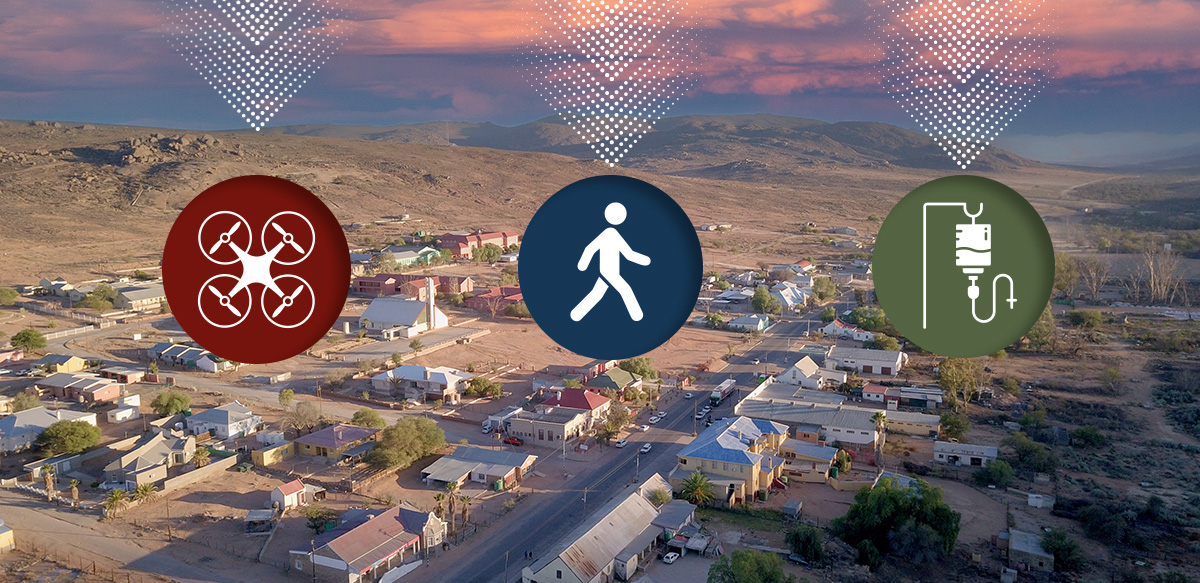
Currently, the Blood D.E.S.E.R.T. Coalition is focusing on four strategies to meet its mission.

Walking blood banks (WBB) employ an emergency process where compatible whole blood—either banked or urgently collected from a donor—is transfused after transfusion-transmitted infection.4 Originating with military applications, adapting this to civilian use could extend availability of blood transfusion to areas with limited access.
“Walking blood banks are not a new idea, but they fell out of favor with the development of standing, stored inventory of blood products,” explained Jacob Pendergrast, MD, medical director of the Blood Transfusions Service at Toronto’s University Health Network. “The problem is that if you don’t have routine use of a walking blood bank, it is hard to keep up with the testing of the donors to make sure that they are safe to donate blood.”
Any discussion of civilian WBBs has always included concerns about the safety of the blood supply. More modern adaptations of WBBs are looking to implement rapid point-of-care testing for donors instead of more time-consuming lab-based methods.
“That makes it much more viable, particularly in low-income countries where centralized testing can be more difficult to arrange,” Pendergrast said.
A mixed-method study published last year showed that use of a WBB for emergency transfusion in a rural, low-resource area of northwestern Kenya, was feasible and safe as a stop-gap measure. In this setting, rapid diagnostic testing demonstrated a 99.2% negative predictive value compared with enzyme immunoassays, the standard of care testing modality.5
Another important strategy being researched and implemented is the use of drone delivery of blood products, whether for standard blood restocking or for urgent medical emergencies.
“Drones, either fixed wing or quad copters, are of some value in areas that do not have adequate road access, or in areas where infrastructure has been disrupted because of weather conditions or armed conflicts,” Pendergrast said. “They may also be of use in circumstances where the use of human pilots cannot be justified either due to cost or the risk of the flight itself.”
The San Francisco-based company Zipline successfully launched a drone delivery blood program first in Rwanda in 2016 and later in Ghana, Nigeria, Japan and Kenya.6 In 2023, the company helped delivery more than 28,000 units of blood to patients in Rwanda. On average, these units were delivered within 42 minutes of the order being placed.7 A study estimated that the blood delivery system reduced nationwide in-hospital mortality from post-partum hemorrhage by 51%.8
Adoption of drone delivery to other areas or countries may face challenges. High-income countries looking to adopt this type of program may face increased regulatory barriers, Pendergrast said. Countries like Canada, with its vast underpopulated areas, may face logistical or technology issues.
“The distances are so enormous that existing drones such as those currently used in Rwanda, which had a maximum delivery distance of 150 km, may have limited utility,” Pendergrast said.
In areas where a WBB or drone-delivery are not options, use of intraoperative autotransfusion (IAT) is a viable alternative. IAT infuses uncontaminated blood lost into the body cavity back into the same patient. This method reduces or eliminates the need for allogeneic products.
“This is something that we use routinely in large hospitals during major surgeries such as, vascular repair operations,” Pendergrast said. “But it requires specialized equipment and people who know how to use that equipment. In blood deserts, it may be necessary to implement technologies that don’t involve processing (or ‘washing’) the shed blood prior to reinfusing it.”
IAT may be considered a blood-sparing intervention, often used when a patient is at risk for imminent death or disability.
“Initial studies exploring various autotransfusion techniques in several hundred patients with low-cost autotransfusion devices in South Africa and Kenya have shown feasibility of use in the low-resource setting and effectiveness in reducing the need for homologous blood products,” several members of the Blood D.E.S.E.R.T. Coalition wrote in a paper in The Lancet Global Health.9
More research is needed around the ideal scenarios in which to employ this technique.
The fourth strategy is the use of tranexamic acid (TXA), a hemostatic agent that can be injected to reduce bleeding if administered within three hours of a bleeding event occurring, explained Barnes.
TXA prevents the breakdown of blood clots in patients who are hemorrhaging. TXA is inexpensive and increased availability and use in low-resource settings could “help bridge the gap for hemorrhaging patients who are at risk of death and disability from injury, childbirth or surgical bleeding.”10
For those looking to aid the efforts of the Blood D.E.S.E.R.T. Coalition, there are multiple ways to get involved. For example, the organization is currently working to better define and map out blood deserts throughout the world.
“Participating in mapping out blood deserts and identifying where they are is an important first step,” Pendergrast said.
The Coalition is also looking to form partnerships with like-minded organizations to support the necessary research into the four strategies. Organizations across medical and surgical specialties are encouraged to reach out. “We also seek partnerships in the advocacy space to elevate the blood agenda globally,” Wesonga said, “and with funding organizations to support the Blood D.E.S.E.R.T. Coalition to achieve its mission and vision.”
There are also ways to help on a more individual level, Pendergrast added. For example, if someone lives in a community with a WBB, sign up and put your name on the donor list. Knowledge of blood-sparing interventions is also important, he said. Programs like ACS Stop the Bleed offer training on how to make and apply basic tourniquets. Prehospital application of tourniquets, when applied properly, have been shown to decrease the need for transfusion support and to have a significant mortality benefit in patients with major extremity injuries.11
Finally, the Blood D.E.S.E.R.T. Coalition’s website lists relevant news and publications related to blood deserts and has links to watch informative webinars on relevant topics.
“The Blood D.E.S.E.R.T. Coalition is shining an important light on a neglected area of our field – that is – parts of the world that lack access to safe blood transfusion,” said Meghan Delaney, DO, MPH, chief of the division of pathology & laboratory medicine and director of transfusion medicine at Children’s National Hospital, Washington, D.C. “This scarcity leads to lower standards for medical and surgical care for patients in these regions and should be a focus for our collective efforts in the future.”
BACK TO ISSUE
April 2026NEXT STORY
Expanding Global Blood and Biotherapies
Transfusion is AABB’s scholarly, peer-reviewed monthly journal, publishing the latest on technological advances, clinical research and controversial issues related to transfusion medicine, blood banking, biotherapies and tissue transplantation. Access of Transfusion is free to all AABB members.
Learn More About Transfusion Journal
Keep abreast of what's happening in the field of biotherapies with CellSource - AABB's monthly update on the latest biotherapies news.

To submit news about the blood and biotherapies field to AABB, please email news@aabb.org.


President
Jose Cancelas, MD, PhD, CABP
Chief Executive Officer
Debra Ben Avram, FASAE, CAE
Chief Communications and Engagement Officer
Julia Zimmerman
Director of Marketing and Communications
Jay Lewis, MPH
Managing Editor
Kendra Y. Mims, MFA
Senior Communications Manager
Drew Case
AABB News
(ISSN 1523939X) is published monthly, except for the combined November/December issue for the members of AABB; 4550 Montgomery Avenue; Suite 700 North Tower; Bethesda, MD 20814.
AABB is an international, not-for-profit association representing individuals and institutions involved in transfusion medicine, cellular therapies and patient blood management. The association is committed to improving health by developing and delivering standards, accreditation and educational programs that focus on optimizing patient and donor care and safety.
+1.301.907.6977
Email: news@aabb.org
Website: www.aabb.org
Copyright 2025 by AABB.
Views and opinions expressed in AABB News are not necessarily endorsed by AABB unless expressly stated.
Notice to Copiers: Reproduction in whole or part is strictly prohibited unless written permission has been granted by the publisher. AABB members need not obtain prior permission if proper credit is given.

4550 Montgomery Avenue
Suite 700, North Tower
Bethesda, MD 20814
301.907.6977