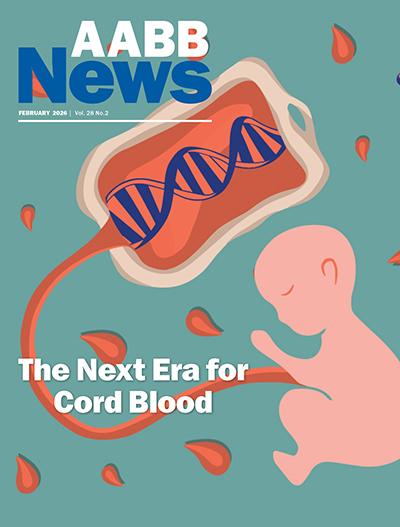
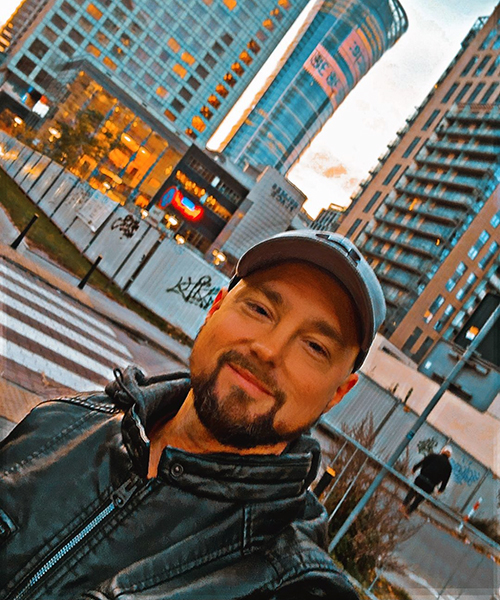
When he was only four years old, Matthew Farrow was diagnosed with Fanconi anemia, a rare genetic disorder that leads to bone marrow failure. In October 1988, at just five years old, Farrow became the first person in the world to receive a cord blood transplant. At the time, the procedure had never been performed in humans and was considered highly experimental.
The cord blood transplant was made possible through an international collaboration and used umbilical cord blood donated at birth by Farrow’s newborn sister, Alison. Her cord blood, which was cryopreserved rather than requiring an invasive bone marrow donation, saved Farrow’s life and marked the first documented use of cord blood as viable source for transplantation.
More than three decades later, Farrow remains healthy, leads a full life and is now a father. Farrow spoke with AABB News about the lasting impact of that pioneering medical procedure, the value of cord blood and how the transplant transformed his life.
I am humbled by the number of patients who have been saved by a science that was so experimental in 1988 when I received my transplant. I was a five-year-old boy that would have died from bone marrow failure, but I was given a second chance while medicine was in pursuit of a cure, using cord blood, since it is often difficult to find a bone marrow transplant for every patient that needs one to save their life.
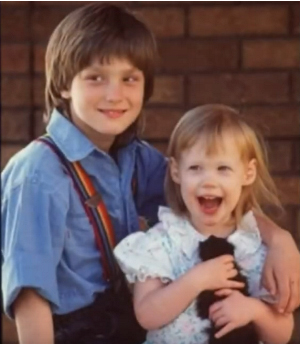
I’m very grateful for the team that worked internationally to give me another chance at life, and of course to my sister, whose cord blood was harvested, and to my family who supported me through the transplant. Having my own son, I can’t imagine how hard that journey must have been on them.
Cord blood, theoretically, is in such great supply considering every baby born into this world, could have the opportunity to have their cord blood collected. Cord blood is easier to collect and totally painless for the mother and baby. By having cord blood readily available, partially pre-tested and processed, the time saved could be the difference in saving a life.
But today, the majority of cord blood is thrown away. It feels as if this underutilized resource needs a “re-birth” in education and awareness.
Some patients have very few issues when looking for a matched donor of peripheral blood or bone marrow. But many people can’t find a matched donor, especially if the patient is Black, Brown or of mixed race. This is where cord blood could have a major role.
Donated cord blood is HLA tested before it is frozen, which could save a lot of time when a transplant surgeon is looking for a matched donor. This is incredibly helpful for many patients for whom finding a matched donor might be more challenging.
I want clinicians, banking professionals and researchers to understand how grateful we, as patients, are for their hard work. I also want them to know that the work they do today will have a huge impact on patients in the future, as well as patients in the present.
Every new discovery is a ripple in a lake, but lakes and rivers lead to oceans. A discovery or an advancement leads to more cures and saving more lives in the future.
Every year, the list of diseases and conditions that cord blood treats and cures grows longer and longer. With the addition of new science, such as gene therapy, the future is wide open! It excites me to think about all the possibilities!
BACK TO ISSUE
February 2026
Transfusion is AABB’s scholarly, peer-reviewed monthly journal, publishing the latest on technological advances, clinical research and controversial issues related to transfusion medicine, blood banking, biotherapies and tissue transplantation. Access of Transfusion is free to all AABB members.
Learn More About Transfusion Journal
Keep abreast of what's happening in the field of biotherapies with CellSource - AABB's monthly update on the latest biotherapies news.

To submit news about the blood and biotherapies field to AABB, please email news@aabb.org.


President
Jose Cancelas, MD, PhD, CABP
Chief Executive Officer
Debra Ben Avram, FASAE, CAE
Chief Communications and Engagement Officer
Julia Zimmerman
Director of Marketing and Communications
Jay Lewis, MPH
Managing Editor
Kendra Y. Mims, MFA
Senior Communications Manager
Drew Case
AABB News
(ISSN 1523939X) is published monthly, except for the combined November/December issue for the members of AABB; 4550 Montgomery Avenue; Suite 700 North Tower; Bethesda, MD 20814.
AABB is an international, not-for-profit association representing individuals and institutions involved in transfusion medicine, cellular therapies and patient blood management. The association is committed to improving health by developing and delivering standards, accreditation and educational programs that focus on optimizing patient and donor care and safety.
+1.301.907.6977
Email: news@aabb.org
Website: www.aabb.org
Copyright 2025 by AABB.
Views and opinions expressed in AABB News are not necessarily endorsed by AABB unless expressly stated.
Notice to Copiers: Reproduction in whole or part is strictly prohibited unless written permission has been granted by the publisher. AABB members need not obtain prior permission if proper credit is given.


4550 Montgomery Avenue
Suite 700, North Tower
Bethesda, MD 20814
301.907.6977