Shaping the future of cancer treatment and transplantation
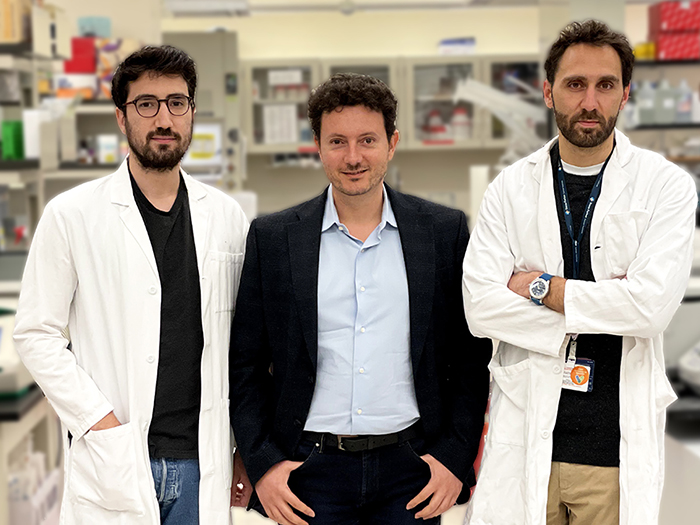
 Pietro Genovese, BSc, MSc, PhD
 Established in 1985, the AABB Foundation Scholar recognition celebrates advancements in research following the receipt of early-career grant funding from the AABB Foundation.
This month’s “AABB Foundation Grant Recipients: Where are They Now?” spotlights Pietro Genovese, BSc, MSc, PhD, researcher at Dana-Farber/Boston Children's Cancer and Blood Disorders Center, and assistant professor in pediatrics at Harvard Medical School. His current research focuses on gene-engineering technologies in hematopoietic stem cells and T cells, with the goal of developing new treatments for cancer and other critical diseases.
Genovese was selected as an AABB Foundation grant recipient in 2021 and a recipient of the Scholar Award in 2023. His “Engineering immunotherapy resistant hematopoiesis to treat high-risk acute myeloid leukemia” successfully modified normal bone marrow stem cells used for allogeneic transplantation to make them resistant to targeted therapies such as CAR-T cells. In preclinical studies, the strategy allowed the administration of highly effective immunotherapies without damaging healthy tissue.
According to Genovese, the goal of the funded project was to develop a strategy to engineer stealth hematopoiesis—editing donor hematopoietic stem/progenitor cells (HSPCs) to render them resistant to specific immunotherapies, while preserving the normal function of the targeted proteins.
“Acute myeloid leukemia (AML) remains one of the most challenging blood cancers to treat, especially in high-risk disease, where relapse after transplant is still far too common,” Genovese said. “A major barrier to bringing powerful immunotherapies to AML is that many of the best targets on leukemia cells are also present on normal blood stem and progenitor cells, so directing antibodies or CAR T cells against those targets risks destroying healthy hematopoiesis.”
The AABB Foundation supports innovation through early-career research grants that help investigators advance promising ideas at critical stages of development. Genovese told AABB News that the Foundation support arrived when his work was still firmly in the “idea-to-first-data” phase.
“We had a strong scientific rationale, but we had not yet reached proof of concept, which made it difficult to secure the funding needed for an approach that, at the time, could seem almost too bold to be practical,” he said. “We weren’t scaling something already validated. We were still trying to demonstrate, for the first time, that this concept could work at all. That’s exactly why the Foundation’s support was so catalytic.”
Without that early investment, Genovese acknowledged it would have been much harder to build the initial evidence needed to convince others—scientists, funders and ultimately regulators—that an ambitious idea had a realistic path forward. “AABB Foundation’s funding enabled us to take something that sounded like science fiction, generate the first proof points and begin turning it into something that could realistically be brought to patients,” he said.
Since receiving the Foundation grant, Genovese’s work has been published in a top scientific journal and has evolved from a single bold proof-of-concept into a broader platform. Multiple research groups have since demonstrated that engineering hematopoietic cells can help overcome on-target toxicity, reinforcing the idea that protecting normal tissue—rather than redesigning immune therapies alone—may be the key to unlocking their full potential in treatments for AML.
“It’s been incredibly energizing to see the field move in parallel toward the same central idea: if we can protect normal hematopoiesis, we can finally bring the most potent immunotherapies to AML targets that were previously off limits,” he said.
Genovese explained that protecting healthy tissue remains one of the central challenges in today’s most powerful immunotherapies because the immune system does not distinguish between cancerous and normal cells—it attacks anything displaying the targeted antigen.
“A classic example is CD19 in B-cell malignancies: CD19 CAR T cells work in part because patients can tolerate B-cell aplasia – and we can manage it clinically with immunoglobulin replacement – so the therapy’s collateral damage is acceptable in exchange for deep, durable remissions,” Genovese said.
The limiting factor, he explained, is not whether an effective CAR T-cell or antibody can be built, but whether it can be deployed without destroying the tissue clinicians are trying to preserve.
“The field has made important progress with the concept of engineering the graft to enable immunotherapy,” Genovese said. “For example, CD33 knockout approaches have provided proof of principle that modifying donor hematopoiesis can make otherwise toxic targeting strategies feasible, and some of these approaches have now moved into first-in-human testing.”
AABB Foundation’s funding enabled us to take something that sounded like science fiction, generate the first proof points and begin turning it into something that could realistically be brought to patients.
However, he noted that knockout strategies often focus on targets that are not essential for leukemia survival. This raises a real concern in AML treatment, as tumors may escape immune pressure through antigen downregulation or selection of antigen-low clones.
The goal, Genovese said, is to unlock potent immunotherapies against hard-but-important targets while simultaneously protecting healthy hematopoiesis, allowing AML to be treated aggressively without the cost of irreversible marrow toxicity.
“That’s where we believe our strategy can be even more powerful. Rather than choosing targets primarily because they are editable in normal cells, we are prioritizing targets that AML depends on, such as FLT3, CD123 and CD117, antigens and signaling nodes that are closely tied to leukemia survival, stemness and relapse biology,” he said. “Our approach changes the conversation from finding ever more specific targets to making normal cells resistant, so we can safely go after the most important tumor drivers.”
Genovese shared that the next major milestones involve moving from a strong preclinical foundation to clinical proof—a transition that is as much as an execution and support challenge as it is a scientific one. Advancing the approach will require the infrastructure and investment needed to translate a complex, high-risk strategy into a clinically viable therapy, including the ability to manufacture and test engineered grafts in a way that meets clinical and regulatory standards.
He noted that what makes the approach particularly challenging is that, unlike many single-product programs, it requires two advanced, costly cellular products: an engineered hematopoietic graft and a potent immune effector therapy. Demonstrating first-in-human feasibility therefore depends not only on technical readiness but also on sustained funding and coordinated institutional/industry support, he explained.
“That’s the hurdle we are actively working through now: assembling the right partnerships and putting the infrastructure in place so that we can generate the clinical proof that this concept is not only scientifically compelling, but also realistically deliverable to patients,” Genovese said.
Looking ahead, Genovese believes engineered hematopoiesis could become a major pillar of systems-level cancer therapy, an approach that involves engineering not only the immune effector cell, but also the normal tissue environment to make powerful therapies tolerable.
“What’s particularly exciting is that multiple groups are converging on the same idea with complementary approaches,” he said. “Over time, I expect we’ll see engineered grafts enabling multi-target immunotherapy, safer combinations and possibly new transplant paradigms where relapse prevention is built in from day one.”
Genovese credits the AABB Foundation and its early-stage funding with playing a vital role in advancing his research.
“The support is often the difference between an idea staying on paper and becoming a real therapeutic direction,” he said. “Innovative projects, especially those at the intersection of gene editing, transplantation and immunotherapy, require early experiments that can be technically demanding and not immediately fundable through conventional channels. AABB Foundation’s support allows investigators to generate decisive early data—proof of concept, feasibility and the first demonstrations of safety and function. Those results don’t just advance one lab; they help move an entire field closer to patients.”
Casirati G, Cosentino A, Mucci A, Salah Mahmoud M, Genovese P, et al. Epitope editing enables targeted immunotherapy of acute myeloid leukaemia. Nature. 2023 Sep;621(7978):404-414. doi: 10.1038/s41586-023-06496-5. Epub 2023 Aug 30. PMID: 37648862; PMCID: PMC10499609.
*Click here to learn more about supporting the mission of the AABB Foundation.
PREVIOUS STORY
Fear, Trust and the Fragility of Cord Blood BankingBACK TO ISSUE
February 2026
Transfusion is AABB’s scholarly, peer-reviewed monthly journal, publishing the latest on technological advances, clinical research and controversial issues related to transfusion medicine, blood banking, biotherapies and tissue transplantation. Access of Transfusion is free to all AABB members.
Learn More About Transfusion Journal
Keep abreast of what's happening in the field of biotherapies with CellSource - AABB's monthly update on the latest biotherapies news.

To submit news about the blood and biotherapies field to AABB, please email news@aabb.org.


President
Jose Cancelas, MD, PhD, CABP
Chief Executive Officer
Debra Ben Avram, FASAE, CAE
Chief Communications and Engagement Officer
Julia Zimmerman
Director of Marketing and Communications
Jay Lewis, MPH
Managing Editor
Kendra Y. Mims, MFA
Senior Communications Manager
Drew Case
AABB News
(ISSN 1523939X) is published monthly, except for the combined November/December issue for the members of AABB; 4550 Montgomery Avenue; Suite 700 North Tower; Bethesda, MD 20814.
AABB is an international, not-for-profit association representing individuals and institutions involved in transfusion medicine, cellular therapies and patient blood management. The association is committed to improving health by developing and delivering standards, accreditation and educational programs that focus on optimizing patient and donor care and safety.
+1.301.907.6977
Email: news@aabb.org
Website: www.aabb.org
Copyright 2025 by AABB.
Views and opinions expressed in AABB News are not necessarily endorsed by AABB unless expressly stated.
Notice to Copiers: Reproduction in whole or part is strictly prohibited unless written permission has been granted by the publisher. AABB members need not obtain prior permission if proper credit is given.

4550 Montgomery Avenue
Suite 700, North Tower
Bethesda, MD 20814
301.907.6977