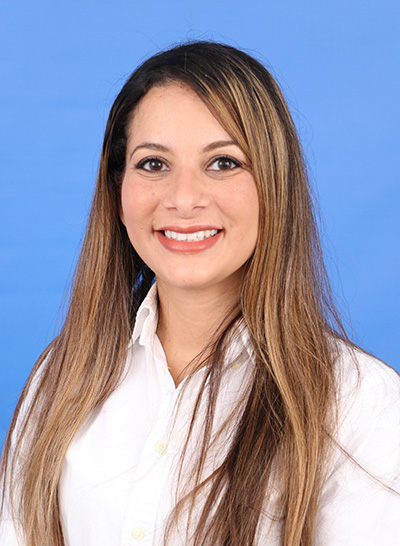
Rim Abdallah, MD, serves as one of the medical directors at Vitalant. Prior to joining Vitalant, Abdallah completed a two-year fellowship in transfusion medicine at the National Institutes of Health (NIH) in Bethesda, Md., and a residency in anatomic and clinical pathology at the George Washington University in Washington, D.C. She is board-certified in clinical pathology and blood banking/transfusion medicine. Abdallah received her medical degree from the Mohammed V University School of Medicine in Rabat, Morocco. Abdallah has numerous publications and presentations in the specialty of transfusion medicine. Her areas of interest include immunohematology, cellular therapy and recruiting and educating donors in underrepresented communities with the goal of diversifying the donor pool.
AABB NEWS: What drew you to specialize in transfusion medicine and, more specifically, what drives your passion for diversifying the donor pool?
Abdallah: I attended medical school in Morocco, where I had limited exposure to transfusion medicine. When I moved to the United States to continue my training, I worked in research with Dr. Craig Kessler at Georgetown University Hospital’s hemophilia treatment center while studying for the United States medical licensing examination. Through that work, I learned the history of how some patients with hemophilia tragically contracted HIV and hepatitis C through blood products in the early 1980s. That experience made patient safety and stewardship of the blood supply feel very personal, and it pushed me to learn more. It also led me to Dr. Gerald Sandler, the transfusion service medical director at Georgetown at the time. I completed a rotation with him, and his mentorship and dedication to the field were pivotal in shaping my decision to pursue this specialty.
My passion for diversifying the donor pool grew from recognizing a persistent disconnect in the U.S. between the donor base and the increasingly diverse population we serve. When the donor pool does not reflect our patient population, the impact is not theoretical. It can mean delays in finding compatible units, a higher risk of alloimmunization for chronically transfused patients, and avoidable inequities in care, particularly for patients with sickle cell disease (SCD). It became clear to me that improving representation in the donor pool is essential for long-term blood supply sustainability and for health equity.
I wanted to understand why this gap exists, what barriers communities face, what builds trust and how we can partner in ways that are respectful, consistent and community-led. I was fortunate to meet Dr. Yvette Miller during my transfusion medicine fellowship at the NIH. It was during the Annual Immunohematology and Blood Transfusion Symposium (co-hosted by NIH and American Red Cross), and she served as the subject matter expert for a clinical vignette that I presented. She has been a major inspiration and mentor, and we share the same passion and commitment to strengthening and diversifying the donor pool, so every patient, regardless of background, has timely access to safe, compatible blood.
AABB NEWS: Your areas of interest include immunohematology and cellular therapy. How do these areas intersect with donor recruitment and the evolving needs of patients?
Abdallah: Immunohematology and cellular therapy intersect with donor recruitment in a very practical way because both fields depend on having the right blood products available for the right patient at the right time. In immunohematology, compatibility is not just about ABO and RhD. Red cell antigen expression is strongly influenced by genetics and ancestry, which means the antigen profile of the donor population directly affects how quickly we can find compatible, antigen negative units for patients who require chronic transfusion support.
When the donor pool is predominantly European ancestry, it becomes more difficult to source certain antigen negative phenotypes commonly needed for chronically transfused patients. A good example is the need for C-negative and E-negative units. Those units are often two to three times more readily available from donors of African descent, reflecting underlying population genetics rather than race. In addition, donors of African descent who are C-negative and E-negative are more likely to be RhD-positive, which helps us preserve scarce RhD-negative inventory for patients who truly need it.
Cellular therapy further amplifies the importance of this issue. Cell and gene therapies are expanding rapidly, including emerging curative approaches for SCD that involve collecting a patient’s own hematopoietic stem cells, modifying them ex vivo to correct the disease mechanism or increase fetal hemoglobin, and then infusing them back after conditioning. These therapies require substantial transfusion support before, during and after treatment. For patients who are alloimmunized or for whom compatible antigen negative units are difficult to obtain, transfusion support becomes a major barrier to safely delivering these therapies.
In that sense, donor recruitment and donor diversity are not separate from immunohematology and cellular therapy. A more representative donor pool improves compatibility, reduces delays, supports better patient outcomes and helps ensure that advanced therapies can be delivered equitably rather than being limited by preventable constraints in transfusion support.
AABB NEWS: Your presentation at the 2025 AABB Annual Meeting emphasized the importance of recruiting donors from underrepresented communities. Why is diversifying the donor pool so critical for patient care, particularly in transfusion medicine?
Abdallah: Diversifying the donor pool is critical because it is directly tied to patient safety, equity and the long-term stability of the blood supply.
When the donor pool does not reflect the diversity of the patient population, it becomes harder to find appropriately matched units. That can lead to delays in care and increase the risk of alloimmunization for chronically transfused patients, particularly patients with SCD, who often require antigen matched red cells over a lifetime. A more representative donor base helps us provide the right unit for the right patient at the right time, more reliably and more equitably.
Diversifying donors also strengthens inventory management and operational resilience. Different communities contribute different ABO distributions, and type O blood is consistently in high demand. Engaging communities with higher proportions of type O donors (such as Latinos, African Americans and American Indians) helps balance inventory, supports local and regional needs and improves preparedness for seasonal shortages and emergencies.
Finally, this is a sustainability imperative. The U.S. is becoming increasingly diverse, and younger Americans are far more diverse than older generations. At the same time, we are seeing an aging donor base. If we want a resilient blood supply for the future, we need to reach and retain donors from underrepresented communities now, not only to meet today’s compatibility needs but also to ensure the blood supply keeps pace with the changing demographics of the patients we serve.
AABB NEWS: From your experience, what are the biggest barriers that prevent people in underrepresented communities from donating blood, and how can blood centers better address them?
Abdallah: The barriers are real, and they are not one size fits all. In my experience, the biggest obstacles tend to fall into a few overlapping categories, and addressing them requires humility, consistency and genuine partnership.
For many Black communities, mistrust is a major barrier. This hesitation is not irrational. It is rooted in a long history of exploitation and unethical treatment in health care and reinforced by the specific history of blood donation in the U.S. During World War II, Black donors were initially banned from donating blood. When donations were later accepted, they were segregated by race under policies driven by racism rather than science, and this persisted until desegregation occurred after sustained public pressure and activism. That history still shapes perceptions today. Many potential donors question whether they will be treated respectfully, how their donation will be used, and whether their communities will truly benefit. Misinformation also persists, including concerns about safety and fears that blood donation could cause harm.
Blood centers can address these concerns by acknowledging the history directly, listening first and building trust through consistent presence and education. Trust is earned by showing up repeatedly with the same partners, being transparent about how blood is used and ensuring the donation experience is respectful and welcoming. Representation matters as well. Having staff, volunteers and community ambassadors who reflect the community helps donors feel understood and increases credibility. Equally important is closing the loop by sharing impact, such as letting donors know that their donation reached a hospital and helped a patient, because that makes the benefit tangible.
For many Latino and other immigrant communities, common barriers include language, limited awareness of the U.S. donation system and uncertainty about eligibility, especially among foreign-born donors who may be unfamiliar with how blood centers operate in the U.S. Blood centers can reduce these barriers by making the process easy to navigate in the donor’s preferred language and by meeting donors where they are. At Vitalant, for example, we offer materials in both Spanish and English, provide interpreter support, and maintain Spanish language digital resources, including a Spanish version of our website and digital outreach in Spanish. These are practical steps that signal inclusion and reduce anxiety about the process.
Across communities, structural barriers also matter. People are busy, transportation can be difficult, work schedules are tight and childcare is a real issue. If donation is inconvenient, even motivated people will not return. That is why flexible hours, mobile drives in trusted community locations and a consistently positive donor experience are all essential.
Ultimately, the most effective approach is community-led. Blood centers do best when they partner with trusted local organizations, faith-based groups such as mosques and other places of worships, colleges, and community leaders, then co-design outreach that reflects what the community says it needs. When we lead with listening and follow through with action, we build relationships that make donation feel familiar, safe and worthwhile.
I hope to contribute to collaborative research and quality improvement efforts that identify scalable best practices across blood centers, so we can close the gap together and build a blood supply that is both resilient and equitable for the future.
AABB NEWS: Vitalant has launched campaigns aimed at expanding and diversifying its donor base. Can you highlight one initiative you’re especially proud of and the impact you’ve seen so far?
Abdallah: One initiative I am especially proud of is Vitalant’s Strength of Us campaign. It is a focused effort designed specifically to engage Black donors and blood drive coordinators through messaging that is respectful, culturally relevant and grounded in community partnership. What makes this initiative stand out is that it was not built in isolation. Our marketing team formed a Strength of Us review committee made up of Black Vitalant employees from different departments and levels to ensure the campaign language, visuals and outreach approach are appropriate, authentic and aligned with how the community communicates and builds trust.
The impact has been meaningful in two ways. First, it has strengthened our internal readiness by helping staff understand the unique barriers, motivators and historical context that influence donation decisions in Black communities. That shared understanding improves how we show up, not just what we say. Second, it has expanded our external partnerships in tangible ways. The campaign has supported relationship building with trusted organizations such as historically Black colleges and universities and alumni chapters, as well as community physicians, local ambassadors and committed Black donors who can carry the message within their networks. Those partnerships are essential because sustained trust is built through consistent presence and credible messengers, not one time outreach.
More broadly, Strength of Us also reflects Vitalant’s commitment to making diversity, equity, inclusion and belonging a foundational part of our culture and mission. Our leadership has been clear that this is not a short-term campaign, but a long-term way of working. Programs like this help create a durable framework for increasing representation in our donor base, strengthening the blood supply and improving equitable access to transfusion support for the patients and communities we serve.
AABB NEWS: What gives you the most hope about the future of donor recruitment and transfusion medicine, and what goals are you personally excited to pursue in the years ahead?
Abdallah: What gives me the most hope is how much momentum and shared commitment I now see across the field of transfusion medicine to address donor diversity and donor recruitment in a more intentional, evidence-based way. There is growing recognition that this is not only a recruitment challenge, but also a patient safety and health equity priority. At the 2025 AABB Annual Meeting, the presence of multiple sessions focused on donor diversity signaled that the field is moving from awareness to action. I am grateful to AABB for elevating these conversations and helping create a platform where blood centers, hospitals, researchers and community partners can learn from one another.
I am also hopeful because we are increasingly focusing on partnership and accountability. The most promising work I see is community-centered and relationship-driven, supported by data that helps us understand what barriers exist, which interventions are effective and how to measure progress over time. We still have a lot to learn, but the willingness to listen, to adapt and to invest in sustained engagement is stronger than it has been in the past.
In the years ahead, I am personally excited to pursue several goals. First, I want to continue building and evaluating practical strategies that improve recruitment and retention of donors from underrepresented communities, with an emphasis on trust building, culturally responsive communication, and reducing structural barriers to donation. Second, I want to strengthen the link between donor diversification and clinical outcomes by highlighting how a more representative donor pool improves access to compatible blood, reduces alloimmunization risk, and supports patients who depend on chronic transfusion, particularly those with SCD. Finally, I hope to contribute to collaborative research and quality improvement efforts that identify scalable best practices across blood centers, so we can close the gap together and build a blood supply that is both resilient and equitable for the future.
AABB NEWS: What are your favorite leisure activities outside of work?
Abdallah: My favorite leisure activities are spending quality time with my family and friends, traveling and learning about different cultures and traditions. I also enjoy exercising and taking group classes at the gym. Zumba is my favorite because it combines fitness with dancing, and if there is a dance floor somewhere, you can be sure I will find it.
BACK TO ISSUE
January 2026NEXT STORY
A Year in Review
Transfusion is AABB’s scholarly, peer-reviewed monthly journal, publishing the latest on technological advances, clinical research and controversial issues related to transfusion medicine, blood banking, biotherapies and tissue transplantation. Access of Transfusion is free to all AABB members.
Learn More About Transfusion Journal
Keep abreast of what's happening in the field of biotherapies with CellSource - AABB's monthly update on the latest biotherapies news.

To submit news about the blood and biotherapies field to AABB, please email news@aabb.org.


President
Jose Cancelas, MD, PhD, CABP
Chief Executive Officer
Debra Ben Avram, FASAE, CAE
Chief Communications and Engagement Officer
Julia Zimmerman
Director of Marketing and Communications
Jay Lewis, MPH
Managing Editor
Kendra Y. Mims, MFA
Senior Communications Manager
Drew Case
AABB News
(ISSN 1523939X) is published monthly, except for the combined November/December issue for the members of AABB; 4550 Montgomery Avenue; Suite 700 North Tower; Bethesda, MD 20814.
AABB is an international, not-for-profit association representing individuals and institutions involved in transfusion medicine, cellular therapies and patient blood management. The association is committed to improving health by developing and delivering standards, accreditation and educational programs that focus on optimizing patient and donor care and safety.
+1.301.907.6977
Email: news@aabb.org
Website: www.aabb.org
Copyright 2025 by AABB.
Views and opinions expressed in AABB News are not necessarily endorsed by AABB unless expressly stated.
Notice to Copiers: Reproduction in whole or part is strictly prohibited unless written permission has been granted by the publisher. AABB members need not obtain prior permission if proper credit is given.

4550 Montgomery Avenue
Suite 700, North Tower
Bethesda, MD 20814
301.907.6977