How personal loss shaped Ron Jacob’s mission to recruit donors and save lives
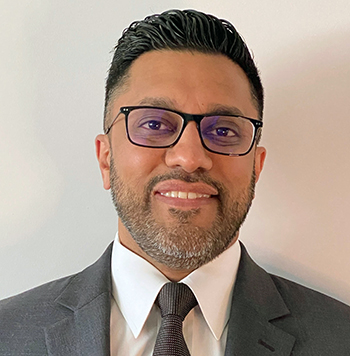
Ron Jacob, MD, director of member recruitment at NMDP, first learned about the potential life-saving impact of blood stem cell donation for patients with blood cancer when his childhood friend received an unexpected leukemia diagnosis. At the time, Jacob was a second-year medical student who had never heard of peripheral blood stem cell donation. The sobering news moved him to take action.
“That was the first time I discovered the National Blood Stem Cell Registry [formerly National Marrow Donor Program and Be The Match],” Jacob recalled. “I remember running to my pathology book, trying to learn more about leukemia and bone marrow transplantation, and what the registry did, and there was literally one line about it. Honestly, I was embarrassed that, as a med student, I knew nothing about the process or the national registry.”
Jacob and his friends rallied together and began volunteering with NMDP to find a match for their friend, Bevin, hoping that one of them would be a match or that they could find someone who was. “We all grew up together. We went to the same church. I’ve known him since I was five years old,” Jacob said. “He was charismatic and charming and someone everyone loved being around, so it affected everyone deeply.”
Unfortunately, a match could not be found, and Bevin died in 2008. That experience propelled Jacob into a new journey with NMDP after medical school—from volunteering to transitioning into an account manager role and eventually becoming an executive director at a blood stem cell donation center in New York.
Jacob’s professional journey came full circle in 2014 when he was identified as a match for a patient and donated his peripheral blood stem cells.
“After our friend passed, ultimately, every one of us decided that if we were ever given the opportunity to ensure another family doesn’t go through what his family experienced, we were going to do it. There’s no reason to say no,” he said. “That’s when everything came full circle for me—going from volunteer to employee to donor. You literally become part of the mission.”
Since 1987, NMDP has impacted more than 140,000 lives through cellular therapy. As the director of recruitment for the East Coast region, Jacob oversees 26 team members from Maine to Florida. His recruitment teams are responsible for educating and enrolling committed and available donors into the NMDP registry. He discussed their strategic approach to recruiting younger donors through college campuses and community events, highlighting partnerships with fraternities, sororities and student organizations across the country.
“We understand that younger donors are the best donors, and they lead to the best outcomes. Knowing that, we go where they are, which is most often college campuses. We follow the academic calendar closely,” he said. “We still host community events and corporate events, and work with faith-based organizations, and that’s something we’ll always do. We want to be in the community to stay connected, provide resources and add committed donors.”
The greatest hurdle, Jacob noted, is convincing potential donors to accept the opportunity to save lives—an offer people decline more than half the time.
“We are currently working to address and ensure that all the misconceptions and preconceived notions are addressed on the front end, and that education is presented in a way that answers everyone's questions,” Jacob told AABB News. “We’re drilling down into why—what misconceptions exist, what educational opportunities we have—and adjusting how we educate people when they register.”
Jacob attributes some of the common misconceptions around blood stem cell donation, such as fear of pain, to misleading portrayals in media. He clarified that marrow donation is typically performed under general anesthesia, and that peripheral blood stem cell collection is more common.
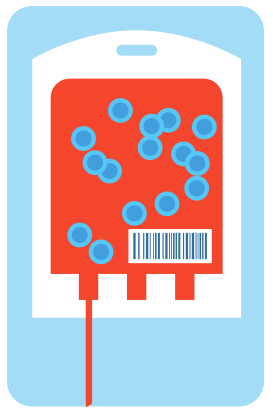
“Movies and medical dramas often portray marrow donation as extremely painful. We need to educate people that marrow donation comes from the back of the hip bone. It’s not your spinal cord or vertebrae,” he explained. “We also need to teach that marrow donation is only done about 10% of the time. About 90% of the time, it’s peripheral blood stem cell collection, which is similar to platelet or plasma donation. We provide a medication that increases stem cells in the bloodstream, and that’s how the donation is done.”
There is also a common assumption that donating peripheral blood stem cells is costly. Jacob debunks that myth, noting that not only is donating free, but NMDP covers all expenses—travel, meals, lodging—for the donor and a travel companion.
“We don’t want donors to worry about expenses,” he added. “It's about supporting them and providing what they need, especially family support and information. Those are the things we have in place and need to continue to ensure donors are available.”
Research shows that patients with diverse ethnic backgrounds have historically faced less than a 50% chance of finding a fully matched donor (8/8 match) due to inherited human leukocyte antigen (HLA) and underrepresentation on the registry.1 To that end, donor diversity is vital for advancing biotherapy research, as HLA typing is influenced by race and ethnicity. Jacob highlighted NMDP's efforts to partner with cultural and ethnic organizations to increase diverse donor participation, including multiple historically Black fraternities and sororities, as well as Asian-focused, Hispanic-focused and African American organizations.
“To have optimal donors, we need younger donors and diverse donors,” he said. “Our vision is that all patients have a match, and that includes diverse populations. As an organization, we have a responsibility to ensure we’re providing education that helps people feel confident and comfortable with not only joining the registry but following through with donation.”
“There needs to be a cultural shift in how we, as an American culture, understand the impact we can make. The opportunity is there for us.”
An observational study conducted by the Center for International Blood and Marrow Transplant Research (CIBMTR) found that donor age significantly influences both overall survival and event-free survival, with donors aged 18 years showing substantial benefits compared with donors aged 34 years and older.2 Jacob emphasized a growing opportunity to address a generational gap and better engage younger individuals.
“The younger generation wants to change the world. They’re socially conscious and altruistic. It’s a matter of working with them and working with their parents too,” he said. “Many 18-25-year-olds are still influenced by parents who may not understand what stem cell donation entails or what the commitment looks like. There needs to be a cultural shift in how we, as an American culture, understand the impact we can make. The opportunity is there for us.”
Looking ahead, Jacob said he is most excited about NMDP’s Donor for All program and its successful outcomes with mismatched donors. The initiative is revolutionizing cellular therapy by expanding access to partially matched donors and has the potential to improve transplant outcomes.
“This is especially important for ethnically diverse populations,” he said. “I’m excited to see outcomes with 7/8 matches and 6/8 matches—and potentially 5/8 and 4/8. But we still need younger donors and diverse donors. The onus doesn’t change. What it shows is that the opportunity to impact more patients is expanding, and that everyone truly has an opportunity for a transplant.”
Nearly 20 years after he began his quest to find a blood stem cell donor for his childhood friend, Jacob remains committed to the mission of helping patients receive life-saving cellular therapy and honoring the memory of his loved one. He expressed gratitude for the unique opportunity to directly impact patients every day through his work—a role he described as fulfilling.
“It’s rare that you can wake up every morning and say, “Everything I do today impacts a patient.” Every little thing I do can potentially save a life,” Jacob said. “It's amazing to wake up and go to bed knowing you made a difference. That’s what drives many people in our organization—from our CEO to our recruitment and marketing teams. Everyone knows their job matters in an incredible way. NMDP literally saves lives, and that’s the beauty of what we do.”
BACK TO ISSUE
January 2026
Transfusion is AABB’s scholarly, peer-reviewed monthly journal, publishing the latest on technological advances, clinical research and controversial issues related to transfusion medicine, blood banking, biotherapies and tissue transplantation. Access of Transfusion is free to all AABB members.
Learn More About Transfusion Journal
Keep abreast of what's happening in the field of biotherapies with CellSource - AABB's monthly update on the latest biotherapies news.

To submit news about the blood and biotherapies field to AABB, please email news@aabb.org.


President
Jose Cancelas, MD, PhD, CABP
Chief Executive Officer
Debra Ben Avram, FASAE, CAE
Chief Communications and Engagement Officer
Julia Zimmerman
Director of Marketing and Communications
Jay Lewis, MPH
Managing Editor
Kendra Y. Mims, MFA
Senior Communications Manager
Drew Case
AABB News
(ISSN 1523939X) is published monthly, except for the combined November/December issue for the members of AABB; 4550 Montgomery Avenue; Suite 700 North Tower; Bethesda, MD 20814.
AABB is an international, not-for-profit association representing individuals and institutions involved in transfusion medicine, cellular therapies and patient blood management. The association is committed to improving health by developing and delivering standards, accreditation and educational programs that focus on optimizing patient and donor care and safety.
+1.301.907.6977
Email: news@aabb.org
Website: www.aabb.org
Copyright 2025 by AABB.
Views and opinions expressed in AABB News are not necessarily endorsed by AABB unless expressly stated.
Notice to Copiers: Reproduction in whole or part is strictly prohibited unless written permission has been granted by the publisher. AABB members need not obtain prior permission if proper credit is given.

4550 Montgomery Avenue
Suite 700, North Tower
Bethesda, MD 20814
301.907.6977