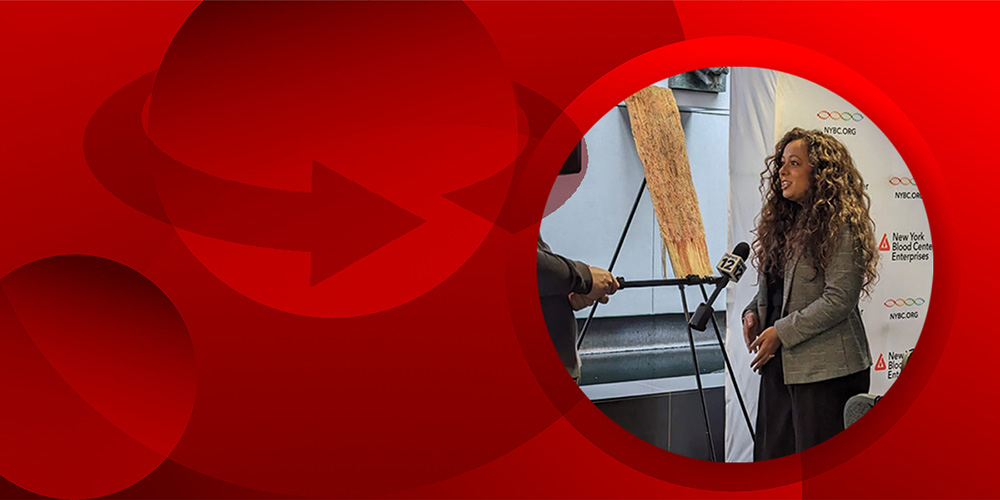
On August 23, 2021, Jaime Singh, a longtime blood donor, underwent a minor uterine procedure that nearly cost her life. Complications quickly arose following her surgery, including massive hemorrhaging that required blood transfusions throughout the night.
Singh was rushed to the operating room after the third hemorrhaging episode, describing it as the worst night of her life. “Each time I lost blood, I needed a unit of blood transfused,” she said, noting she received 13 units of whole blood, 11 units of plasma and nine units of platelets. “The hospital had to keep giving me blood just to keep me alive and prevent my organs from shutting down. I wouldn’t have made it to the operating room without those transfusions.”
Singh recalled a moment of epiphany on her way to the operating room: a donor could become a recipient at any given moment. “A nurse was running beside me, holding the bag of blood up, transfusing me as we went. That’s when it really hit me,” she said. “Before, I was just a donor. You give blood, go home, and you don’t really know where it goes. Then suddenly, I was the recipient. That shift opened my eyes to just how important donation is.”
Singh, 37, became a blood donor in 2011 after seeing a blood mobile at her workplace in Orlando. She read a pamphlet about her O-negative blood type—the most often used during emergencies—and learned only 7% of the population is O- negative. “I didn’t realize at first how important it was or how special it is to have that blood type. That really stuck with me,” she said.
“When I go back to donate now, I look around at the other donors and think, any one of these people could have saved my life.”
Singh said her personal experience of transitioning from a universal donor to a blood recipient has given her a new perspective of blood donation and deepened her appreciation for blood donors.
“When I go back to donate now, I look around at the other donors and think, any one of these people could have saved my life,” she said. “I remember once being told my blood was being rushed to a premature baby in the NICU. That was powerful. But nothing compares to being on the receiving end yourself.”
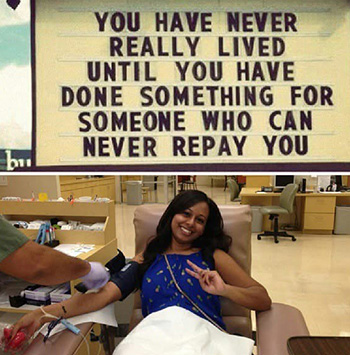
Singh noted that her traumatic medical experience introduced new fears. She found herself battling anxiety when she stepped inside a doctor’s office, and the sight of needles and blood made her uneasy. It took her one year to return to regular blood donation. “I remember it was my birthday week. My husband came with me, my sister-in-law donated, and then my mom did too. It became a family thing,” she said. “After what happened, I knew I wanted to donate again. I’m alive because of blood donors. I’ve encouraged my husband, my twin, and my mom to donate too since we’re all O-negative. I’ve become that person in my family who’s always saying, ‘You should donate.’”
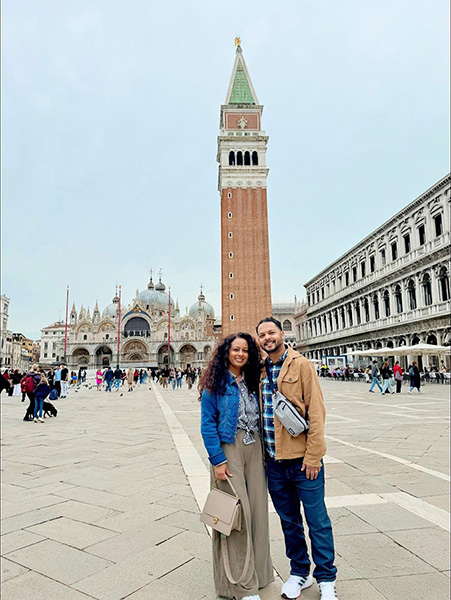
Jaime Singh and her husband Ramesh vacationing in Venice, Italy.
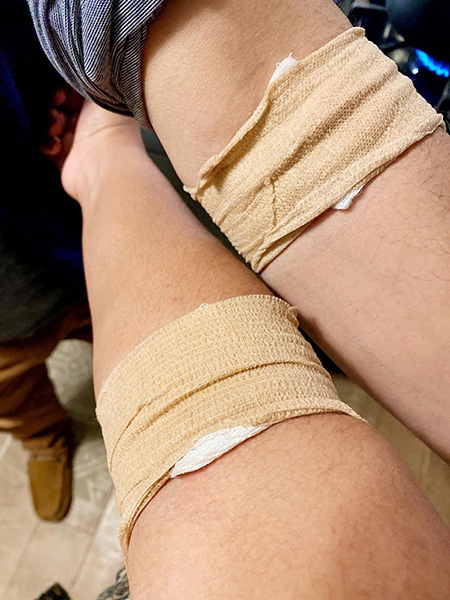
Singh and her husband donate blood together for her 35th birthday in February 2023.
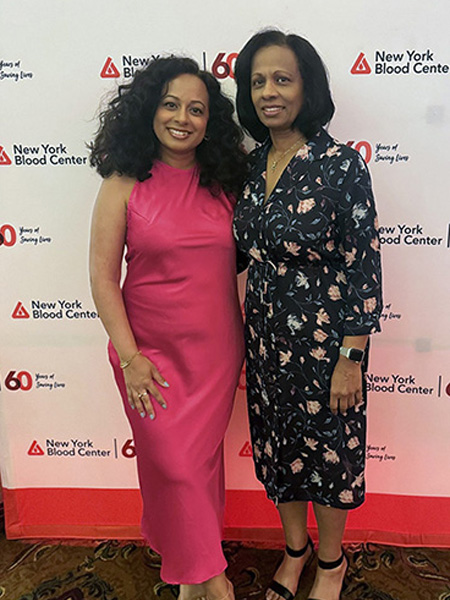
Guest speaker Singh and her mother at the NYBCe Long Island Chairpersons' Recognition Event in May 2024.
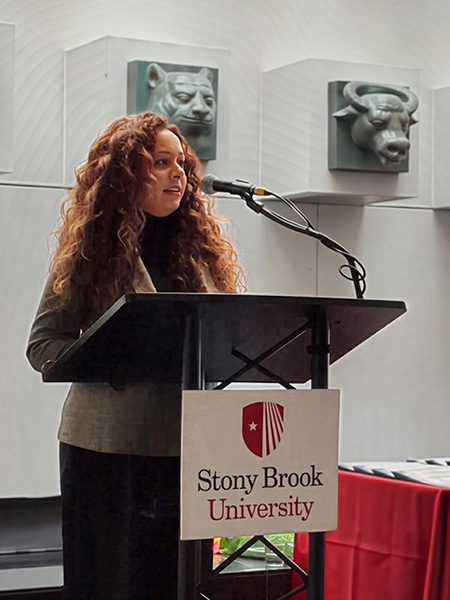
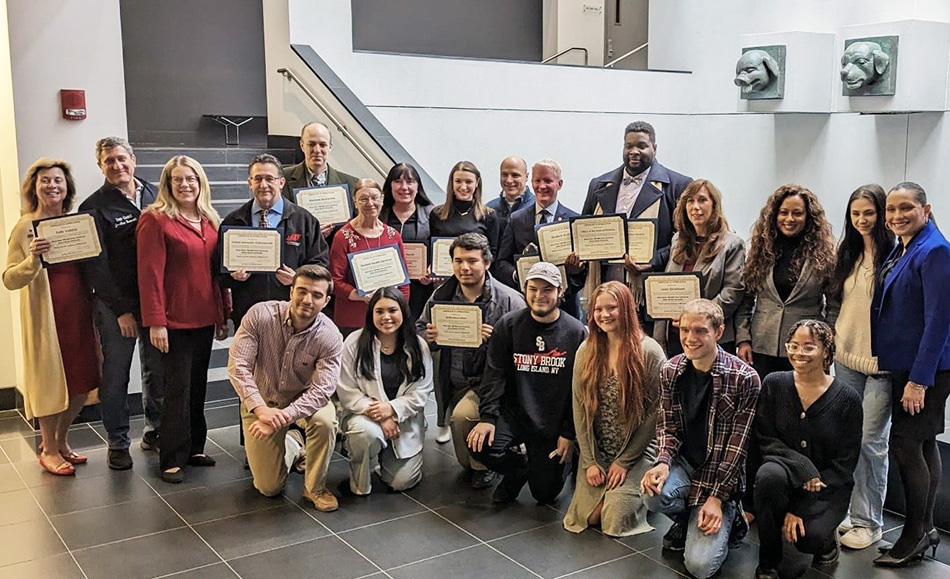
In 2023, Singh spoke at the NYBCe and Stony Brook University event, which celebrated 100,000 lives saved through blood donations.
As an advocate for blood donation, Singh shares her journey of overcoming post-traumatic stress disorder to encourage hesitant donors to push past their fears and focus on the bigger picture.
“I’ve felt that same fear too, especially after what I went through. I experienced a lot of medical trauma and PTSD. But I felt that donating was more important, so I pushed past it,” she said. “The process is very safe and relatively painless. The more you do it, the less scary it becomes. Your mind and body relearn that you’re safe. Sometimes you just have to push past the fear. If I can do it, anyone can. People truly need our blood.”
Singh said she hopes her story resonates with potential donors and emphasizes that healthy individuals may unexpectedly need a life-saving blood transfusion.
“I was healthy. No issues. It was a minor surgery I had even undergone before, and in a split second, I went from donor to recipient,” Singh said. “If you’re healthy and able to donate, donating is such a small amount of time, but it can give someone—someone like me—another chance at life. Donating blood saves lives.”
Today, Singh channels her gratitude into advocacy. She has collaborated with New York Blood Center Enterprises (NYBCe), speaking at various events that honor O-negative donors and blood drive organizers. She said she is deeply grateful to the NYBCE for its lifesaving mission to support both donors and patients.
“It’s been a real privilege to partner with the NYBCe and Christine Foran [director of corporate and community events],” Singh told AABB News. “I feel so much gratitude, not just for donors, but for everyone who works to make this possible. There aren’t enough words to thank the people who helped save my life. I can’t quantify it. It’s priceless. This is my life, and I am thankful that organizations like AABB, NYBCE and other blood centers exist.”
PREVIOUS STORY
Closing the Gap in Blood Stem Cell DonationBACK TO ISSUE
January 2026
Transfusion is AABB’s scholarly, peer-reviewed monthly journal, publishing the latest on technological advances, clinical research and controversial issues related to transfusion medicine, blood banking, biotherapies and tissue transplantation. Access of Transfusion is free to all AABB members.
Learn More About Transfusion Journal
Keep abreast of what's happening in the field of biotherapies with CellSource - AABB's monthly update on the latest biotherapies news.

To submit news about the blood and biotherapies field to AABB, please email news@aabb.org.


President
Jose Cancelas, MD, PhD, CABP
Chief Executive Officer
Debra Ben Avram, FASAE, CAE
Chief Communications and Engagement Officer
Julia Zimmerman
Director of Marketing and Communications
Jay Lewis, MPH
Managing Editor
Kendra Y. Mims, MFA
Senior Communications Manager
Drew Case
AABB News
(ISSN 1523939X) is published monthly, except for the combined November/December issue for the members of AABB; 4550 Montgomery Avenue; Suite 700 North Tower; Bethesda, MD 20814.
AABB is an international, not-for-profit association representing individuals and institutions involved in transfusion medicine, cellular therapies and patient blood management. The association is committed to improving health by developing and delivering standards, accreditation and educational programs that focus on optimizing patient and donor care and safety.
+1.301.907.6977
Email: news@aabb.org
Website: www.aabb.org
Copyright 2025 by AABB.
Views and opinions expressed in AABB News are not necessarily endorsed by AABB unless expressly stated.
Notice to Copiers: Reproduction in whole or part is strictly prohibited unless written permission has been granted by the publisher. AABB members need not obtain prior permission if proper credit is given.


4550 Montgomery Avenue
Suite 700, North Tower
Bethesda, MD 20814
301.907.6977