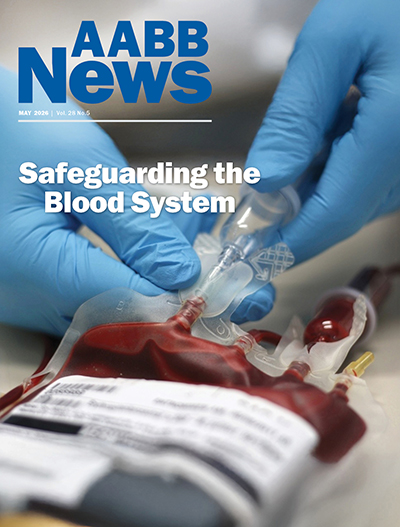
A pioneer in blood safety during the HIV/AIDS epidemic, Edgar Engleman, MD, shaped screening efforts and laid the groundwork for cellular therapies used in cancer treatment.
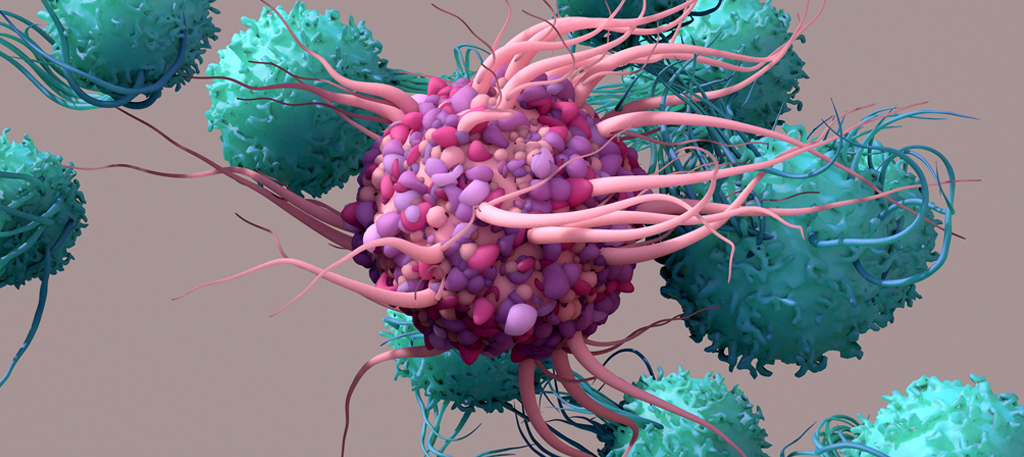
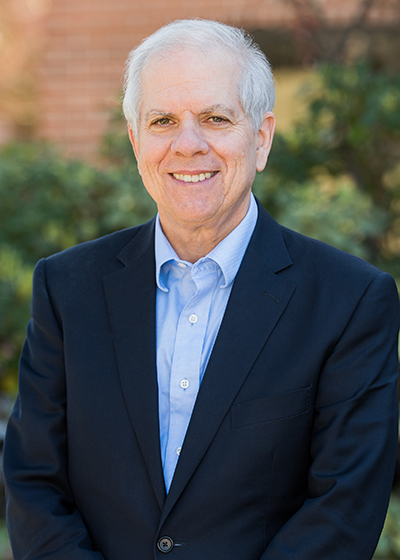
After discovering that critical immune cells were being selectively lost in patients with AIDS during the early days of the epidemic, Edgar Engleman, MD, set out to develop the first screening test to identify asymptomatic carriers before symptoms appeared. These cells – CD4+ T cells – were a key indicator of disease progression, and early studies showed that individuals who would later develop AIDS had declining CD4+ T cell counts years before HIV was discovered.
Engleman, professor of pathology and medicine at Stanford University School of Medicine and medical director of the Stanford Blood Center, and his team generated the first monoclonal antibodies to human T lymphocytes, including anti-CD4 and anti-CD8, enabling them to detect and count CD4+ T cells in the blood among high-risk individuals and blood donors.
“We knew, almost from the very beginning, that AIDS was an infectious disease,” Engleman said. “Between 1980 and 1982, we learned that it was lethal and transmitted through contaminated needles and blood. That was genuinely frightening, both in my role in blood banking and in immunology.”
Through practice studies, Engleman discovered that the testing he developed for CD4+ T cells had a high accuracy level. Initially, testing was conducted on individuals in the Bay Area who were aware of their potential risk.
“I recognized that we had a practical way of testing people at high risk of both developing AIDS and transmitting it through blood donation,” he said. “We studied approximately 200 individuals who either had AIDS or had been exposed to it, and the test was extremely sensitive and predictive.”
On that basis, Engleman wrote letters to blood banks around the country, offering his antibody test for free to improve blood safety. But his proposal garnered little interest, and he faced overwhelming resistance.
“Nobody wanted to do it back then,” he recalled. “There was a general belief that voluntary deferral was sufficient, and that because only 15 or 20 transfusion-transmitted AIDS cases were known at the time, it was exceedingly rare.”
The problem, he explained, was that AIDS develops slowly, and it can take several years to accurately know how many people were affected. Today, estimates are that more than 12,000 people in the United States were infected with HIV through blood transfusions before mandatory screening was implemented in 1985.¹ At the Stanford Blood Center, Engleman and his team began testing before the mandate.
“By the peak of the untested period, thousands of people developed AIDS from transfusion products,” he added. “Here at Stanford, we had no transfusion-transmitted AIDS cases, because we tested. And when a donor tested positive, we would meet with them, advise them of our findings, ask about any risk behaviors and ask them to defer from donating until we had clearer methods.”
Despite developing a test that showed abnormal results in less than 2% of donors in the Bay Area, Engleman said the blood banking community resisted implementing it due to financial concerns and fears that widespread positives would reduce the blood supply. As a result, the testing was not adopted nationally, with most blood banks not testing at all. According to Engleman, the lack of widespread testing was a missed opportunity to safeguard the blood supply.
“I think the data was very clear and, in retrospect, most people would agree the field made a mistake,” he said. “The test generated a great deal of unnecessary hostility. It wasn't FDA-licensed; we conducted it on an emergency basis. I recognized it was not a perfect test, and at that point, no one knew what the causative agent was; that came two and a half years later. Once HIV was identified, mandatory testing was established. I was actually subpoenaed to testify before Congress about the test and why it hadn't been more widely used.”
In addition to Engleman’s work during the AIDS crisis, his research into the use of immune cells to treat disease laid the foundation for the first FDA-approved cellular therapy and helped usher in a new era in which cellular therapies have become a standard treatment for many cancers.
Engelman, who founded the Stanford Blood Center in 1978, began a decades-long investigation into myeloid cell biology, focusing initially on dendritic cells. His group is credited as the first to develop a method for isolating and arming human dendritic cells and evaluate their ability to induce anti-tumor immunity in cancer patients.
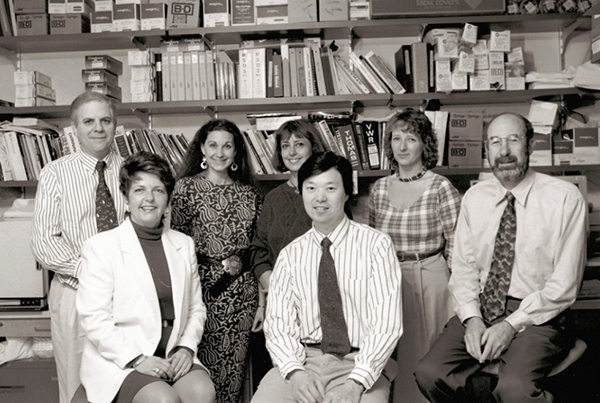
Research and clinical team following early first-in-human dendritic cell studies at Stanford Blood Center, including Engleman (upper left), collaborator Dr. Ron Levy (far right) and Dr. Claudia Benike (seated below left), who prepared the dendritic cells.
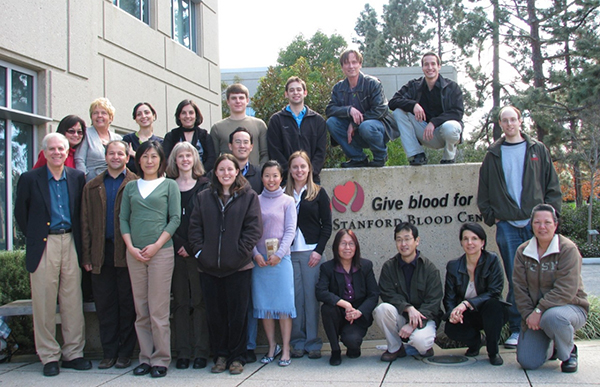
Engleman Lab group, 2009
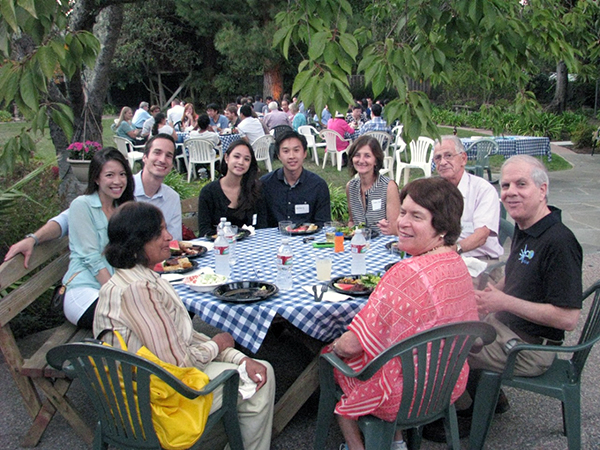
Engleman Lab picnic, 2014
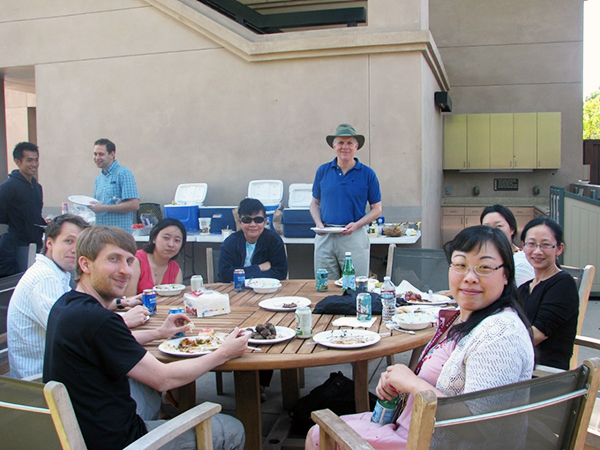
Engleman Lab picnic, 2016
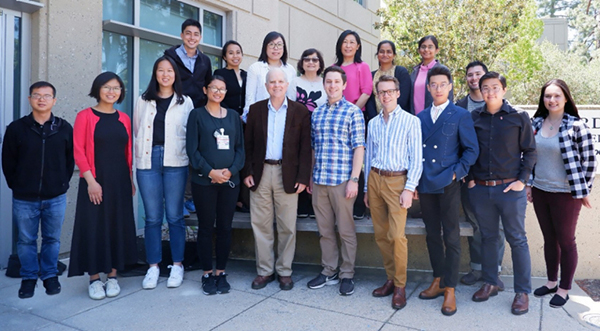
Engleman Lab group, 2022
His early work in cancer immunotherapy focused on T-cell subsets and antigen-presenting cells. Patients underwent leukapheresis at the Stanford Blood Center, where he and his team isolated rare dendritic cells from their blood, performed manipulations in vitro, and then returned the cells by injection to the same patients three days later in a hospital setting.
“It occurred to me that since the immune system is often so suppressed in patients with cancer, perhaps if we removed these powerful antigen-presenting cells and activated them outside the body — arming them with tumor material in the lab — and then injected them back into the same patients, they might generate a potent immune response against the cancer,” he explained. “That was my rationale. Fortunately, I was working within a wonderful blood center that put up with my unconventional ideas and helped me see the work through.”
He noted that cell therapy wasn’t regulated by the FDA at the time, allowing his team to conduct their early clinical studies at a lower cost. However, that changed when FDA regulations were implemented.
Engleman said his team was meticulous about purifying cells under careful conditions to prevent contamination and obtained institutional review board approval from Stanford. After completing successful studies and publishing their findings, the FDA contacted him to express interest in the results and to seek his input on how cell therapy should be regulated going forward.
“I estimate our per-patient cost in the early 1990s was under $1,000,” he said. “Once FDA regulations were in place, all work had to be done in special facilities with specialized reagents, and the minimum cost became $50,000 per patient, and even more today.”
The methods developed by Engleman’s group at Stanford served as the basis for the development of Sipuleucil-T, also known as Provenge, which was approved for the treatment of advanced prostate cancer in 2010. As the first FDA-approved cell therapy, Provenge set the stage for the subsequent development of a range of highly effective cell therapies that are widely used today for the treatment of several cancers.
Going forward, however, he cited funding and regulatory burden as the greatest hurdles to developing new cell therapies in the U.S., adding that much of this work is now moving overseas, particularly to China, where newer cell therapies can move more quickly and inexpensively into clinical settings.
“Although the FDA's mission to improve safety is clearly worthwhile, the cost impact has been enormous,” he said. “We simply could not have conducted the foundational work that led to this breakthrough under those conditions.”
When reflecting on his pioneering contributions to the field, Engleman cited his work in cellular immunotherapy as his proudest accomplishment to date. “With cellular therapies, the impact was more immediate for the patients who received it, but more importantly, I believe it set the stage for today's cellular therapies, which are saving countless lives,” he said. “If I contributed to that, even in a small way, that is probably the greatest impact of anything I've done.”
In recognition of his scientific leadership and lifelong work in blood safety and cellular therapies, Engleman has been named the 2026 AABB Landsteiner-Alter Award recipient. The prestigious award, bestowed annually, recognizes scientists of international renown whose original research has significantly expanded the body of scientific knowledge in transfusion medicine or biotherapies. He will receive the award in person this October at the 2026 AABB Annual Meeting in Atlanta.
For Engleman, the recognition is the “ultimate honor within the transfusion medicine, cell therapy and blood safety community.”
“I’ve been at this for a very long time, and I think sometimes years have to pass before contributions are truly recognized,” he said. “My lab has been based at Stanford Blood Center since the beginning, and I could not have done this work without the involvement and support of the Blood Center. The colleagues I've had there have been the best I could ask for. My identity as a physician-scientist is rooted in this world, and I'm deeply grateful for this recognition.”
With cellular therapies, the impact was more immediate for the patients who received it, but more importantly, I believe it set the stage for today's cellular therapies, which are saving countless lives.”
Beyond his research contributions, Engleman has mentored and trained more than 150 researchers, many of whom have become leaders in academia and industry. His advice to those working in blood safety today comes from lessons learned early on in his career: “Don't take shortcuts.”
“Blood safety must remain the highest priority. What I learned during the AIDS crisis is that even when you face criticism, if you believe you're doing the right thing, which always means making the blood safer in this field, then do it.”
He also added that it’s important to recognize that humans make mistakes. “It's remarkably common, and sometimes those mistakes can be almost contagious, as they were at the start of the AIDS crisis,” he said. “The good news is that the blood supply is very safe today, but new pathogens will emerge in the future, and we must be prepared.”
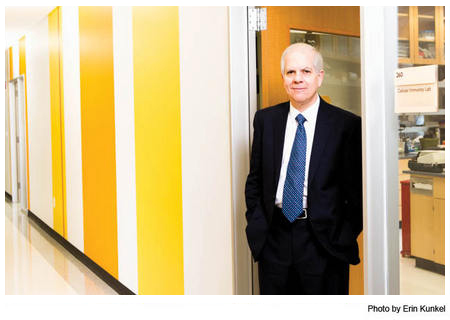 Engleman’s interest in the field began with immunology, specifically studying donated white blood cells under the microscope and learning more about their behavior. Decades later, he remains optimistic about future advances in cell therapy and cancer treatment, predicting significant progress within the next decade with adequate funding and support.
“I believe we will be curing most cancers,” he said. “When I lecture students in immunology and immunotherapy, I express the same optimism, because I've seen the improvements in patients' lives firsthand.”
He added that he is a champion of traditional cell therapies, while recognizing the growing interest in vivo gene-based approaches, in which genes are injected to remodel cells inside the body.
“I consider that approach still too risky at this stage, but ultimately if it is shown to be safe as well as effective, it may become a new standard,” he said he said. “I'm a believer in immunotherapy, including cell therapy, as a path to curing cancer, even as chemotherapy and other modalities remain part of the picture. I'm an optimist, and you won't be able to talk me out of it.”
He said he hopes the blood banking community will continue its commitment to making blood safer and cell therapies safe and effective. “We must always serve patients and provide the safest possible products,” he said. “I believe we've contributed meaningfully toward that goal, and I'm grateful to still be making contributions in the lab with my students.”
Engleman has no plans of slowing down anytime soon. The co-director of the immunology and immunotherapy program of the Stanford Cancer Institute discussed his recent breakthrough discovery and published research on erythropoietin's dual function in regulating the immune response and its potential impact on cancer treatment.
“I'm very excited and proud of what we've accomplished in blood safety and in pioneering cell therapy, but I keep going because I know there's still so much more that can be done,” he said. “That's what keeps me in the game.”
BACK TO ISSUE
May 2026
Transfusion is AABB’s scholarly, peer-reviewed monthly journal, publishing the latest on technological advances, clinical research and controversial issues related to transfusion medicine, blood banking, biotherapies and tissue transplantation. Access of Transfusion is free to all AABB members.
Learn More About Transfusion Journal
Keep abreast of what's happening in the field of biotherapies with CellSource - AABB's monthly update on the latest biotherapies news.

To submit news about the blood and biotherapies field to AABB, please email news@aabb.org.


President
Jose Cancelas, MD, PhD, CABP
Chief Executive Officer
Debra Ben Avram, FASAE, CAE
Chief Communications and Engagement Officer
Julia Zimmerman
Director of Marketing and Communications
Jay Lewis, MPH
Managing Editor
Kendra Y. Mims, MFA
Senior Communications Manager
Drew Case
AABB News
(ISSN 1523939X) is published monthly, except for the combined November/December issue for the members of AABB; 4550 Montgomery Avenue; Suite 700 North Tower; Bethesda, MD 20814.
AABB is an international, not-for-profit association representing individuals and institutions involved in transfusion medicine, cellular therapies and patient blood management. The association is committed to improving health by developing and delivering standards, accreditation and educational programs that focus on optimizing patient and donor care and safety.
+1.301.907.6977
Email: news@aabb.org
Website: www.aabb.org
Copyright 2025 by AABB.
Views and opinions expressed in AABB News are not necessarily endorsed by AABB unless expressly stated.
Notice to Copiers: Reproduction in whole or part is strictly prohibited unless written permission has been granted by the publisher. AABB members need not obtain prior permission if proper credit is given.


4550 Montgomery Avenue
Suite 700, North Tower
Bethesda, MD 20814
301.907.6977