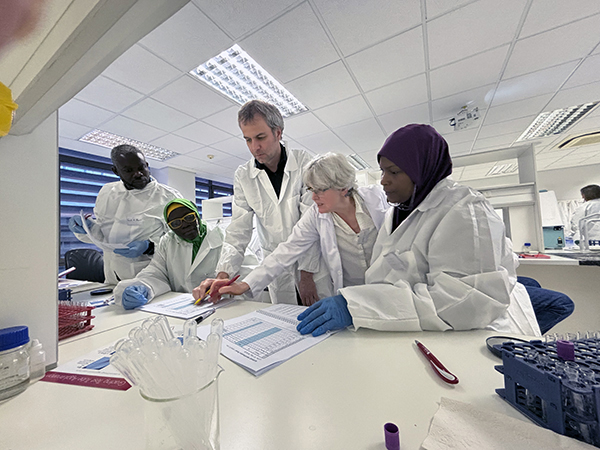
(Center): Benjamin Rioux-Massé, MD, FRCPC, of the Montreal University Hospital Center, Quebec, Canada, and Heather Hume, MD, FRCPC, of the Centre Universitaire Hospitalier Ste-Justine and Université de Montréal, Canada, train participants during the 2026 immunohematology wet workshop in Namibia, Africa.
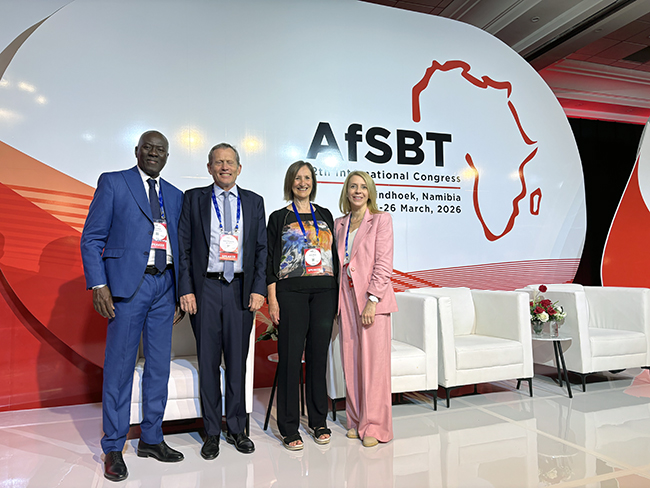
Last Month, transfusion medicine professionals, physicians and scientists convened in Windhoek, Namibia, for the 12th International Congress of the Africa Society for Blood Transfusion (AfSBT). AfSBT’s biannual congresses offer valuable opportunities for networking, knowledge-sharing and practical problem-solving for professionals throughout Africa and beyond.
Immediately before this year’s congress, AABB and the Etablissement Français du Sang (EFS) sponsored a one-day immunohematology wet workshop on red blood cell antibody detection and identification for African laboratory professionals. The hands-on workshop—hosted by AfSBT and the Blood Transfusion Service of Namibia, with additional support from the International Society of Blood Transfusion (ISBT)—focused on strengthening pretransfusion testing practices and improving patient outcomes.
Meghan Delaney, DO, MPH, highlighted the global significance of the congress, particularly as many regions still lack access to blood transfusion, immunohematology testing and advanced biotherapies to treat cancer and genetic diseases.
“Patients across the age spectrum need access to safe blood transfusion, regardless of their geographic location,” she said. “From preterm babies to children with malaria, to women giving birth and those with traumatic injury, cancer, or those undergoing transplants or surgery, the world does not have an equal distribution of safe blood for transfusion in every clinic, hospital or ambulance. AABB and its members lead and support countless projects and educational campaigns to improve access to safe blood transfusion, accurate testing and biotherapy treatments around the world.”
Heather Hume, MD, FRCPC, of the Centre Universitaire Hospitalier Ste-Justine and Université de Montréal, Canada, said the initiative grew out of discussions within the AABB Global Transfusion Forum to address knowledge gaps in immunohematology education in low- and middle-income countries (LMICs) nearly two years ago.
“It was noted that the gap is not only one of theoretical knowledge but also of practical experience with immunohematology testing, in particular performing and interpreting red blood cell antibody screening and identification,” Hume said.
To bridge that gap, organizers developed a hybrid model combining three preparatory webinars with the hands-on workshop held in advance of the AfSBT congress. The webinars provided foundational knowledge and case-based learning, while the workshop allowed participants to apply those skills in a supervised setting.
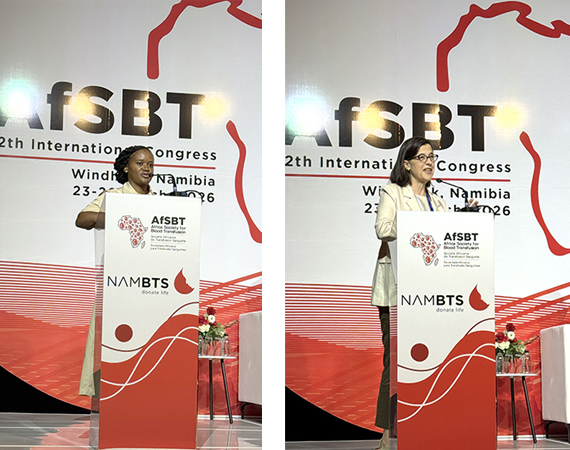
Hume credited Vanitha Rambiritch, PhD, manager of the tissue immunology and genetics laboratories at the South African National Blood Service, with significant contributions to planning the event, securing reagent sponsorship, delivering webinar presentations and facilitating hands-on practical sessions. The effort also relied on significant local and regional support, including contributions from the Blood Transfusion Service of Namibia, the South African National Blood Service and the Namibia University of Science and Technology, which provided personnel, equipment and laboratory resources.
“We recognized early on that financial constraints would limit how long participants could attend an in-person workshop,” Hume said. “The webinars were offered in English and French through AfSBT’s platform. To do this well, we needed help from French-speaking colleagues, so we approached Professor France Pirenne from the EFS. She joined our planning committee and faculty, and EFS financially supported the project equally with AABB.”
The initiative reflects long-term collaboration between AABB and key partners, including the Blood Transfusion Service of Namibia, EFS, AfSBT and the ISBT.
Sue T. Johnson, MSTM, MLS(ASCP)SBB, director, clinical education and SBB Program, Versiti, noted that this partnership plays a vital role in advancing global transfusion medicine by expanding access to basic immunohematology testing and antibody screening in many parts of Africa.
“The hands-on component is what’s really valuable,” she said. “It’s one thing to gain theoretical knowledge, but when you actually perform the testing, that’s what translates. People can then take that experience back and say, ‘We need to be doing this for our patients.’”
In the antibody identification webinars leading up to the workshop, Johnson noted that only about half of participants reported performing antibody screening, which is a standard practice in the United States.
“The goal is really to improve transfusion safety at a very basic level—something many people may not realize we do routinely,” Johnson said.
Understanding why this testing is essential for patient safety, and being able to advocate for it, is equally important.” –Sue T. Johnson, MSTM, MLS(ASCP)SBB
During the congress, Johnson co-led an interactive session on transfusing the alloimmunized patient with Dr. Tanya Glatt of the South African Blood Transfusion Service, which covered both clinical and testing aspects through patient-centered case studies.
Johnson noted that identifying antibodies in alloimmunized patients is particularly important for those who require ongoing transfusions, such as individuals with sickle cell disease.
“Each transfusion becomes more complex if antibodies are present, so identifying those antibodies ahead of time is critical to ensuring safer, more effective transfusions,” Johnson said.
She also highlighted the importance of ensuring attendees gain the knowledge and resources necessary to advocate for better transfusion safety practices in their home countries.
“Understanding why this testing is essential for patient safety, and being able to advocate for it, is equally important,” Johnson said. “Attendees need to go back and say, ‘This matters... we need the resources to do this.’ That’s one of the biggest challenges. They’ll have the knowledge, but they also need the support to implement it.”
France Pirenne, medical director of the EFS, head of transfusion and pathologies of the red blood cell at the Mondor Biomedical Research Institute in Creteil, France, said that the organization supported the workshop as part of its mission to help low-income countries strengthen transfusion systems, from donor recruitment to delivery and hemovigilance.
“My Canadian colleague, Heather Hume, originally had the idea for the project. The president of the AfSBT, Professor Saliou Diop, connected us, as the society includes both French- and English-speaking regions across Africa,” she said. “At the beginning, we didn’t realize how much work it would take to coordinate everything. She was also working with Sue Johnson, so initially it was the three of us leading the effort.”
There was also a need for funding, as organizing the workshop required resources for travel, reagents and logistics. “Our institution agreed to support the project because it aligns with our mission,” Pirenne said. “We don’t typically provide funding, but we felt this would have a real impact—helping participants learn techniques they are not currently using, but that are feasible within their own resource settings.”
Despite strong interest in the preparatory webinars—which reached approximately 350 participants per session from more than 80 countries—participation in the wet workshop itself was limited due to travel expenses. Although the training was free, attendees had to travel to Namibia.
“We had many applications—around 50—but only about 14 or 15 participants were ultimately able to attend,” Pirenne said. “Many could not attend because they could not afford the cost of travel. That is one of the main barriers.”
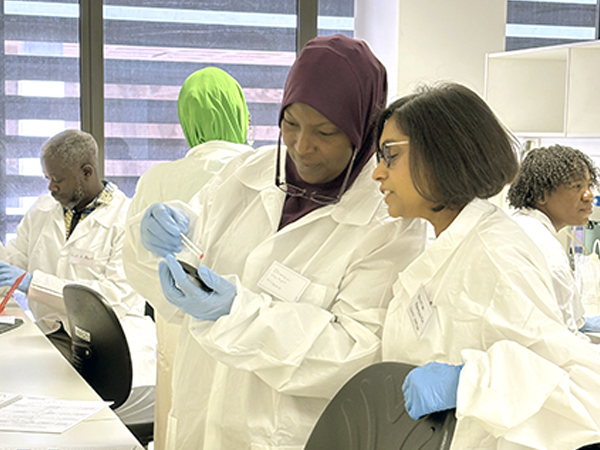
Vanitha Ramviritch, PhD, and participants at the wet workshop.
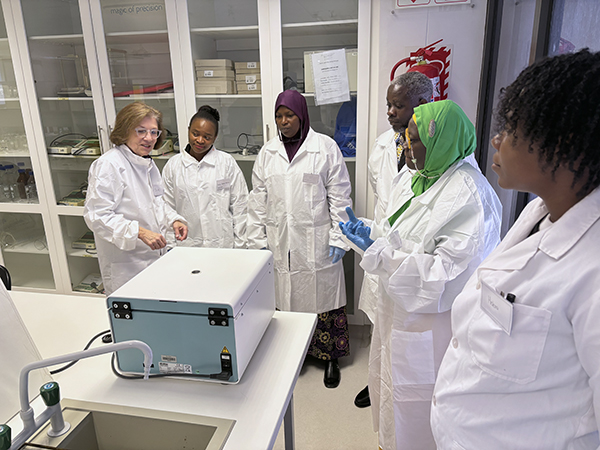
Sue T. Johnson training a group of participants.
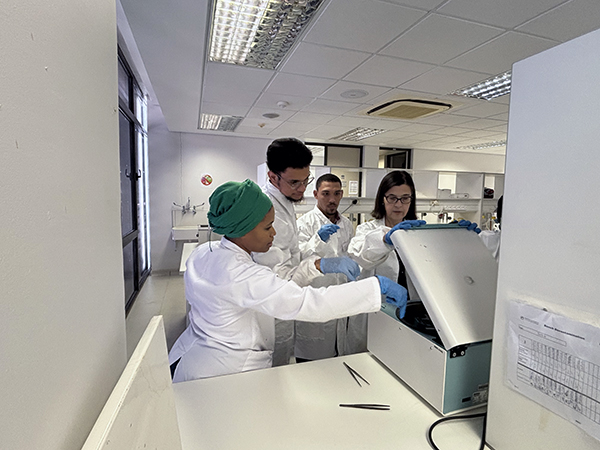
Prof. France Pirenne and participants during the workshop.
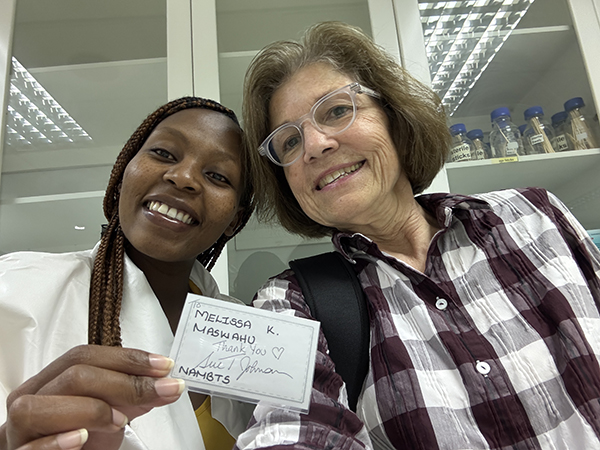
Melissa K. Maskahu from Blood Transfusion Service of Namibia and Sue T. Johnson (right). Maskahu was a member of the planning committee, invaluable in procuring necessary materials for the workshop and a wet workshop proctor.
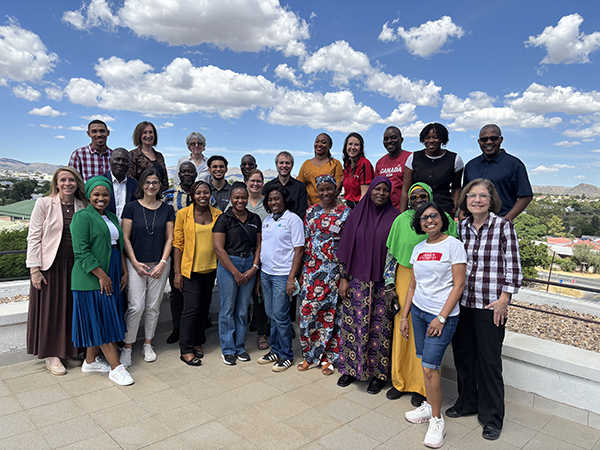
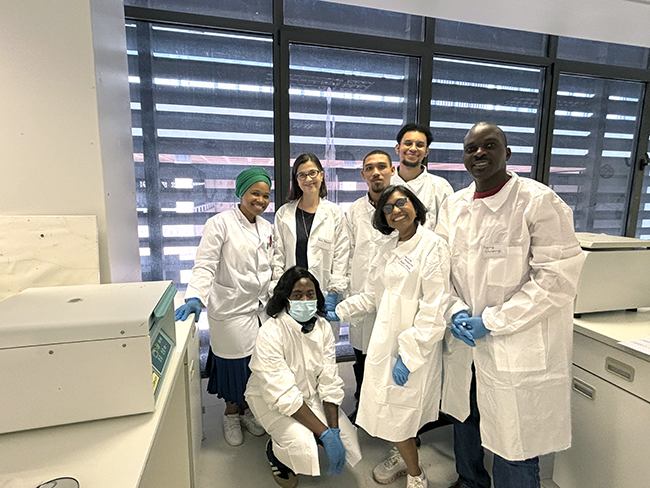
Workshop faculty, supportive guests and participants from Nigeria, Uganda, Senegal, Cameroon and Namibia.
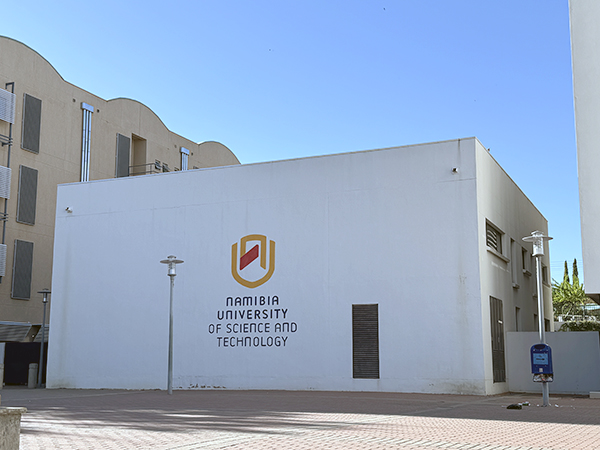
Nambia University of Science and Technology
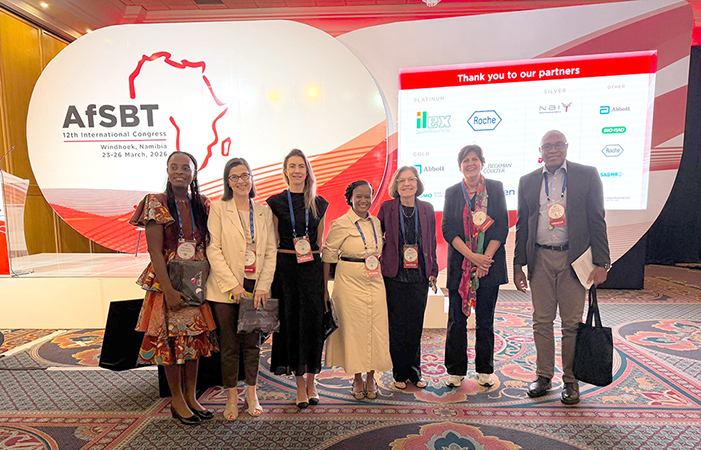
Blood Group Genotyping session speakers (left to right): Dr. Lilian Antwi, Ghana; Prof. France Pirenne, Creteil, France; Dr. Tanya Glatt, South Africa; Edwig Shingenge, Namibia; Prof. Sue Johnson, USA; Prof. Ellen van der Schoot & Prof. Claude Tayou Tagny
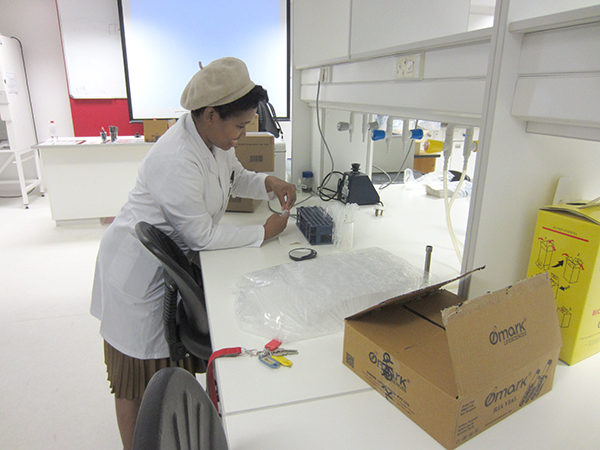
Elmarie Eises, instructor from Namibia University of Science and Technology, setting up the lab.
Pirenne said the experience highlighted the need to expand access to training through virtual learning or locally hosted workshops. However, she stated that hands-on training remains essential. “Participants need to perform the techniques themselves,” she said. “That approach makes the workshop effective.”
She also discussed future collaborative opportunities to bring training directly to local transfusion centers to reduce the financial burden on participants. “Instead of bringing participants to one location, it may be more effective to organize workshops within individual countries, so participants do not have to travel,” she said. “This would make the training more accessible.”
Pirenne described the workshop as an enriching experience for both participants and instructors, with lively discussion and extensive knowledge sharing. Participants asked detailed questions about implementing techniques in their own environments.
“It helped us better understand the challenges they face in implementing safety testing, particularly due to limited resources,” she said. “There was a strong exchange of knowledge, and we are proud of what was accomplished. The feedback was very positive. They learned practical skills, and we also established a connection with them. That ongoing relationship is important.
Hume echoed that same sentiment, emphasizing the importance of expanding access to hands-on training to reach more laboratory professionals and transfusion medicine physicians.
“A hands-on workshop is effective in any setting, high or low income,” Hume said. “Although one can become familiar with technical skills through lectures or webinars, it is essential to physically perform tests properly in the presence of teachers. However, in resource-limited settings there are very few teachers with such hands-on experience.”
She added that expanding this model through future workshops, and eventually train-the-trainer workshops, could help build local capacity and support long-term sustainability. “The hands-on workshop further enables the trainees to connect theoretical knowledge with the practical aspects, allowing improved understanding of immunohematology,” Hume said.
Mohammed Farouk, MD, MBA, AfSBT managing director; and Claire Barrett, MD, co-chair of the Global Transfusion Forum Education Subcommittee and head of research and development at the University of the Free State, South Africa, described the congress as a significant milestone for global transfusion medicine, bringing together experts from across Africa, Europe, North America and Asia.
They noted that African representation remained central, ensuring discussions were grounded in local realities while aligned with international best practices. The program addressed key priorities including hemovigilance, transfusion-transmissible infections, blood system sustainability and donor engagement, with a focus on practical implementation in resource-constrained settings.
AABB was represented by multiple speakers, including members of the Global Transfusion Forum. Quentin Eichbaum, MD, PhD, MPH, MFA, MMHC, FCAP, founder of the forum, delivered two presentations highlighting key Global Transfusion Forum initiatives. The meeting also included an International Society of Blood Transfusion Academy Day and participation from multiple international partners.
Participating organizations included World Health Organization Regional Office for Africa, the Asian Association of Transfusion Medicine, International Plasma and Fractionation Association, International Council for Commonality in Blood Banking Automation, Paul-Ehrlich-Institut, Serious Hazards of Transfusion, Belgian Red Cross-Flanders, and Swiss Red Cross, alongside industry partners, underscoring a shared commitment to strengthening safe and sustainable transfusion systems.
“These organizations underscored a shared commitment to strengthening safe and sustainable transfusion systems,” Farouk and Armour told AABB News. “The congress reinforced global collaboration and the importance of regional leadership in addressing disparities in access to safe blood and biotherapies.”
The 13th International Congress of AfSBT is slated to take place in Kigali, Rwanda, from March 14-17, 2028.
Transfusion is AABB’s scholarly, peer-reviewed monthly journal, publishing the latest on technological advances, clinical research and controversial issues related to transfusion medicine, blood banking, biotherapies and tissue transplantation. Access of Transfusion is free to all AABB members.
Learn More About Transfusion Journal
Keep abreast of what's happening in the field of biotherapies with CellSource - AABB's monthly update on the latest biotherapies news.

To submit news about the blood and biotherapies field to AABB, please email news@aabb.org.


President
Jose Cancelas, MD, PhD, CABP
Chief Executive Officer
Debra Ben Avram, FASAE, CAE
Chief Communications and Engagement Officer
Julia Zimmerman
Director of Marketing and Communications
Jay Lewis, MPH
Managing Editor
Kendra Y. Mims, MFA
Senior Communications Manager
Drew Case
AABB News
(ISSN 1523939X) is published monthly, except for the combined November/December issue for the members of AABB; 4550 Montgomery Avenue; Suite 700 North Tower; Bethesda, MD 20814.
AABB is an international, not-for-profit association representing individuals and institutions involved in transfusion medicine, cellular therapies and patient blood management. The association is committed to improving health by developing and delivering standards, accreditation and educational programs that focus on optimizing patient and donor care and safety.
+1.301.907.6977
Email: news@aabb.org
Website: www.aabb.org
Copyright 2025 by AABB.
Views and opinions expressed in AABB News are not necessarily endorsed by AABB unless expressly stated.
Notice to Copiers: Reproduction in whole or part is strictly prohibited unless written permission has been granted by the publisher. AABB members need not obtain prior permission if proper credit is given.

4550 Montgomery Avenue
Suite 700, North Tower
Bethesda, MD 20814
301.907.6977