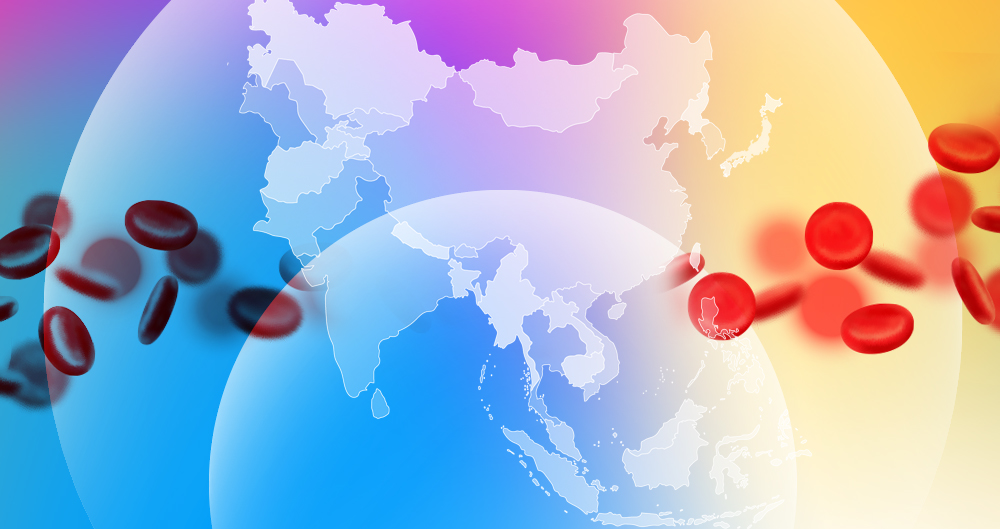
From Latin America to India, these global leaders in transfusion medicine and biotherapies are advancing innovation, quality systems, access and equity worldwide.
Read the other perspective profile on advancing biotherapies in Latin America: Carrying the Work Foward
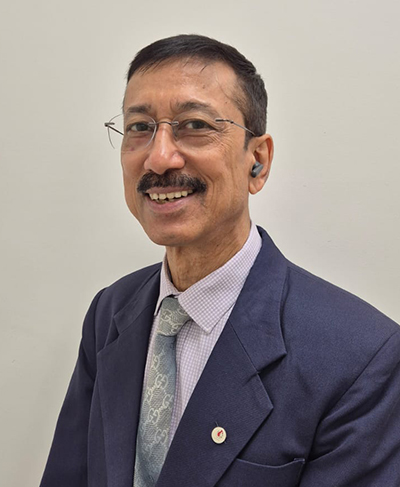
Nabajyoti Choudhury, MBBS, PhD, MBA, medical director and unit head of the Dibrugarh Cancer Centre in India, began his career in transfusion medicine in 1986. Although he gained early clinical exposure in the field, he said the turning point occurred during his one-year Marie Curie fellowship by European Union in Groningen, the Netherlands, where he experienced a different approach to quality.
“That is where I truly understood what quality means—not just in theory, but in systems, in documentation, in accountability and in how every step is connected,” he said. “When I entered this field, we thought that if we collected blood, processed it and transfused it properly, that itself was quality. But in the Netherlands, I realized that quality is much broader. It involves systems, audits, traceability, training and continuous improvement.”
In 2001, Choudhury attended a three-week World Health Organization training in Bangkok that further expanded his understanding, introducing him to a framework for quality systems. “That WHO training made me realize that we had been focusing on only one part of the system, while many other critical components were being overlooked,” he said. “In reality, there are many elements that define quality systems.”
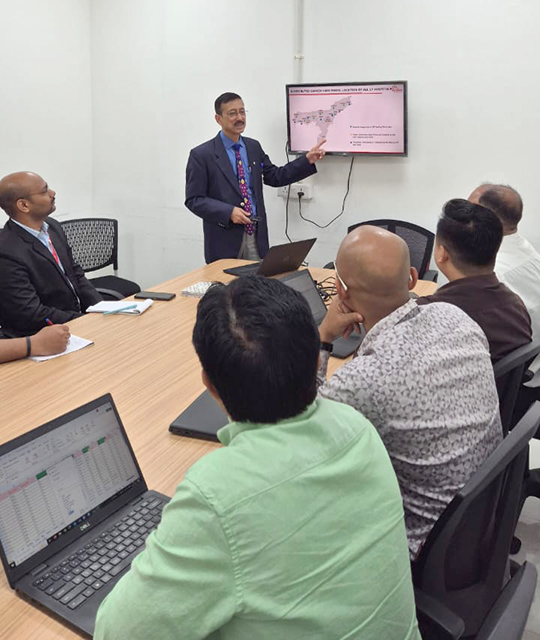
“Based on that, we introduced accreditation in India through the National Accreditation Board for Hospitals and Healthcare Providers (NABH),” he told AABB News. “Since then, for almost 20 years, I have been closely involved in the accreditation process. The standards have been revised four times, and I have been involved in three of those revisions.”
Over time, he said, it became clear that national standards alone were not sufficient for neighboring countries due to their complexity and requirements that were not always applicable. After attempting to implement AABB standards across Asia from 2014 to 2018, he and his colleagues worked alongside AABB colleagues and shifted focus to the AABB Fundamental Standards for Blood Collection and Transfusion.
“That became a practical solution, and from there, the AABB Quality Certificate program was introduced,” he said. “We worked closely with AABB colleagues and began applying this certification across Asian countries. Currently, it has been implemented in about five countries. This work is ongoing and continuing to expand.”
Choudhury highlighted several key advancements that have improved patient safety in India throughout the past four decades. Reflecting on the early days in his career, he noted the field was mainly unregulated in India without a centralized, governing body for blood transfusion services. That changed during the HIV epidemic when widespread concern about blood safety led to the introduction of government regulations.
The government introduced licensing systems between 1992 and 1996, and from that point onward, blood banking became a regulated service. He described this period as a major turning point in raising public awareness about blood safety and transfusion.
“That was one of the most important changes for patient safety, because once regulation is in place, there is accountability and standardization,” he said. “People realized that blood transfusion is not a simple service. It must follow strict rules and systems to ensure safety.”
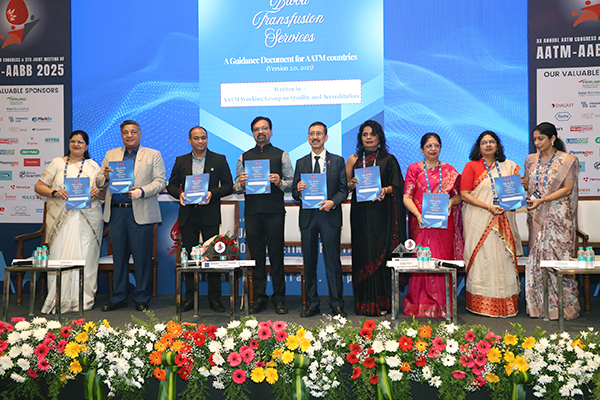
Another important change, he noted, was the shift from whole blood transfusion to component therapy. “Earlier, most transfusions were whole blood, but gradually we moved toward component-based transfusion, which allows more targeted and effective patient care.”
Choudhury discussed current challenges in India’s fragmented blood banking system, including harmonization and the variation between urban and rural areas. As the world’s most populous country, with about 1.42 billion people, he noted that scale adds complexity to India’s health care system and blood transfusion services.
Throughout India, more than 4,000 blood banks across different sectors operate under different administrative and organizational structures, and a single unified system does not exist. According to Choudhury, government sector accounts for about 35-40%; corporate sector 30-35%; NGOs about 15–20%; and the Red Cross around 5%.
“Each of these sectors operates differently, and because of these different administrative controls, there is no uniformity in standards or practices,” Choudhury said. “Some blood banks are very advanced and follow strict quality systems. Some even have AABB certification, and many follow NABH accreditation. But there are many small blood banks, especially in smaller hospitals, and at district level, that collect fewer than 3,000 to 4,000 units per year.”
He noted that smaller hospitals often don’t have the same level of infrastructure, training or quality systems in place, emphasizing the need for harmonization in blood banking to maintain a consistent level of quality. “Without harmonization, patient safety can vary depending on where care is delivered,” Choudhury said.
He also addressed the significant gap in training and quality standards in rural and remote areas, noting that urban and corporate blood banks often maintain high standards due to medical tourism and competition. These pressures, including the international patient flow, have pushed hospitals to adopt stronger quality systems, infrastructure and advanced practices, improving patient safety in these settings. However, this progress is not uniform across the country, he pointed out.
“In metropolitan cities, standards are generally higher due to better infrastructure, competition and access to training,” he said. “That is why training and capacity building in rural regions are so important. Infrequently, we keep on getting reports of compromise in quality chains and necessary actions in all cases need to be taken after root cause analysis. Training programs are more accessible in cities and at the district level, but they are still not reaching all areas equally. We need to ensure that professionals in smaller and remote blood banks receive the same level of proper training, ongoing education and support.”
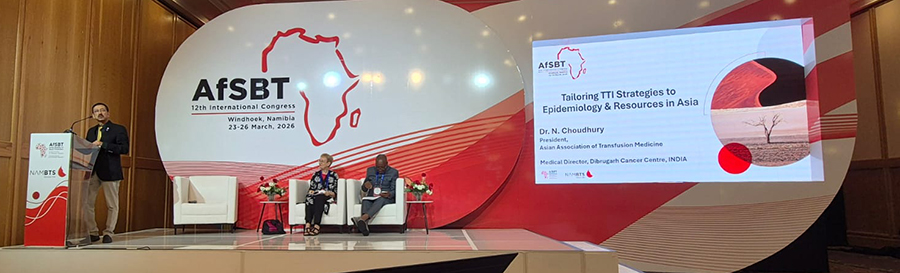
As president of the Asian Association of Transfusion Medicine (AATM), Choudhury has worked to advance quality standards across 26 member countries, from Turkey to the Philippines. He noted that wide variation in quality systems and infrastructure among these countries makes implementing a single standard challenging.
“To address this, we focus on practical and adaptable approaches, one of the most important being the AABB Quality Certificate based on fundamental standards,” he said. “We strongly encourage countries to adopt quality certification by demonstrating its value and benefits.”
“We believe blood is universal. Boundaries are political, but blood is the same for all.”
AATM's initiatives include collaborative webinars, hands-on training workshops and working groups to improve standards across Asia. He noted that several countries have achieved AABB certification, while others are working toward it.
“We provide structure, but each country implements programs independently,” he said. “Our role at AATM is to support them through guidance, training, collaboration and shared learning so that overall quality improves across the region. Our vision is to improve standards across borders.”
He added that significant work remains, especially in developing countries like Bhutan and Laos, where funding constraints make it difficult to organize hands-on workshops.
“Still, lack of resources should not stop progress,” he said. “We can provide online training, support documentation and remote guidance. That is how we create meaningful change. We believe blood is universal. Boundaries are political, but blood is the same for all.”
In recognition of his leadership in advancing blood safety standards in India and beyond, Choudhury was named the 2026 AABB Hemphill-Jordan Leadership Award recipient; he will receive the award in person this October at the 2026 AABB Annual Meeting in Atlanta. He said the honor reflects decades of work and a long-standing partnership with AABB.
“I attended my first AABB Annual Meeting in 1992 in San Diego,” he said. “Over the years, I have continued that engagement, and for the past decade we have had a formal partnership. I have dedicated much of my career to this field, and I am very grateful to AABB for this recognition.”
As the field evolves into a broader discipline and expands into transplantation and cellular therapies, Choudhury emphasized the ongoing responsibility to ensure the safety of human blood.
“For decades, we have talked about artificial blood, but it has not yet become a practical solution,” he said. “Because of that, we must focus on making blood as safe as possible.”
PREVIOUS STORY
Global Perspectives Series: Carrying the Work ForwardBACK TO ISSUE
April 2026
Transfusion is AABB’s scholarly, peer-reviewed monthly journal, publishing the latest on technological advances, clinical research and controversial issues related to transfusion medicine, blood banking, biotherapies and tissue transplantation. Access of Transfusion is free to all AABB members.
Learn More About Transfusion Journal
Keep abreast of what's happening in the field of biotherapies with CellSource - AABB's monthly update on the latest biotherapies news.

To submit news about the blood and biotherapies field to AABB, please email news@aabb.org.


President
Jose Cancelas, MD, PhD, CABP
Chief Executive Officer
Debra Ben Avram, FASAE, CAE
Chief Communications and Engagement Officer
Julia Zimmerman
Director of Marketing and Communications
Jay Lewis, MPH
Managing Editor
Kendra Y. Mims, MFA
Senior Communications Manager
Drew Case
AABB News
(ISSN 1523939X) is published monthly, except for the combined November/December issue for the members of AABB; 4550 Montgomery Avenue; Suite 700 North Tower; Bethesda, MD 20814.
AABB is an international, not-for-profit association representing individuals and institutions involved in transfusion medicine, cellular therapies and patient blood management. The association is committed to improving health by developing and delivering standards, accreditation and educational programs that focus on optimizing patient and donor care and safety.
+1.301.907.6977
Email: news@aabb.org
Website: www.aabb.org
Copyright 2025 by AABB.
Views and opinions expressed in AABB News are not necessarily endorsed by AABB unless expressly stated.
Notice to Copiers: Reproduction in whole or part is strictly prohibited unless written permission has been granted by the publisher. AABB members need not obtain prior permission if proper credit is given.


4550 Montgomery Avenue
Suite 700, North Tower
Bethesda, MD 20814
301.907.6977