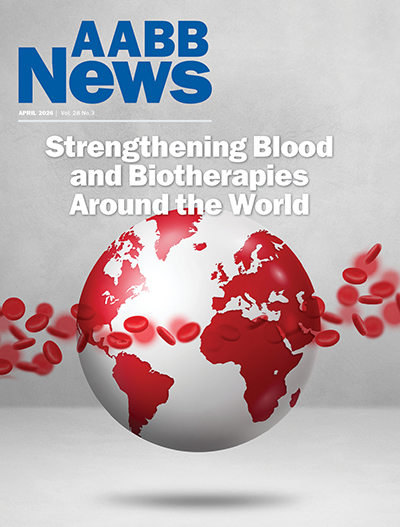
From blood collection, blood services and patient blood management to cellular therapies and biobanking, the AABB Spanish Language Subsection (SLS) is helping translate standards into strategy for a region moving from isolated progress to durable systems.
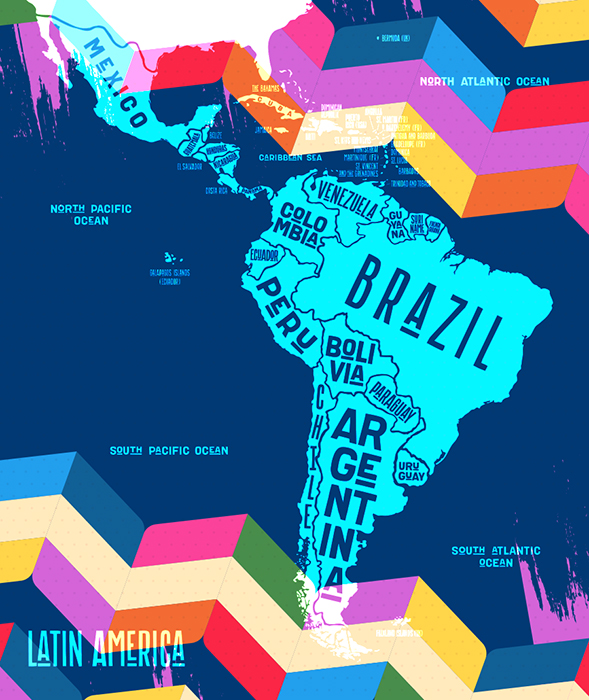
Throughout Latin America, the conversation about quality in blood and biotherapies is shifting from isolated achievements to systems that can be replicated, audited and sustained. That shift is exactly where AABB’s Spanish Language Subsection (SLS) has found its purpose. For the subsection, language is not only a means of communication; it is infrastructure. It allows professionals across the region to interpret standards in context, exchange implementation lessons and translate global expectations into operational decisions inside real hospitals, blood banks and emerging biotherapies programs.
Since 2022, one of the clearest priorities for the SLS has been advancing regional conversations around AABB accreditation in blood collection, transfusion services and patient blood management (PBM). In many Latin American countries, blood systems are mature enough to ensure supply, yet still uneven in documentation, traceability, process control and clinical governance. The contribution of accreditation, as the SLS has emphasized, is not symbolic. It is structural. It reduces variability by requiring institutions to work through a verifiable quality framework rather than relying on individual expertise alone.
That distinction matters in Latin America, where blood services often operate within heterogeneous regulatory and institutional environments. AABB accreditation introduces discipline into the “vein-to-vein” continuum: donor selection, collection, processing, storage, compatibility testing, distribution, transfusion and event management. In practice, that means standard operating procedures, document control, competency assessment, internal audit and corrective and preventive actions. In strategic terms, it means moving from fragmented quality efforts to a system that can be measured, compared and improved over time.
PBM extends that same logic into bedside decision-making. Rather than treating transfusion as the default response to anemia or bleeding, PBM asks clinicians to preserve red cell mass, minimize blood loss and optimize tolerance of anemia. The fifth edition of AABB’s PBM standards, effective June 1, 2025, reinforces that a PBM program is part of patient evaluation and clinical management surrounding transfusion decision-making, not merely a utilization review tool. For the SLS, this convergence between accreditation and PBM has been central: strong quality systems make good clinical decisions reproducible. Accreditation gives structure; PBM gives clinical direction.
For the SLS, language is not only a means of communication; it is infrastructure.”
The impact of that integration is best understood through indicators. The SLS’s transfusion medicine work has consistently pointed toward the need for metrics that are clinically relevant and operationally actionable: transfusion rates per admission or procedure, adherence to restrictive thresholds, component use per discharge, transfusion-reaction rates, traceability, nonconformities and timely closure of corrective and preventive actions. These measures help institutions answer a more important question than whether they passed an audit: are they exposing patients to fewer unnecessary transfusions while improving reliability and efficiency?
That same systems mindset is increasingly shaping the subsection’s cellular therapies perspective. Throughout Latin America, the growth of biotherapies and clinical biorepositories has been significant, but uneven. The region faces a recurring obstacle: scientific capacity is advancing faster than harmonized governance. International frameworks, such as ISO 20387 and AABB cellular therapy standards, offer a path toward interoperability, technical consistency and external credibility. Here again, the SLS serves as a bridge, helping regional professionals understand how standards can support—not stifle—innovation.
On the other hand, perspective on CAR-T implementation sharpens the point. Throughout Latin America, the field of biotherapies is not defined only by scientific promise; it is defined by implementation constraints. Manufacturing capacity, logistics, cost and regulatory readiness determine whether precision medicine remains aspirational or becomes accessible. Brazil’s locally driven model, including the alliance among Instituto Butantan, USP and Ribeirão Preto-USP, shows what can happen when installed capacity, scientific leadership and public-sector ambition align. Other countries, including Argentina, Mexico, Chile, Uruguay, Colombia and Peru, illustrate different stages of that journey—some stronger in trials, others in clinical support, others in regulatory learning.
For the SLS, the lesson is consistent across both transfusion medicine and biotherapies: standards matter most when they make regional capacity visible, scalable and trustworthy. In blood banking, that means safer donor-to-patient pathways. In biotherapies, it means quality systems robust enough to support biorepositories, donor eligibility, product handling and eventually local manufacturing models. AABB’s Cellular Therapy Services standards underscore that a quality systems approach must cover collection, manufacture and patient care as a single continuum.
That shared approach is especially valuable in Spanish, where technical precision, regional context and peer exchange can accelerate adoption for institutions without flattening local realities today. This is why the SLS’s current work is best understood not as translation alone, but as alignment. It aligns language with implementation, implementation with evidence and evidence with patient benefit. In a region where institutional realities differ sharply, the SLS has become a practical forum for turning standards into strategy. Whether the subject is accreditation, PBM, biobanking or CAR-T readiness, the underlying message is the same: quality is not imported by decree. It is built, shared, measured and sustained together.
Claudio Darío Dufour, MD, director médico, Cryoholdco Biocells Biotech; professor of hematology, Universidad de Buenos Aires.
José Arnulfo Pérez-Carrillo, MD, PhD, MHA, EMTACT is a Colombian physician-scientist specializing in clinical pathologist & transfusion medicine. He serves as medical director of the blood bank and transfusion services at Clínica Colsanitas in Colombia and is co-leader of AABB’s SLS in Transfusion Medicine. His work focuses on AABB accreditation, PBM, donor safety, ITT, and operational improvement in blood services.
Carlos Ferrari Rebolledo, MSc, MT, head of laboratory, VidaCel (AABB Accredited), co-director of the AABB Spanish Cell Therapy Subsection Adjunct Professor, Faculty of Medical Technology, PUCV
Jose Quesada. MT, senior director manufacturing, IRL, and Transfusion Services. South Texas Blood & Tissue. 6211 IH 10 West, San Antonio, TX 78201.
The AABB Spanish Language Subsection (SLS) engages Spanish-speaking members of AABB to advance transfusion medicine and biotherapies through collaboration, standards and education.
Open to: AABB members who speak or understand Spanish Meets: 4th Wednesdays, 5–6 PM ET (bimonthly)
Click here to enroll and learn more.
BACK TO ISSUE
April 2026NEXT STORY
Ensuring Quality and Safety in Chile
Transfusion is AABB’s scholarly, peer-reviewed monthly journal, publishing the latest on technological advances, clinical research and controversial issues related to transfusion medicine, blood banking, biotherapies and tissue transplantation. Access of Transfusion is free to all AABB members.
Learn More About Transfusion Journal
Keep abreast of what's happening in the field of biotherapies with CellSource - AABB's monthly update on the latest biotherapies news.

To submit news about the blood and biotherapies field to AABB, please email news@aabb.org.


President
Jose Cancelas, MD, PhD, CABP
Chief Executive Officer
Debra Ben Avram, FASAE, CAE
Chief Communications and Engagement Officer
Julia Zimmerman
Director of Marketing and Communications
Jay Lewis, MPH
Managing Editor
Kendra Y. Mims, MFA
Senior Communications Manager
Drew Case
AABB News
(ISSN 1523939X) is published monthly, except for the combined November/December issue for the members of AABB; 4550 Montgomery Avenue; Suite 700 North Tower; Bethesda, MD 20814.
AABB is an international, not-for-profit association representing individuals and institutions involved in transfusion medicine, cellular therapies and patient blood management. The association is committed to improving health by developing and delivering standards, accreditation and educational programs that focus on optimizing patient and donor care and safety.
+1.301.907.6977
Email: news@aabb.org
Website: www.aabb.org
Copyright 2025 by AABB.
Views and opinions expressed in AABB News are not necessarily endorsed by AABB unless expressly stated.
Notice to Copiers: Reproduction in whole or part is strictly prohibited unless written permission has been granted by the publisher. AABB members need not obtain prior permission if proper credit is given.

4550 Montgomery Avenue
Suite 700, North Tower
Bethesda, MD 20814
301.907.6977