From Latin America to India, these global leaders in transfusion medicine and biotherapies are advancing innovation, quality systems, access and equity worldwide.
Read the other perspective profile on advancing blood safety in Asia: Building Systems to Improve Quality.
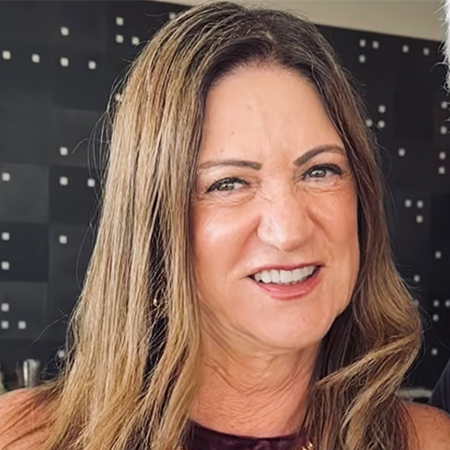
Early in her career, Lillian Maria de Castilho, PhD, was drawn to the challenge of solving complex serological cases and uncovering their genetic basis. That curiosity grew into a focus on blood group diversity across populations and its role in improving transfusion practices globally. “I became especially interested in how subtle molecular variations, sometimes just a few nucleotides, can have profound effects on transfusion safety and patient outcomes,” she said.
For Castilho, the blend of problem-solving, discovery and meaningful patient impact continues to drive her work today. With more than 40 years of experience in immunohematology and blood group genetics, spanning both laboratory research and teaching, Castilho has worked in laboratories throughout Brazil, served as a consultant for the American Red Cross in Philadelphia, Penn., and now collaborates with national and international laboratories.
A professor of immunohematology at the University of Campinas, senior researcher at the red cell research laboratory and director of the molecular immunohematology laboratory at Hemocentro-UNICAMP in Campinas, Brazil, Castilho said her experience working in both Brazil and the United States has given her a valuable dual perspective on how research, training and access to care evolve across vastly different health care systems.
In the U.S., she encountered a highly structured research environment with strong funding mechanisms, advanced technology and well-established infrastructure. “These factors facilitate innovation, accelerate the translation of research into clinical practice and provide extensive opportunities for specialized training,” she said.
In Brazil, and more broadly in Latin America, Castilho developed a deep appreciation for adaptability, creativity and resilience. “Professionals often achieve remarkable results despite limited resources, and there is a strong sense of commitment to patient care and public health,” she said. “Working in this context reinforces the importance of developing cost-effective, scalable solutions tailored to local realities.”
Castilho added that her experiences demonstrated that excellence in transfusion medicine is not solely dependent on resources, but also on collaboration, innovation and education.
“I have become particularly committed to bridging these environments, adapting high-complexity technologies to more resource-constrained settings, fostering international collaboration and promoting training initiatives that empower local professionals,” she said.
In addition to contributing to more than 200 scientific studies, Castilho has helped to advance the field of blood and biotherapies in Latin America. She said she is most proud of the steady progress in strengthening both the scientific and operational foundations of blood services across the region, as well as the growth in regional collaboration.
“Another contribution I value deeply is my involvement in building and supporting rare donor programs and reference laboratory networks in Latin America,” she said. “Strengthening collaboration across institutions and countries has been essential for improving access to compatible blood for patients with rare phenotypes.”
Castilho also emphasized the growing recognition of population diversity in blood group genetics, noting a significant expansion in the use of molecular immunohematology throughout the years. More laboratories are adopting genotyping to complement serology and improve transfusion safety, particularly for patients with complex needs. Another important achievement has been investment in education and capacity building. Training programs, workshops and mentorship initiatives have strengthened local expertise and empowered a new generation of professionals in the field.
“The progress has been very meaningful,” Castilho told AABB News. “Increased research focused on the genetic diversity of Latin American populations has improved our ability to provide more precise and compatible transfusion support, reflecting the unique characteristics of the region.”
If you remain committed, collaborative and focused on improving patient outcomes, you will find many opportunities to make a meaningful impact, both locally and globally.”
Castilho cited her contribution to the integration of molecular methods into routine immunohematology practice as one of the most meaningful aspects of her work. “Being involved in the adoption and validation of genotyping approaches to complement traditional serology has helped improve the accuracy of blood group determination, particularly in complex cases such as recently transfused patients or those with autoimmune hemolytic anemia,” she said.
Her work has also involved identifying and characterizing novel blood group alleles and variants. “These discoveries not only expanded our understanding of blood group systems but also had direct clinical relevance, helping to explain serological discrepancies and prevent transfusion-related complications,” she said.
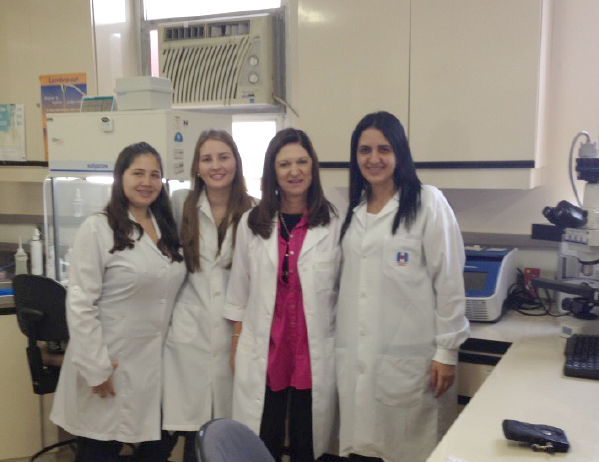
Dr. Castilho training and mentoring PhD students in her lab ( Red Cell Research Laboratory) at the University of Campinas, Brazil.
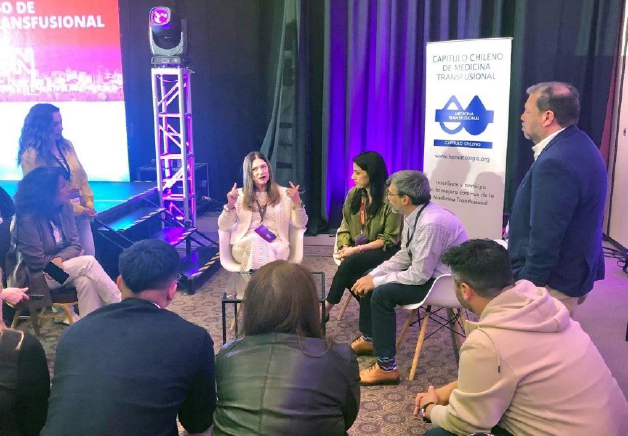
Dr. Castilho mentoring a group of professionals in Chile on how to implement a rare donor program in their country.
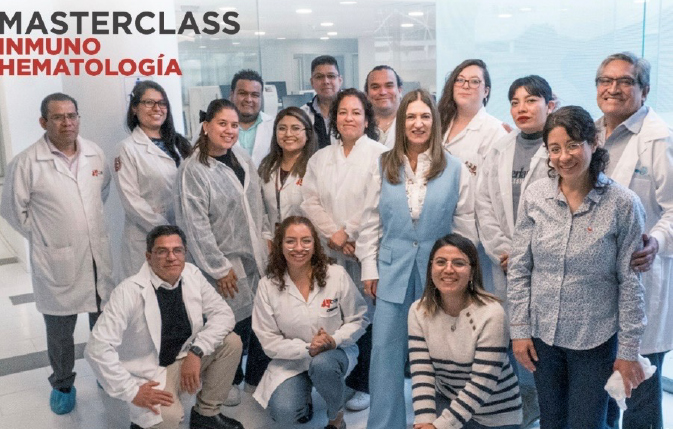
Dr. Castilho mentoring and training students in solving complex cases using molecular methods in a Masterclass in Immunohematology in Mexico.
Ensuring a stable and sufficient blood supply remains a significant challenge in transfusion medicine across Latin America. Although there has been progress, many countries still rely heavily on replacement donors rather than regular voluntary donors, making the system more reactive than sustainable. Donation rates also vary widely across the region, reflecting economic and health care disparities.
“Another major issue is fragmentation of blood systems,” Castilho said. “In many countries, blood collection and processing are still highly decentralized, with hundreds of centers operating independently. This limits efficiency, standardization and equitable access to safe blood, particularly for patients in less-resourced or remote areas.”
Castilho also highlighted variation in laboratory practices and screening strategies as a key hurdle. Although all units are screened, the level of technological sophistication, such as the use of molecular testing, varies considerably. This variation can impact both safety and the ability to implement advanced transfusion strategies, she explained.
Despite these challenges, she emphasized that significant developments are underway, including the continued adoption of molecular immunohematology. “Expanding genotyping and precision transfusion approaches can significantly improve compatibility, especially in genetically diverse populations like those in Latin America,” she said.
She also pointed to regional collaboration as a contributor to progress, adding that networks of laboratories and blood centers are increasingly sharing expertise, rare donor registries and best practices, helping to overcome local limitations through collective effort.
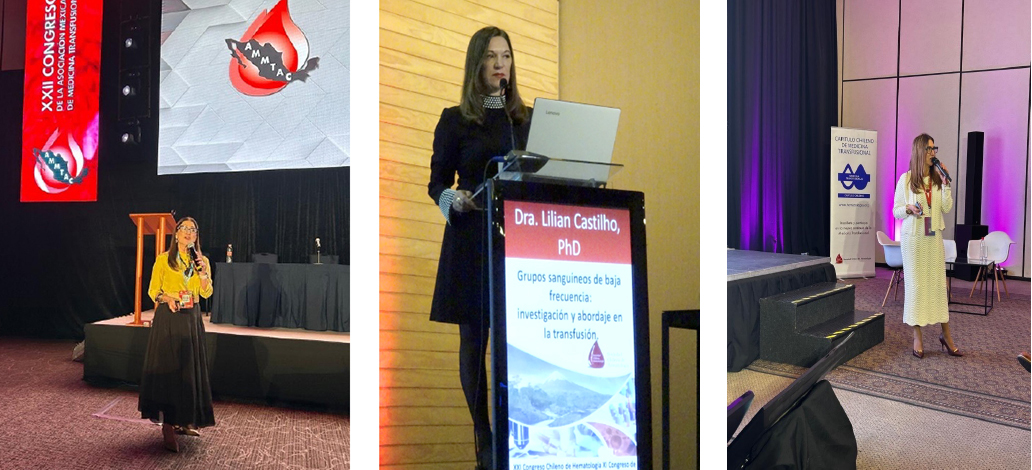
Throughout her career, Castilho has trained and mentored hundreds of blood and biotherapies professionals across Latin America. She has also supervised 36 master’s and doctoral theses and continues to advise graduate students.
“Mentoring students and professionals, and helping disseminate knowledge in molecular immunohematology, has allowed me to contribute to the sustainability and continued advancement of the field,” she said.
Beyond the scientific contributions, she highlighted the human impact of mentorship. For Castilho, having the opportunity to support individuals as they grow in confidence, develop expertise and find their own paths in the field is the most rewarding aspect of her mentoring experience.
“Seeing former trainees become leaders, educators and innovators in their own institutions and countries is extremely fulfilling,” she said. “Knowing that they are contributing to improving transfusion practice and patient care, often in settings with significant challenges, gives a strong sense of purpose and continuity.”
Castilho described mentorship as a two-way process where she can share her knowledge and experience, while also learning from the perspectives, questions and energy that her trainees bring.
“This experience has reinforced the importance of generosity in science: sharing knowledge, creating opportunities and building supportive professional networks,” she said. “It is a reminder that advancing the field is not only about discoveries, but also about investing in people who will carry that work forward.”
Castilho was named the 2026 Sally Frank Memorial Award recipient in recognition of her efforts to bring transformative advancements to the field in Latin America. She will receive her award in person at the 2026 AABB Annual Meeting in Atlanta. Castilho noted the award represents not only personal recognition, but also the acknowledgment of the many collaborations, mentors and trainees who have shaped her professional journey.
“At this stage, I see the award less as an endpoint and more as a reflection of the collective work we have done to advance immunohematology and blood group genetics, particularly in strengthening connections between regions and expanding access to knowledge and technology,” she told AABB News. “It is especially meaningful to have this recognition associated with a legacy that values education, mentorship and service to the field.”
She also expressed gratitude to her colleagues, institutions and the many students and professionals she has mentored throughout her career. “Their contributions are an essential part of this recognition,” she added. “The award reinforces my sense of responsibility to continue contributing through research, education and global collaboration to ensure that advances in transfusion medicine translate into better and more equitable patient care worldwide.”
Looking ahead, Castilho said she is most excited about the growing alignment between scientific innovation and a stronger focus on equity and precision medicine. She also mentioned the expansion of biotherapies, including cell and gene-based approaches, and their potential to redefine the boundaries of transfusion medicine. In some cases, these advances may cure diseases that have traditionally relied on long-term transfusion support, she pointed out.
“We are entering a period where advances in molecular diagnostics, genomics and data science are transforming how we understand and manage blood group diversity,” Castilho said. “The increasing use of genotyping and next-generation sequencing will allow for more precise matching, particularly for patients with complex transfusion needs, ultimately improving safety and outcomes.”
In terms of equity and access, Castilho believes the field is moving toward more inclusive and globally coordinated approaches, particularly through expanded international partnerships, strengthened regional capacity and the use of digital technologies.
“This will be key to closing existing gaps,” she said. “Ultimately, I see the future of the field as one where high-level science and equitable care go hand in hand, where innovation is not only about what is possible, but also about ensuring that its benefits reach patients everywhere.”
PREVIOUS STORY
Expanding Global Blood and BiotherapiesBACK TO ISSUE
April 2026
Transfusion is AABB’s scholarly, peer-reviewed monthly journal, publishing the latest on technological advances, clinical research and controversial issues related to transfusion medicine, blood banking, biotherapies and tissue transplantation. Access of Transfusion is free to all AABB members.
Learn More About Transfusion Journal
Keep abreast of what's happening in the field of biotherapies with CellSource - AABB's monthly update on the latest biotherapies news.

To submit news about the blood and biotherapies field to AABB, please email news@aabb.org.


President
Jose Cancelas, MD, PhD, CABP
Chief Executive Officer
Debra Ben Avram, FASAE, CAE
Chief Communications and Engagement Officer
Julia Zimmerman
Director of Marketing and Communications
Jay Lewis, MPH
Managing Editor
Kendra Y. Mims, MFA
Senior Communications Manager
Drew Case
AABB News
(ISSN 1523939X) is published monthly, except for the combined November/December issue for the members of AABB; 4550 Montgomery Avenue; Suite 700 North Tower; Bethesda, MD 20814.
AABB is an international, not-for-profit association representing individuals and institutions involved in transfusion medicine, cellular therapies and patient blood management. The association is committed to improving health by developing and delivering standards, accreditation and educational programs that focus on optimizing patient and donor care and safety.
+1.301.907.6977
Email: news@aabb.org
Website: www.aabb.org
Copyright 2025 by AABB.
Views and opinions expressed in AABB News are not necessarily endorsed by AABB unless expressly stated.
Notice to Copiers: Reproduction in whole or part is strictly prohibited unless written permission has been granted by the publisher. AABB members need not obtain prior permission if proper credit is given.

4550 Montgomery Avenue
Suite 700, North Tower
Bethesda, MD 20814
301.907.6977