

Voluntary non-remunerated blood donation (VNRBD) has long defined the moral identity of modern transfusion medicine. It symbolizes civic duty, shared responsibility and trust between health care institutions and the communities they serve. But in today’s world, marked by shifting generational motivations, global economic inequities and increasingly fragile blood availability, compensating donors has transitioned from a theoretical concern to an ethical and policy question.
In many professional conversations, money can become moralized. Those of us grounded in altruistic philosophy often instinctively reject the idea of paying for something so deeply tied to human dignity and solidarity. Yet ethical discomfort does not erase real-world pressure. Hospitals cannot transfuse moral ideals; they transfuse blood components. When supply fails, the conversation inevitably returns to motivation, and today, motivation is more complex than ever before.
Shortages are not abstract risks; they threaten patient care. Short supply means delayed surgeries, vulnerable platelet inventories, risk during disasters and inequity in access for already marginalized populations. These consequences invite ethically complicated but unavoidable questions:
Bioethics exists precisely for these moments when values collide with necessity.
1. United States: Pragmatic Necessity Meets Ethical Ambivalence
The United States represents perhaps the most ethically paradoxical case.
The American position evolved not from ideology but from necessity. Payment emerged as a way to maintain stability, protect disease therapy manufacturing and ensure access to life-saving plasma-derived therapies worldwide.
Yet this solution comes with ethical weight. It relies disproportionately on economically vulnerable donors, and it exists within a health care context where corporate profit complicates trust. The U.S. is both a champion of altruism in principle and the global leader of compensated donation in practice. The tension remains very real and publicly visible, with meaningful implications for donor-recruitment strategies today. It also exposes a moral paradox when countries that uphold altruism as the only acceptable standard frequently rely on blood products derived from paid donors elsewhere to meet their demand.
2. Canada: A Case Study in Principle, Politics and Public Trust
Canada adds another ethically rich dimension. Canadian policy prioritizes voluntary non-remunerated donation, aligning philosophically with European values of dignity, public trust and national solidarity.
However, Canada has struggled with:
Canada’s debate is as much about trust and national identity as it is about ethics. Canadian federal regulators must simultaneously ensure safety, avoid exploitation, maintain consistency with national ethical culture and confront the geopolitical reality that many therapies Canadians depend on come from systems that compensate donors elsewhere. Therefore, Canada embodies a question many high-income nations must face honestly: If we reject compensation morally, are we comfortable depending on those who accept it?
3. Europe: Moral Idealism with Structural Dependence
Europe remains the strongest global defender of VNRBD. The Council of Europe and the EU Blood Directive (2002/98/EC) firmly emphasize voluntary donation as a moral standard. However, Europe also confronts periodic shortages and relies heavily on plasma sourced from compensated donors elsewhere, most notably the U.S. Ethicists increasingly describe this as an ethical outsourcing paradox, outsourcing the morally uncomfortable while benefiting from it materially. Although this does not invalidate Europe’s commitment to moral principles, it highlights the global interconnectedness of global ethics.
4. Latin America: Between Principle, Resource Constraint and Social Reality
Latin America presents a distinctly different ethical reality, shaped by powerful cultural traditions, fragile public trust, structural limitations and persistent economic pressures. Although many countries in the region formally endorse the WHO standard of VNRBD, sustained mistrust in health systems and governmental institutions often undermines true altruistic participation. Consequently, many blood services remain heavily dependent on replacement-donor systems, which shift the moral burden of donation onto patients and families. In parallel, informal incentives may emerge despite being officially prohibited, creating ethically problematic recruitment practices and exposing profound inequities in donor motivation and access to transfusion care.
In several Latin American health systems, shortages are not episodic; they are structural. This produces a fundamentally different ethical landscape. Ethics in Latin America is deeply intertwined with health equity and access.
Different ethical traditions emphasize different moral commitments. As illustrated in Table 1, the varied ethical responses to paying blood donors arise from authentic and valid moral diversity, rather than ethical inconsistency.
The Principle of Double Effect, an enduring cornerstone in medical ethics, is particularly relevant here. It allows a morally problematic side effect when the intention and outcome are morally justified, under strict criteria:
Recruiting donors to save lives is morally good.
The goal is to ensure a life-saving supply, not exploiting donors.
Lives are saved through transfusion, not through vulnerability exploitation itself.
Preventing shortages and saving lives must outweigh risks—if systems meaningfully mitigate harm.
Under this analysis, compensation may be ethically defensible, but only if coercion is minimized, dignity is preserved, vulnerable populations are protected and justice is actively ensured.
Critics contend that the potential harm, particularly the commodification of the human body and the erosion of social virtue, are not incidental or peripheral outcomes, but rather transformative shifts that fundamentally alter the moral character of donation itself. From this perspective, such changes fail the proportionality test because they reshape the very ethical foundation upon which donation rests. This helps explain why some bioethicists cautiously endorse tightly regulated compensation models, while others reject them unequivocally as incompatible with the moral meaning of donation.
Ultimately, this debate is not a simple confrontation between ethical absolutism and pragmatic compromise; it is a deeper philosophical inquiry into how societies balance competing moral truths and whether financial incentives can coexist with, or inevitably displace, the moral vocabulary of solidarity, altruism, and human dignity.
A responsible future does not lie in choosing blind idealism or unregulated pragmatism. It lies in designing ethically intelligent donor motivation strategies, including:
In Latin America and other resource-constrained regions, meaningful progress requires international capacity building, sustained infrastructure development, and ethical policy frameworks that avoid transferring moral and operational burdens onto already vulnerable health systems. In Canada and Europe, public trust, policy transparency and ethical consistency must remain central, ensuring that principled commitments to voluntary donation remain aligned with evolving practical realities. In the U.S., a candid recognition of the system’s reliance on compensated plasma should be paired with continued ethical vigilance and deliberate efforts to sustain a culture of altruism, especially in contexts where public discourse and media narratives raise concerns about donor vulnerability and fairness.
The debate over compensating blood donors is no longer a theoretical discussion confined to academic journals. Reflexively demonizing financial compensation does not advance an honest, thoughtful, or nuanced conversation. This is now a living ethical challenge situated at the intersection of patient care, public trust, health equity and global interdependence.
Ultimately, the central question is not simply whether to pay or not to pay donors; the real ethical task is to develop evidence-based, context-sensitive strategies that can recruit and retain donors without coercion, exploitation or erosion of dignity. Bioethics does not offer a single definitive answer; rather, it provides disciplined frameworks through which we can transparently weigh trade-offs, safeguard human dignity, strengthen trustworthy systems and ensure that any policy approach reflects not only clinical necessity, but also the values we aspire to uphold as a global transfusion community. A mature, candid and globally informed dialogue is therefore not only timely but it is ethically imperative.
Table 1. Comparative Ethical Framework Table
| Ethical Framework | Key Proponents / Origins | Pro Argument (Supports Payment) | Con Argument (Opposes Payment) | Core Moral Lens |
|---|---|---|---|---|
| Deontology | Immanuel Kant; duty-based ethics | Saving lives may justify structured incentives aligned with moral duty to help others. | Treating blood as a commodity violates human dignity and moral law | Duty, dignity, universality |
| Consequentialism / Utilitarianism | Jeremy Bentham, John Stuart Mill | If payment increases supply, prevents shortages, and saves lives, it is ethically justified. | Commercialization may erode altruism and harm societal moral health | Outcomes, greatest good |
| Principlism | Beauchamp & Childress | Respects autonomy: donors may freely consent to compensation | Risks injustice, exploitation, and harm to vulnerable donors; challenges non-maleficence | Balance of the four principles |
| Virtue Ethics | Aristotle: moral character formation | Incentives may coexist with virtue if intentions remain oriented toward community good. | True virtue requires generosity free from economic motivation | Character, moral excellence |
| Care Ethics | Nel Noddings, Virginia Held | Payment may recognize donors’ time, showing care and relational respect | Transactionalizing donation may erode empathy and human connection | Care, relationships, empathy |
| Communitarianism | Alasdair MacIntyre, Michael Sandel | Compensation may support community resilience and health self-sufficiency | Undermines solidarity, shared civic responsibility, and communal moral identity | Common good, social cohesion |
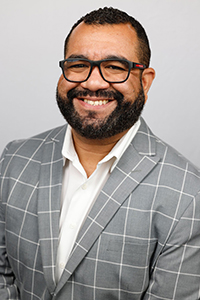
Ludwig Frontier, MD, MSc, MBA, DHSc, holds a doctor of health science with a concentration in global health from A.T. Still University and is a scholar of the MSc in global bioethics at Anáhuac University, co-sponsored by the UNESCO Chair in Bioethics and Human Rights and the Pontifical Athenaeum Regina Apostolorum in Rome. He also holds a master’s degree in transfusion medicine and advanced cell therapies from the Universitat Autònoma de Barcelona and Leiden University Medical Center, along with a cellular therapies certificate from AABB in collaboration with George Washington University. He works as a scientific marketing manager at Macopharma and reports no conflicts of interest.
By Ludwig Frontier, MD, MSc, MBA, DHSc, Contributing Writer
January 2026
 View Issue
Transfusion is AABB’s scholarly, peer-reviewed monthly journal, publishing the latest on technological advances, clinical research and controversial issues related to transfusion medicine, blood banking, biotherapies and tissue transplantation. Access of Transfusion is free to all AABB members.
Learn More About Transfusion Journal
Keep abreast of what's happening in the field of biotherapies with CellSource - AABB's monthly update on the latest biotherapies news.

To submit news about the blood and biotherapies field to AABB, please email news@aabb.org.


President
Jose Cancelas, MD, PhD, CABP
Chief Executive Officer
Debra Ben Avram, FASAE, CAE
Chief Communications and Engagement Officer
Julia Zimmerman
Director of Marketing and Communications
Jay Lewis, MPH
Managing Editor
Kendra Y. Mims, MFA
Senior Communications Manager
Drew Case
AABB News
(ISSN 1523939X) is published monthly, except for the combined November/December issue for the members of AABB; 4550 Montgomery Avenue; Suite 700 North Tower; Bethesda, MD 20814.
AABB is an international, not-for-profit association representing individuals and institutions involved in transfusion medicine, cellular therapies and patient blood management. The association is committed to improving health by developing and delivering standards, accreditation and educational programs that focus on optimizing patient and donor care and safety.
+1.301.907.6977
Email: news@aabb.org
Website: www.aabb.org
Copyright 2025 by AABB.
Views and opinions expressed in AABB News are not necessarily endorsed by AABB unless expressly stated.
Notice to Copiers: Reproduction in whole or part is strictly prohibited unless written permission has been granted by the publisher. AABB members need not obtain prior permission if proper credit is given.


4550 Montgomery Avenue
Suite 700, North Tower
Bethesda, MD 20814
301.907.6977