The 2025 ASBP Lifetime Achievement Honoree reflects on her decades-long career and unwavering commitment to quality assurance.
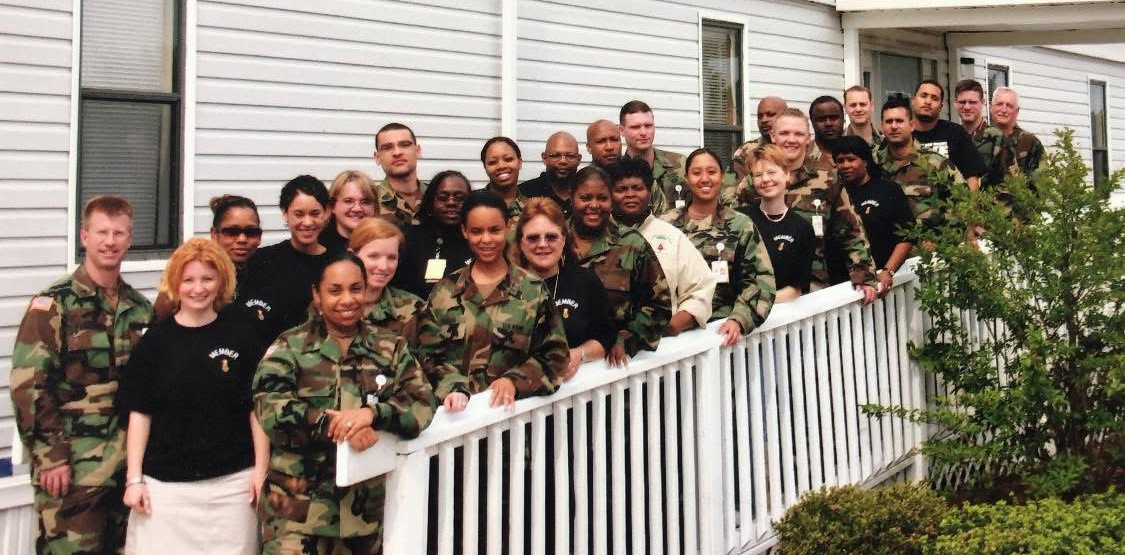
Karen Royster developed an interest in military transfusion medicine while stationed in Germany with her husband during his military service. As they prepared to return to the United States, a position in blood banking opened up at a local military hospital in Wiesbaden, Germany. Royster applied and was hired in 1991 as the supervisor of the transfusion service and donor center, marking the beginning of her 30-year career in military blood banking.
“That role was my first exposure to the military blood donor system, specifically an Air Force facility,” she said. “I didn't realize different military services had blood programs. It was still early in my career, and I was just learning.”
When she returned to the States, she worked in the hematology department at the Womack Army Medical Center until a technical supervisor position opened up in the blood donor center. In that role, Royster established mobile blood collections at Fort Bragg’s military installation in North Carolina and expanded blood drives to Fort Jackson, S.C., Naval Weapons Station, Charleston, S.C., Fort Lee, Va., and Fort Eustis, Va., increasing collections from 2,400 to 8,000 annually. She pivoted her career to quality assurance in 2002 after recognizing its critical role in improving processes and ensuring the safety of blood products.
“With blood donor centers, you deal with inspections, such as FDA and AABB, and one of the FDA findings was related to repeat citations about quality assurance,” Royster said. “The FDA had previously recommended having someone specifically focused on quality assurance, but the center hadn’t followed through with the recommendation. At that point, I suggested we make the quality assurance role my main responsibility.”
Royster’s quality assurance duties later expanded to include transfusion services. In 2019, she transitioned from the Womack Army Medical Center to the Army Blood Program (ABP), where she became the deputy quality assurance manager—a role that allowed her to work across all Army facilities and help standardize policies and procedures.
In 2019, Royster became the first quality assurance manager for the Armed Services Blood Program (ASBP). “In the past, each service operated independently even though they had similar goals, but with limited resources, having unified systems made it easier to collaborate and tackle large-scale projects,” Royster said. “That push for integration has been one of my most meaningful contributions to the ASBP.”
Royster noted that quality assurance in military blood operations has changed substantially over the past 20 years. Once viewed as an additional duty, quality systems are now recognized as essential for consistently producing safe, effective blood products. “Even with limited resources, there's now a greater appreciation for the role quality plays. It’s more than checking boxes,” Royster pointed out.
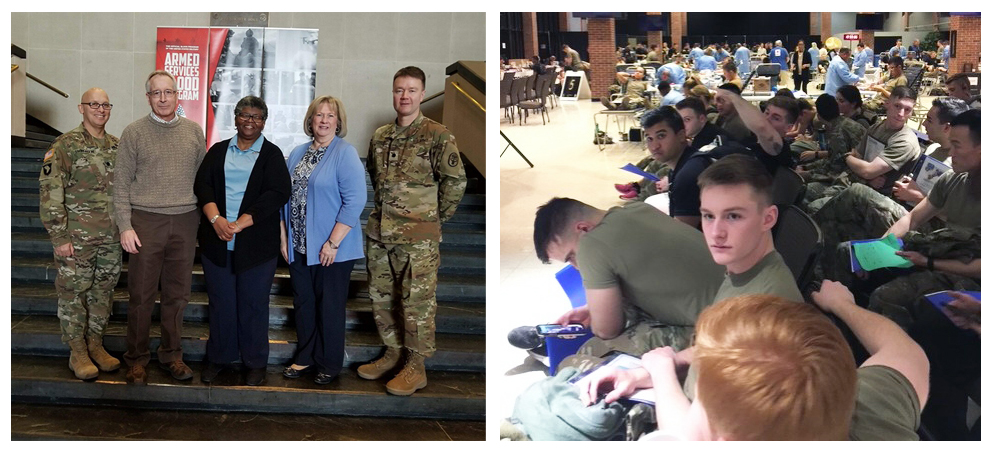
In 2020, the ASBP was tasked by the Department of Defense with standardizing processes during the COVID-19 pandemic and coordinating the collection of 10,000 units of convalescent plasma, which required working closely with donor centers, transfusion services and military facilities to meet FDA requirements for collecting and administering plasma. The daunting task also involved facilitating distribution to domestic hotspots and overseas operations, including ships and combat theaters.
My Inspirations: Kathy Elder, our first quality assurance lead on the Army side. When I was just starting out, she always reminded me that not knowing something didn’t mean I wasn’t capable of learning it. She supported me, answered questions and helped me grow. Also, Col. Audra Taylor. She's been a major influence and support throughout my career.
My Leadership Advice: First, the basics: If it’s not written, it’s not done. Procedures need to be documented and followed. Be open to more effective ways of doing things. Just because something’s been done the same way for 10 years doesn’t mean it can’t be improved. Also, listen to others’ ideas, use your resources and always keep learning and improving.
If I could implement one major change across military blood operations today...A fully standardized document management process across all services. That alone would help drive consistency and alignment in many other areas.
Royster coordinated the reporting system to track plasma collection, manufacturing and distribution and transfusion data for the Secretary of Defense. Additionally, she worked with service blood quality assurance managers to develop applicable collection and manufacturing procedures, establish collection goals for each Service Blood Program and utilize the Defense Health Agency’s COVID hot spot data to plan targeted mobile blood drive collections.
Royster described the task as both a tremendous undertaking and a defining moment in her career, crediting her team’s collaborative efforts for the successful outcome.
“We started by breaking the project into phases and developing a core procedure that all services could follow. Once we had a baseline procedure, we could manage FDA changes more effectively,” she explained. “I often felt more like a director orchestrating efforts, making sure the right people had the right tools at the right time. It was an intense, high-pressure time. But we had a great team, and we were able to meet the goal and help patients in need, all while keeping our staff safe.”
Royster noted that crises like 9/11 and the COVID-19 pandemic taught her to face unprecedented challenges head on. Her approach is to analyze the situation and identify the true root cause. She mentioned she applied this strategy when she transitioned the military transfusion services into the Genesis electronic medical record system. “Figuring out how to migrate legacy data and ensure integration with hospital systems was a major transformation and another major milestone in my career,” she said. “It’s easy to get distracted by surface-level issues or outside circumstances. But once you pinpoint the core issue, you can figure out how to move forward, whether that means finding an alternate path or realizing that something truly isn't working and needs to be rethought.”
Royster, who retired in March 2023, received the 2025 ASBP Lifetime Achievement Award. She shared her excitement about the prestigious award and emphasized how teamwork and mentorship have shaped her career path.
“This award feels like a huge ‘thank you’ from my colleagues. I’ve worked with so many dynamic, intelligent and capable people over the years. Just to be considered on the same level is an honor. I’ve learned from some outstanding leaders, and I’ve been able to pass that wisdom on. We’ve shared knowledge and improved systems together,” Royster told AABB News. “The military environment changes constantly with new leadership every 18 months to 3 years, so to be able to maintain quality and progress through all those transitions has been very meaningful.”
“This award feels like a huge ‘thank you’ from my colleagues. I’ve worked with so many dynamic, intelligent and capable people over the years. Just to be considered on the same level is an honor.”
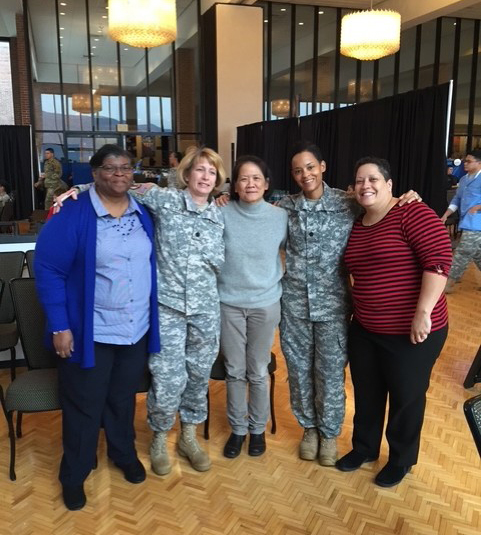
Retired U.S. Army Col. Audra L Taylor, former chief, ASBP Division, lauded Royster for her significant contributions to military transfusion medicine and her commitment to improving safety outcomes.
“Mrs. Karen Royster’s decades of service to the ASBP have been marked by her extraordinary dedication, expertise and a genuine care for the people and mission. She has championed innovation, mentored generations of professionals in quality assurance and worked tirelessly to strengthen the blood supply that saves lives on the battlefield and beyond,” Taylor told AABB News. “The Lifetime Achievement Award is a fitting tribute to a leader whose impact will be felt for years to come, and whose legacy inspires all who have had the privilege to work alongside her.”
Col. Jason Corley MS, MT(ASCP)SBB, chief for the Armed Serves Blood Program Division at the Defense Health Agency, added, “Mrs. Royster’s tireless efforts have helped to advance the Armed Services Blood Program mission around the globe. Her work has positively affected so many aspects of the military blood program, from maintaining the highest quality standards to advancing blood availability on the battlefield. Throughout her career, she consistently focused on teamwork, mission readiness and being a source of support to those she works with. She has been a leader throughout her decades of service and is truly deserving of the Lifetime Achievement Award.”
As an avid advocate of mentorship, Royster said helping people grow personally and professionally has been the most gratifying aspect of her career. “You meet a lot of people working in the military environment. It’s rewarding to help them to move forward in their careers,” Royster said. “I’ve had people reach out years later to thank me for pushing them to take those extra steps they didn't want to or learn something new. They’ve gone on to succeed elsewhere, and knowing I played a small role in that feels fulfilling.”
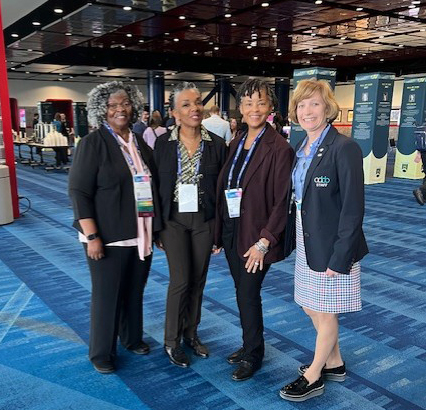
Today, Royster is enjoying more time with her family in retirement. As an AABB consultant, she occasionally provides project management services and technical assistance to clients, allowing her to stay connected to the blood banking community.
“After years of being so focused on work, it’s nice to have more balance and the freedom to choose how I spend my time. I can be selective about what I choose to work on,” Royster said. As she reflects on her longstanding career and the meaningful connections developed over the years, Royster expressed her gratitude. “The military blood program really is a special community,” Royster said. “It’s given me the opportunity to work with so many amazing people. The friendships and professional relationships I’ve built over the years are something I deeply value. It’s been a privilege.”
Transfusion is AABB’s scholarly, peer-reviewed monthly journal, publishing the latest on technological advances, clinical research and controversial issues related to transfusion medicine, blood banking, biotherapies and tissue transplantation. Access of Transfusion is free to all AABB members.
Learn More About Transfusion Journal
Keep abreast of what's happening in the field of biotherapies with CellSource - AABB's monthly update on the latest biotherapies news.

To submit news about the blood and biotherapies field to AABB, please email news@aabb.org.


President
Jose Cancelas, MD, PhD, CABP
Chief Executive Officer
Debra Ben Avram, FASAE, CAE
Chief Communications and Engagement Officer
Julia Zimmerman
Director of Marketing and Communications
Jay Lewis, MPH
Managing Editor
Kendra Y. Mims, MFA
Senior Communications Manager
Drew Case
AABB News
(ISSN 1523939X) is published monthly, except for the combined November/December issue for the members of AABB; 4550 Montgomery Avenue; Suite 700 North Tower; Bethesda, MD 20814.
AABB is an international, not-for-profit association representing individuals and institutions involved in transfusion medicine, cellular therapies and patient blood management. The association is committed to improving health by developing and delivering standards, accreditation and educational programs that focus on optimizing patient and donor care and safety.
+1.301.907.6977
Email: news@aabb.org
Website: www.aabb.org
Copyright 2025 by AABB.
Views and opinions expressed in AABB News are not necessarily endorsed by AABB unless expressly stated.
Notice to Copiers: Reproduction in whole or part is strictly prohibited unless written permission has been granted by the publisher. AABB members need not obtain prior permission if proper credit is given.


4550 Montgomery Avenue
Suite 700, North Tower
Bethesda, MD 20814
301.907.6977